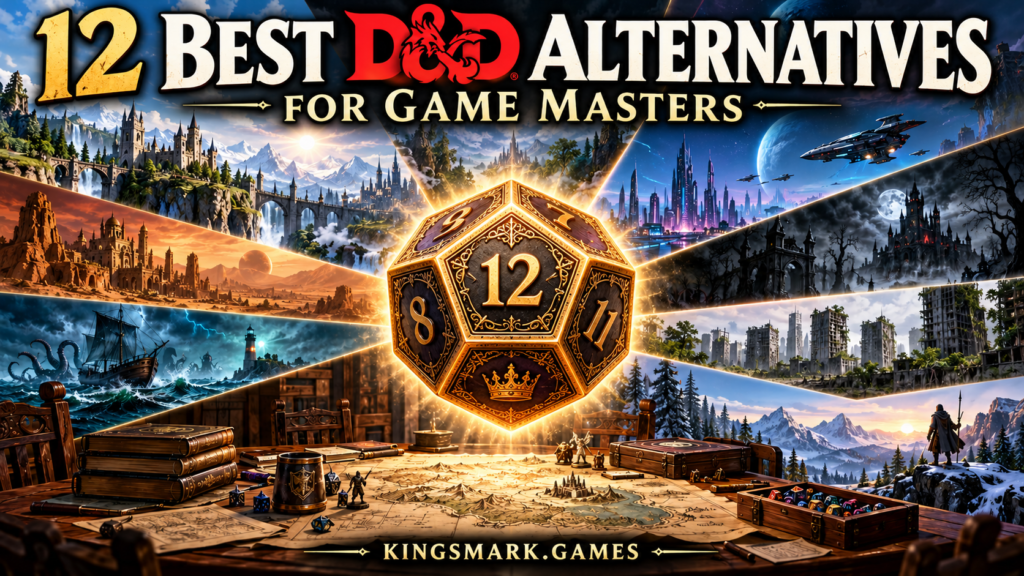
12 Best D&D Alternatives for Game Masters
The Best Fantasy, Sci-Fi, Horror & Rules-Light Tabletop RPGs
From complex tactical systems to streamlined dungeon crawlers, discover twelve tabletop role-playing games that offer something different from Dungeons & Dragons.
Why Look Beyond Dungeons & Dragons?
Imagine spending fifteen hours preparing an adventure for your Dungeons & Dragons campaign. You’ve designed the encounters, selected the monsters, studied their abilities, drawn maps, invented several interesting characters, and established the political situation surrounding the mission. You’re feeling pretty damn good about yourself until the players arrive, spend twenty minutes discussing your carefully prepared adventure, and announce that they would rather purchase a sailing ship and become pirates.
Congratulations! You’re now running a maritime campaign, and you know absolutely nothing about ships.
This is one of the extraordinary things about tabletop role-playing games. Players possess a freedom that doesn’t exist in most other forms of entertainment, and an imaginative group can transform an ordinary evening into something nobody could have predicted. Unfortunately, that freedom also places considerable responsibility upon the Game Master, especially when the game’s rules, published adventures, and fictional setting don’t provide the support needed to accommodate unexpected decisions.
I’ve been involved in tabletop role-playing games since the early 1990s, primarily as a Shadowrun Game Master. Over the years, I’ve developed particular opinions about what makes a role-playing game enjoyable, what makes it unnecessarily complicated, and what kind of support a Game Master should reasonably expect from a publisher. Those experiences eventually contributed to my decision to develop 👑Kingsmark, my own heroic fantasy tabletop role-playing game.
However, Dungeons & Dragons is hardly the only game worth playing, and Kingsmark certainly isn’t the only alternative worth investigating. There are extraordinary games involving interstellar exploration, criminal conspiracies, psychological horror, post-apocalyptic survival, corporate espionage, and even tiny mice fighting for their lives in a world of enormous dangers. Some abandon traditional fantasy mechanics almost entirely, while others take familiar concepts and develop them in interesting new directions.
The reasons for trying another system are equally varied. Perhaps you dislike the amount of preparation required by your current game, or you’re exhausted by complicated combat encounters. Perhaps you want more detailed tactical options, believable injuries, investigative adventures, or an established fictional universe that doesn’t require you to spend the next six months inventing kingdoms and drawing maps.
You might also dislike the business practices or creative direction of a particular publisher. There’s nothing unreasonable about deciding that the executives of a giant entertainment corporation are a bunch of dickheads whose products no longer deserve your money. Fortunately, the tabletop hobby includes independent designers, small publishers, and established competitors offering entirely different approaches to gaming.
As I discussed in Is It Fun to Be a Game Master?, the difficulty isn’t necessarily that Game Mastering requires preparation. Many of us genuinely enjoy inventing adventures, studying fictional worlds, developing memorable villains, and creating situations for players to explore. The problem begins when preparation becomes an exhausting obligation rather than an enjoyable part of the hobby.
It’s also important to distinguish between different kinds of complexity. A game might possess relatively simple rules but require the Game Master to invent practically everything about the setting. Another might contain extensive mechanical systems while providing decades of published adventures, developed locations, and fascinating characters.
The best game for you is the one that provides the experience you want while demanding the kind of work you actually enjoy.
With that in mind, I’ve selected twelve tabletop role-playing games representing remarkably different design philosophies. We’re counting from one to twelve in honor of the mighty twelve-sided die, and although the list concludes with my own game, the numbering shouldn’t be mistaken for some scientifically established hierarchy of entertainment. I’ve deliberately placed several more mechanically demanding games toward the beginning, but complexity isn’t automatically a defect, and simplicity isn’t automatically a virtue.
Let’s roll that d12 and see what happens.
Rules, Complexity, and Worlds Already Built
1. Shadowrun — Why Build a World When Someone Already Built One?
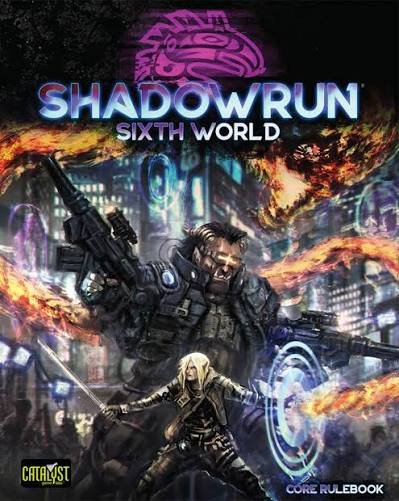
Imagine a world where enormous multinational corporations possess extraordinary political power, hackers explore a global computer network, cybernetically enhanced mercenaries conduct illegal operations, and actual magic has returned to civilization. Dragons occupy positions of tremendous influence, ancient supernatural forces threaten humanity, and ordinary people struggle to survive beneath institutions considerably more powerful than themselves. Welcome to Shadowrun.
Shadowrun combines cyberpunk science fiction with fantasy in a world that has been developed through decades of publications. Its setting contains an enormous collection of cities, corporations, organizations, personalities, historical events, and ongoing conflicts. For someone who enjoys creating adventures within an established fictional universe, this material can be an extraordinary resource.
One of the greatest attractions of Shadowrun is that the Game Master doesn’t need to invent the world.
Consider Seattle, one of Shadowrun’s most established campaign locations. A GM can learn about its political situation, its corporate interests, the organizations operating within its borders, and the tensions among competing factions. Rather than inventing an entirely new metropolis, he can concentrate on developing a mission involving people and organizations that already have established motivations.
Suppose the player characters are hired to steal confidential research from a corporate facility. The Game Master can determine who owns the facility, what the research concerns, who wants it stolen, and which other organizations might become involved. Published sourcebooks provide background information that can make those decisions easier while supporting a consistent fictional world.
This is one of the reasons I’ve always appreciated Shadowrun as a Game Master. A well-developed setting allows the GM to concentrate on what happens rather than continually inventing the universe in which everything happens. If the players decide to abandon one mission and pursue another opportunity, the setting already contains numerous people, organizations, and conflicts capable of generating new adventures.
Shadowrun also possesses a substantial library of published adventures and missions. A Game Master can run prepared material, adapt it to his campaign, or develop original operations using established locations and personalities. Even someone who enjoys writing his own adventures can benefit tremendously from having an existing fictional world that behaves according to recognizable principles.
Of course, there’s a catch, and it’s a fairly substantial one.
Shadowrun’s rules can be complicated. Its different editions have employed detailed procedures for combat, magic, hacking, cybernetic equipment, vehicles, and specialized character abilities. A Game Master who no longer needs to invent a fictional world may discover that he has instead volunteered to become an expert in several interacting mechanical systems.
Shadowrun commonly uses pools of six-sided dice, with characters combining relevant abilities to determine how many dice they roll. In Sixth Edition, various circumstances and mechanical advantages also interact with the Edge system. Once players develop specialized characters involving magic, cyberware, drones, and Matrix operations, the Game Master must understand enough of those systems to adjudicate their activities.
This doesn’t make Shadowrun a bad game. For the right audience, its complexity supports a richly detailed combination of technology, supernatural power, tactical action, and corporate intrigue. Nevertheless, someone looking specifically for a rules-light experience might prefer the more streamlined Shadowrun: Anarchy approach.
The broader lesson is that reducing worldbuilding and reducing rules complexity are two different objectives. A Game Master might happily accept complicated mechanics in exchange for a fascinating universe that has already been developed by professional writers. Another might prefer the exact opposite arrangement—a straightforward system and complete freedom to invent whatever world he pleases.
2. Pathfinder Second Edition — The Game for People Who Love Rules
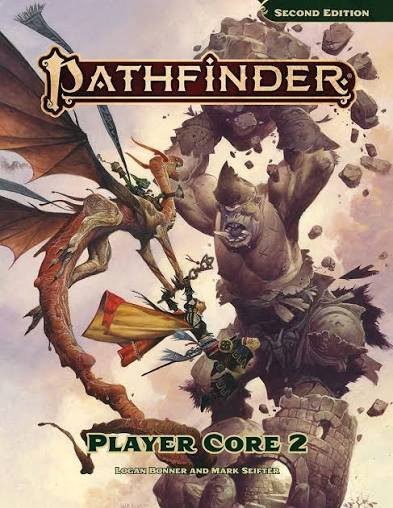
If you’re interested in alternatives to Dungeons & Dragons but still enjoy elaborate character development, tactical combat, and traditional fantasy adventuring, Pathfinder Second Edition deserves serious consideration. Published by Paizo, Pathfinder originated from a branch of D&D’s mechanical ancestry, and its modern edition offers an extensive system for constructing characters and resolving encounters. Its rules are detailed, highly structured, and particularly attractive to people who enjoy discovering how different abilities interact.
One of its most recognizable features is the three-action economy. Rather than organizing every turn around precisely the same categories used by contemporary D&D, Pathfinder generally gives characters three actions that can be spent on movement, attacks, special abilities, and other activities. This creates interesting tactical decisions because different combinations of actions can produce considerably different results.
Character customization is another major attraction. An adventurer’s ancestry, class, feats, skills, and advancement choices allow players to develop specialized capabilities, and two characters belonging to the same class can become remarkably different individuals. The system rewards people who enjoy studying their options and planning how their characters will develop over an extended campaign.
However, those options come with a substantial learning commitment. Conditions, traits, proficiency rules, character abilities, and their numerous interactions can require frequent consultation, particularly when a group is unfamiliar with the system. A Game Master who dislikes remembering mechanical details may discover that Pathfinder offers more information than he wants to manage.
Nevertheless, it would be unfair to confuse mechanical depth with inadequate Game Master support. Pathfinder provides detailed encounter-building procedures, published adventures, and substantial reference material, including the freely accessible Archives of Nethys. Its encounter guidelines can help a GM estimate the danger presented by different opponents rather than relying entirely upon intuition.
Pathfinder illustrates an important design principle I explored in Early RPG Simplicity or Modern TTRPG Complexity?: A longer or more detailed rulebook isn’t necessarily an inferior one. The question is whether its complexity produces enjoyable decisions and whether the players consider those decisions worth learning.
Pathfinder is particularly suitable for Game Masters who enjoy mastering a sophisticated tactical system and players who consider character optimization part of the entertainment. If you want something dramatically different from D&D’s fundamental approach to fantasy adventure, however, the next game takes us into considerably stranger territory.
3. Traveller — The Universe Is Your Playground
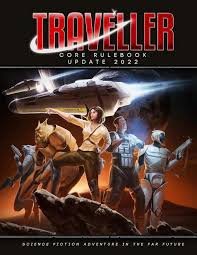
Not every adventuring party needs a Wizard, a Barbarian, and a Thief. Sometimes what you really need is a battered starship, several questionable business partners, a cargo hold full of merchandise, and just enough fuel to reach civilization before somebody realizes you’ve been selling stolen equipment. That’s the sort of situation that makes Traveller interesting.
Traveller is one of the longest-running science-fiction tabletop RPGs, originally appearing in 1977. Its established setting provides an enormous universe of inhabited worlds, political powers, interstellar commerce, and opportunities for exploration. Players can portray explorers, merchants, soldiers, scientists, criminals, diplomats, and numerous other kinds of characters whose adventures need not resemble traditional fantasy quests.
One of Traveller’s distinguishing characteristics is its career-based approach to character creation. Instead of necessarily beginning as inexperienced adventurers pursuing a familiar level-based progression, characters can develop backgrounds through periods of professional service. Their previous careers help establish their abilities, personal histories, resources, and relationships before the campaign begins.
This creates a different relationship between the characters and the world. A former naval officer might possess useful contacts, practical experience, and professional obligations. A merchant could begin with commercial knowledge and financial ambitions, while a veteran soldier might have surviving comrades or unresolved conflicts involving his former service.
For Game Masters, Traveller offers both established setting material and tools for creating additional worlds. The rules support activities such as interstellar travel, commerce, exploration, and encounters across unfamiliar environments. A campaign might concern the discovery of an ancient alien structure, a dangerous cargo delivery, or the political consequences of establishing contact with an isolated civilization.
The challenge is that open-ended exploration demands meaningful situations. A universe containing thousands of worlds is impressive, but it doesn’t automatically tell the Game Master what should happen when the characters land on one of them. Traveller provides tools, while the GM must still create or select interesting opportunities.
Traveller is an excellent choice for groups that enjoy freedom, exploration, and characters whose ambitions extend beyond collecting treasure and defeating monsters. It is particularly attractive when the players want to decide what kind of lives their characters will lead rather than follow an established sequence of heroic adventures.
4. Cyberpunk RED — Guns, Chrome, and Corporate Nightmares
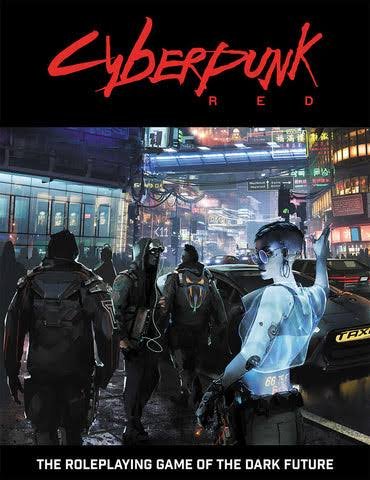
If Shadowrun’s combination of technology and fantasy magic doesn’t appeal to you, Cyberpunk RED offers another approach to a dangerous technological future. Its setting revolves around corporate power, criminal opportunities, cybernetic enhancement, urban violence, and people attempting to survive in a world where money and influence often matter more than ordinary human concerns. The atmosphere is gritty, rebellious, and filled with opportunities for morally complicated adventures.
Cyberpunk RED takes place within the established Cyberpunk universe, including the famous Night City. Its setting supplies corporations, gangs, neighborhoods, technological developments, and social conflicts that a Game Master can use when developing missions. Someone familiar with the Cyberpunk 2077 video game will recognize aspects of the larger fictional universe, although RED takes place earlier in its chronology.
Characters occupy distinctive professional roles, with abilities reflecting their backgrounds and specialties. Combat, social influence, technological expertise, investigation, and Netrunning can all become important parts of an adventure. Rather than requiring every problem to be solved through violence, the setting encourages situations involving information, influence, deception, and carefully negotiated criminal opportunities.
One aspect particularly interesting to me is Cyberpunk RED’s treatment of injuries. Its combat mechanics include critical injuries and wound states, creating consequences beyond simply announcing that a character has lost several numerical points. A violent encounter can leave someone seriously impaired even if he survives, influencing what happens during the remainder of the adventure.
I’ve explored the importance of consequences in my article Combat System Considerations in TTRPGs. When a game establishes meaningful injuries, the Game Master receives useful information for describing what actually happened. Combat becomes something more substantial than a succession of arithmetic exercises.
Cyberpunk RED isn’t necessarily a beginner’s dream of absolute simplicity. Equipment, special abilities, Netrunning, and tactical encounters still require familiarity with the rules. However, its free introductory Easy Mode materials provide an approachable opportunity to investigate the game before investing in the complete system.
For players fascinated by technological dystopias, criminal intrigue, dangerous gunfights, and the consequences of living in a world dominated by powerful corporations, Cyberpunk RED offers a compelling alternative.
Beyond the Traditional Fantasy Adventure
At this point, we’ve examined games featuring extensive tactical rules, corporate conspiracies, interstellar exploration, and technological dystopias. Those are substantial departures from familiar fantasy adventuring, but they still involve recognizable conflicts, dangerous opponents, and characters attempting to accomplish objectives. The next four games challenge some of the assumptions about what players should actually spend their time doing.
5. Star Trek Adventures — Explore Strange New Worlds
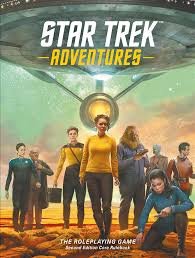
I’ve always had a particular affection for Star Trek because its best stories aren’t simply about shooting enemies or destroying opposing starships. They’re about exploration, discovery, moral decisions, extraordinary scientific problems, and conflicts between civilizations whose interests and beliefs may be very different. A successful mission might conclude with an agreement between two governments rather than the destruction of an enemy.
Star Trek Adventures allows players to participate in that kind of storytelling. Its Second Edition uses an updated version of Modiphius’s 2d20 system and supports the portrayal of Starfleet officers, other playable species, and the crews of different starships. The game provides rules for professional responsibilities, scientific challenges, social encounters, exploration, and the dangers of operating in space.
Imagine the crew discovering an inhabited planet threatened by an approaching astronomical catastrophe. The inhabitants possess technology insufficient to protect themselves, and outside intervention could create serious cultural consequences. The players must investigate the danger, consider their responsibilities, evaluate possible solutions, and determine how to proceed.
That’s an entire adventure without anyone needing to draw a sword.
Star Trek also demonstrates the enormous advantage of using a well-established fictional universe. A Game Master can draw upon recognizable civilizations, political relationships, technologies, scientific concepts, and historical events. Published Mission Briefs and introductory adventures provide additional support, including material compatible with the Second Edition.
However, running Star Trek effectively requires understanding what makes the franchise interesting. Simply filling every mission with hostile starships and firefights misses much of its appeal. The GM needs to create problems that reward curiosity, intelligence, cooperation, diplomacy, and sometimes the courage to refuse an apparently easy solution.
This is one of the most attractive qualities of tabletop role-playing as a medium. Victory doesn’t have to mean killing the opposition. It can mean preventing a war, saving a civilization, solving a mystery, or convincing someone that cooperation is preferable to destruction.
6. Call of Cthulhu — Some Mysteries Are Better Left Unsolved
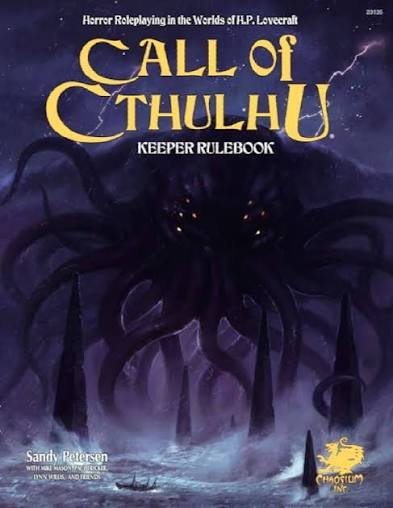
What happens when your characters aren’t legendary heroes destined to destroy terrible monsters, but ordinary people who gradually discover that the universe contains things humanity was never meant to understand? What happens when opening a mysterious book might be more dangerous than confronting an armed criminal? Those questions lie near the heart of Call of Cthulhu.
Inspired by the cosmic horror associated with H. P. Lovecraft and related fiction, Call of Cthulhu emphasizes investigation, mystery, psychological deterioration, and survival. Characters frequently begin as investigators possessing ordinary professional abilities rather than extraordinary combat powers. Their greatest assets may be knowledge, curiosity, social connections, and the ability to recognize danger before it’s too late.
The game’s percentile-based rules provide a familiar method of resolving uncertain actions. Players investigate locations, interview witnesses, examine documents, and attempt to understand situations involving frightening supernatural forces. The Sanity system represents the psychological consequences of exposure to horrifying discoveries and experiences.
A successful adventure might involve identifying the members of a dangerous cult, preventing a supernatural ceremony, or discovering the truth behind a series of disappearances. Sometimes the wisest decision is to escape before the investigators encounter something that cannot reasonably be defeated. In this kind of game, surviving long enough to warn someone else can be an extraordinary achievement.
For Game Masters, Chaosium offers a substantial library of prepared scenarios. The free Quickstart includes the classic introductory mystery The Haunting, making it relatively easy to experience the game’s investigative structure. Published scenarios can supply locations, witnesses, clues, handouts, and supernatural threats that would otherwise require extensive preparation.
Nevertheless, horror and investigation require particular skills from the GM. An exciting mystery depends upon the discovery of information, and a poorly designed scenario can collapse when players overlook a clue or make an unexpected decision. The GM must maintain atmosphere while remaining flexible enough to accommodate different investigative approaches.
Call of Cthulhu is especially attractive for groups that enjoy solving mysteries, uncovering disturbing secrets, and confronting dangers that cannot always be overcome through superior firepower. Its emphasis on psychological consequences also demonstrates that physical injuries are only one way a game can make dangerous experiences matter.
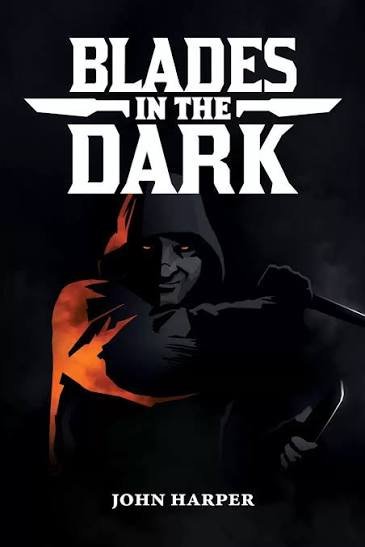
7. Blades in the Dark — Stop Planning Every Detail and Start Playing
Imagine an adventuring party deciding to rob an extremely wealthy nobleman. In a conventional game, the players might spend two hours debating guard schedules, escape routes, disguises, equipment, and what to do if somebody recognizes them. By the time they’re finally ready to begin the robbery, the session is practically over, and half the group has forgotten why they wanted to steal anything in the first place.
Blades in the Dark takes a different approach to that problem. Designed by John Harper, the game places players in the roles of criminals operating within the haunted industrial city of Doskvol. Characters belong to a developing crew whose activities involve robberies, smuggling, assassination, espionage, and conflicts with rival organizations.
One of the game’s most distinctive ideas is that exhaustive planning doesn’t always need to occur before the adventure begins. Players can establish the broad approach to an operation, and the game uses an engagement roll to help determine the circumstances when the action starts. Preparations that would traditionally require lengthy discussion can instead become relevant through the game’s flashback mechanics.
For example, the characters might already be inside a heavily guarded mansion when someone discovers a locked door. A player could declare that his character previously arranged for a servant to provide a key. The flashback rules help determine how that preparation was accomplished and what it costs, rather than requiring every contingency to have been established at the beginning of the session.
This changes the rhythm of play considerably. Instead of discussing every conceivable problem before taking action, players encounter problems and reveal appropriate preparations when they become important. The GM can concentrate on presenting meaningful obstacles, consequences, and changing circumstances rather than waiting for a committee of suspicious criminals to complete its third meeting concerning which window to climb through.
Blades in the Dark also uses Stress, resistance, faction relationships, downtime, and progress clocks to organize its adventures. These procedures connect individual criminal operations with the crew’s larger development, creating consequences that can shape future sessions. Success might attract dangerous attention, while failure can produce complications that become the foundation for additional adventures.
However, rules that encourage improvisation don’t automatically eliminate the need for Game Master skill. The GM must interpret the fictional circumstances, establish meaningful consequences, portray competing factions, and maintain the momentum of events. Someone who prefers highly specified tactical rules might find this style uncomfortable.
Nevertheless, Blades in the Dark is one of the strongest examples of a game that changes the process of preparing and playing adventures rather than merely replacing fantasy monsters with different opponents. It demonstrates that the structure of a game can fundamentally influence how participants approach problems.
For readers who find themselves interested in the relationship between rules and dramatic decisions, I’ve explored another approach in Why “I Attack” Isn’t Enough, examining how tactical choices can produce more interesting Action Scenes.
If you’d like to investigate my own approach to these questions, you can also read the complete 👑Kingsmark Player’s Handbook free at Kingsmark.games. The system was developed around cinematic action, meaningful consequences, and allowing players to attempt considerably more than the obvious choices.
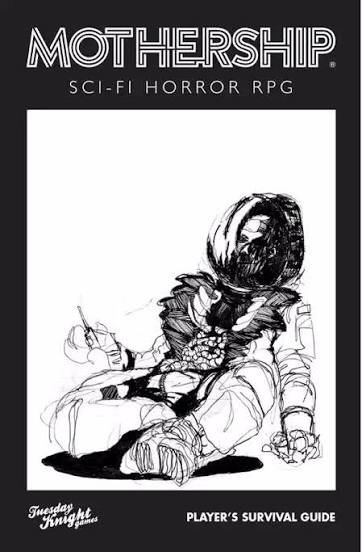
8. Mothership — In Space, Survival Is an Achievement
Science fiction doesn’t always promise a future of exploration, technological progress, and peaceful relations between civilizations. Sometimes the future is a malfunctioning spaceship drifting through darkness, with failing life-support systems and something horrible moving through the ventilation ducts. Mothership specializes in that considerably less optimistic possibility.
Published by Tuesday Knight Games, Mothership is a science-fiction horror RPG concerned with survival under extraordinary pressure. Players might portray scientists, marines, androids, technicians, or other individuals confronting dangerous environments and terrifying discoveries. The game’s atmosphere owes much to the tradition of claustrophobic space horror, where isolation and uncertainty can be as dangerous as the creatures themselves.
Mothership uses percentile mechanics accompanied by Stress and Panic rules. As characters encounter danger, fail important checks, and experience frightening situations, their psychological condition can become increasingly significant. These mechanics help establish the tension that defines the game’s intended experience.
For the Game Master, its Warden’s Operations Manual is particularly interesting because it provides guidance for preparing and conducting horror adventures. Rather than simply supplying rules and expecting the GM to invent the rest, the game offers procedures and advice concerning frightening situations, scenario construction, and campaign development. Its introductory adventures provide additional opportunities to learn the system through practical play.
The appeal of Mothership depends upon a willingness to accept vulnerability. Characters may die, plans may collapse, and circumstances can become catastrophically dangerous. Players expecting invincible heroes who reliably triumph over every obstacle may discover that they’ve boarded the wrong spaceship.
However, that vulnerability creates a distinctive kind of satisfaction. Escaping an abandoned research station with three surviving crew members and a terrifying secret can feel like an extraordinary victory. Sometimes the most heroic accomplishment is simply getting everybody out alive.
Small Heroes, Dangerous Worlds, and a New Kind of Fantasy
Not every innovative role-playing game needs to abandon fantasy, and not every interesting new system requires decades of established publishing history. Independent designers continue exploring unusual settings, alternative mechanics, and different ways of representing danger. Some of their ideas are immediately recognizable, while others initially sound like something somebody invented after drinking too much coffee and watching an unusually disturbing cartoon.
That’s part of what makes the hobby interesting.
9. Tales from Elsewhere: Clockworld — Welcome to a Stranger Frontier
Tales from Elsewhere: Clockworld is one of the more intriguing independent projects I’ve encountered while investigating alternatives to traditional fantasy RPGs. Its setting combines post-apocalyptic imagery, Weird West adventure, supernatural horror, and the dangers of traveling through an unfamiliar world. Instead of wandering through a conventional medieval kingdom, characters inhabit a frontier where the environment and its inhabitants can present extraordinary threats.
The game’s published descriptions emphasize dangerous adventures, distinctive characters, and a setting shaped by catastrophic events. Character creation involves elements such as Professions, Cultures, and Incidents, which help establish who a survivor is and what experiences have influenced his life. These elements suggest a game interested in developing character identities that extend beyond a collection of combat abilities.
Its mechanics employ a d10-based skill system, with particular attention given to injuries and their consequences. This is especially interesting because many popular RPGs represent physical harm through abstract numerical reserves. A system that establishes particular injuries can create different tactical and narrative possibilities.
Consider the difference between losing ten hit points and suffering a serious injury to your leg. In the first case, the numerical loss might have no immediate effect on your character’s performance. In the second, your ability to run, climb, escape, or continue fighting may become an important part of the situation.
That distinction is one of the reasons I’m interested in how different designers approach injury mechanics. The consequences of violence can become part of the adventure itself rather than merely something to erase after the fight. How those consequences are represented, and whether the additional procedures improve the game, depends upon the quality of the individual design.
Clockworld also represents something important about independent publishing. A small development team can explore an unusual creative direction without needing to reproduce the conventions of the largest commercial RPGs. Its atmosphere, presentation, and mechanical priorities don’t have to appeal to every fantasy gamer to offer something worthwhile.
As of October 2026, the publisher advertises the full game’s release for the final quarter of the year, and a free Clockworld Demo Packet is available for readers interested in exploring its introductory material. Consequently, it should be approached as an emerging game rather than one possessing decades of established campaign support. Nevertheless, its concept is sufficiently distinctive to warrant attention alongside better-known alternatives.
10. Mausritter — Tiny Heroes, Enormous Adventures
Of all the games on this list, Mausritter might initially appear the least threatening. After all, the characters are mice, and the artwork has a certain charm that could convince someone unfamiliar with the game that it’s intended primarily for children. However, the underlying concept is considerably more interesting than simply replacing traditional fantasy heroes with adorable rodents.
Imagine being approximately three inches tall in a world where an ordinary house cat is a terrifying predator. A garden becomes an enormous wilderness filled with towering vegetation, hidden tunnels, and dangerous animals. A discarded pocket watch might become valuable treasure, while an abandoned human building could contain entire settlements of miniature inhabitants.
Suddenly, familiar objects become extraordinary.
Mausritter is a rules-light fantasy adventure game in which players portray courageous mice exploring a dangerous world. Its mechanics emphasize straightforward resolution, limited resources, inventory management, and the practical consequences of confronting creatures much larger than the characters themselves. The simplicity of its rules allows the fictional circumstances to become particularly important.
One of its most appealing features is its inventory system. Equipment is represented through items occupying limited spaces, making the decision to carry something meaningful. Rather than treating possessions as an invisible collection of statistics, the game encourages players to consider what their tiny adventurers can reasonably transport.
This creates situations that would be absurd in an ordinary heroic fantasy game but perfectly reasonable for mice. A rusty sewing needle might serve as a formidable weapon, while a discarded button could become a valuable shield or piece of equipment. Food, shelter, and safe passage can become serious considerations when ordinary animals are potentially deadly adversaries.
The game also emphasizes clever solutions rather than assuming that combat is always the most effective response to danger. A mouse confronting a cat doesn’t necessarily need to defeat it in a heroic duel. Distracting the animal, escaping through a narrow passage, constructing a trap, or negotiating assistance from another creature may be considerably more sensible.
I haven’t personally played Mausritter, although I’ve watched reviews and examined information about its mechanics and presentation. What attracts me is the way it transforms familiar surroundings into an unfamiliar adventure setting. It demonstrates how much imaginative potential exists in changing the scale and perspective of the player characters.
There is also a useful lesson for Game Masters. You don’t necessarily need an enormous fictional universe to create a memorable campaign. An abandoned farmhouse, a small garden, and the surrounding woodland might provide enough material for an extraordinary series of adventures when the characters are sufficiently small.
The complete Mausritter rules are available through a free or pay-what-you-want digital download, making it particularly accessible for groups interested in experimenting. Its distinctive approach also demonstrates why some of the hobby’s most compelling ideas emerge from independent designers willing to pursue unusual concepts.
11. Shadowdark — Classic Fantasy Without the Excess Baggage
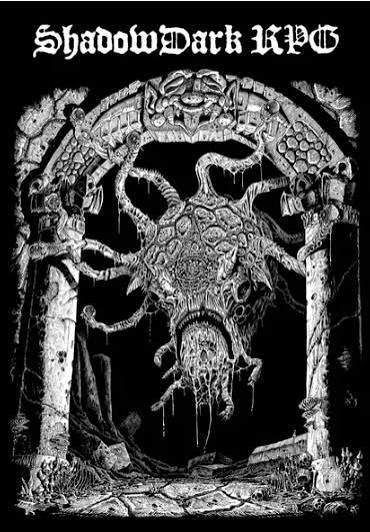
Not every alternative to Dungeons & Dragons needs to reinvent the entire concept of fantasy adventuring. Sometimes the better approach is to examine what originally made dungeon crawling exciting, identify which mechanics are genuinely necessary, and discard complications that contribute relatively little to the experience. That’s approximately the design philosophy that makes Shadowdark interesting.
Created by Kelsey Dionne and published by The Arcane Library, Shadowdark combines traditional dungeon-crawling concepts with a streamlined modern rules structure. Characters explore dangerous locations, confront monsters, discover treasure, and attempt to survive environments where preparation and good judgment matter. Its mechanics should feel recognizable to many experienced D&D players without requiring them to learn an enormous collection of specialized procedures.
Shadowdark uses a familiar d20 resolution approach and relatively straightforward character classes. Magic involves rolling to cast spells, creating uncertainty and potential consequences rather than treating every prepared spell as a guaranteed expenditure of a resource. These decisions contribute to a game where ordinary actions can remain uncomplicated while dangerous situations retain meaningful tension.
One of Shadowdark’s most distinctive mechanics concerns light.
A torch burns for approximately one hour of actual playing time, rather than requiring the group to calculate its duration through fictional timekeeping. This transforms light into a real-world resource and gives players a practical reason to make decisions efficiently. When darkness becomes dangerous, the remaining torchlight can influence whether the group explores another chamber or retreats toward safety.
Imagine the adventurers discovering a concealed staircase descending beneath an abandoned temple. They have already spent considerable time exploring, their resources are limited, and their torches are beginning to expire. Somewhere below, they hear something enormous moving through the darkness.
The players now confront a meaningful decision. They can investigate the mysterious sound, potentially discovering something valuable, or withdraw while they still possess enough light to escape. Their choice is interesting because the mechanics give the environment genuine consequences.
That’s good game design.
Shadowdark also emphasizes old-school problem-solving. Not every obstacle requires a specialized character ability or an elaborate combat maneuver. Players are encouraged to investigate their surroundings, interact creatively with the environment, and make intelligent decisions about which dangers are worth confronting.
For Game Masters, this approach can reduce the time spent learning unusual rules while placing greater emphasis on presenting interesting situations. Its published Quickstart Set provides introductory rules, pregenerated characters, monsters, and an adventure designed to demonstrate the system. The game also received considerable industry recognition, including four gold ENNIE Awards in 2024.
However, simpler mechanics don’t automatically mean effortless Game Mastering. A compelling dungeon still needs atmosphere, meaningful choices, interesting inhabitants, and reasons for players to care about what they’re discovering. A GM can certainly run a boring dungeon using an excellent rules-light system.
I’ve discussed some of these considerations in How to Create a Dungeon Adventure, including how a dungeon becomes more interesting when its inhabitants, architecture, dangers, and history possess believable relationships. The quality of an adventure depends upon considerably more than the number of monsters occupying its rooms.
Shadowdark is especially appealing to players who enjoy traditional fantasy but want fewer mechanical complications. It also offers an interesting comparison with my own design philosophy because I approached some of the same problems from a different direction. Where Shadowdark concentrates on preserving old-school danger through streamlined procedures, I wanted Kingsmark to accommodate a broader range of cinematic action while maintaining meaningful physical consequences.
Neither objective is inherently superior. The important question is what kind of fantasy experience the group actually wants.
12. 👑Kingsmark — A Different Vision of Heroic Fantasy
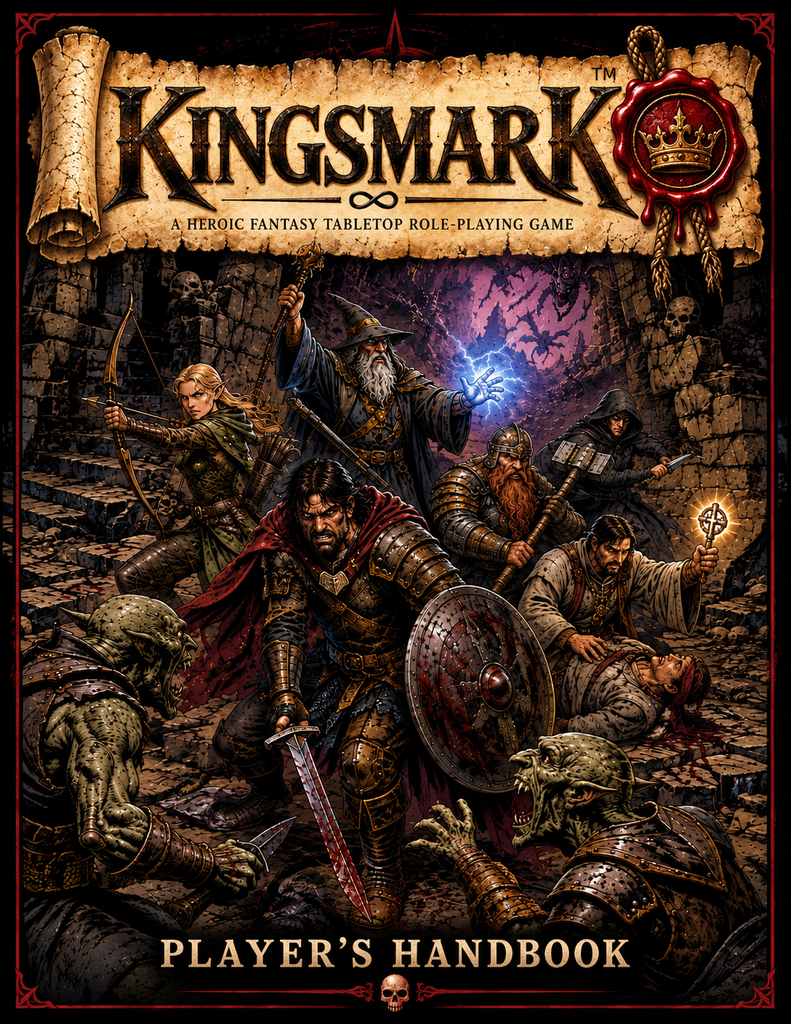
When I began developing 👑Kingsmark, I wasn’t particularly interested in creating another version of Dungeons & Dragons. I wanted a system that could help Game Masters and players create exciting, believable, cinematic adventures without requiring an entirely different collection of rules for every type of situation. My ambition was to establish a mechanical foundation that could eventually support multiple genres, while developing Kingsmark itself around the heroic fantasy of the medieval world.
I’ve always enjoyed stories involving dangerous journeys, professional warriors, formidable enemies, supernatural mysteries, and people attempting extraordinary accomplishments through courage, discipline, intelligence, and determination. Stories involving heroes such as Conan the Barbarian particularly appeal to me because physical danger remains meaningful even when the protagonists are exceptionally capable. A powerful warrior should be dangerous, but that doesn’t mean a sword suddenly becomes harmless because he’s survived forty previous adventures.
That perspective influenced one of the most fundamental decisions I made about the system. Kingsmark doesn’t use conventional Hit Points.
Instead, its ⭐Jack’s Cinematic d12 system—JCd12—uses 🩸Physical Wounds, 🧠Mental Trauma, and additional mechanics designed to represent the consequences of dangerous events. A character can suffer specific injuries ranging from Minor to Critical, while the resulting Pain Modifiers may influence his ability to continue performing demanding Actions. Armor, Hit Locations, damage severity, and the circumstances surrounding an attack all contribute to determining what happens.
For example, imagine an armored swordsman confronting a powerful enemy inside a ruined fortress. His opponent lands a successful blow, but instead of merely subtracting eight points from an abstract reservoir, the mechanics can establish whether the weapon penetrated his protection, where the attack struck, and what injury resulted. Perhaps the blow was stopped by his armor, or perhaps it injured his sword arm badly enough to compromise his ability to fight.
The mechanical result now gives the Game Master something meaningful to describe.
That was one of my principal objectives. I wanted the rules to assist in the creation of cinematic scenes rather than leaving the GM to invent every physical consequence of combat. Readers interested in the underlying system can examine Chapter 13 — 💥Damage & Defense or my article Building 👑Kingsmark from the Ground Up.
Another important distinction concerns tactical freedom. Kingsmark uses Action Points to govern what characters can accomplish during their Turns, and the Player’s Handbook provides approximately 108 🎬Example Actions covering attacks, defenses, movement, positioning, teamwork, and specialized maneuvers. These Actions are intended to demonstrate possibilities, not establish an exhaustive list of everything a player is permitted to attempt.
Suppose the same swordsman discovers that his injured companion has fallen near an approaching enemy. He might attempt to intercept the attacker, defend his companion, retreat toward a more favorable position, or use the surrounding environment to create an obstacle. The Game Master can interpret these decisions through the established mechanics while considering the actual circumstances.
This reflects a larger principle in my approach to game design. Tactical knowledge should be rewarded, but tactical expertise shouldn’t be mandatory for enjoying the game. Someone familiar with historical combat, martial arts, or military tactics should find opportunities to apply that knowledge, while a newcomer should still be able to make sensible decisions without studying swordsmanship for three years.
The relevant procedures appear in Chapter 11 — ▶️Action Scenes and Chapter 12 — 🎬Example Actions. These chapters provide the structure through which ordinary activities and extraordinary cinematic maneuvers can be resolved.
Kingsmark also incorporates 🧠Mental Trauma as a separate consideration from physical injuries. A character might survive a terrifying supernatural encounter without receiving a single physical wound, yet still experience psychological consequences. The interaction of the 🌈Physical Performance PRISM and 🌈Mental Performance PRISM with injury and trauma thresholds allows differences in physical and mental resilience to matter mechanically.
Furthermore, injuries aren’t simply inconveniences that disappear because the party decided to spend the night at an inn. Chapter 14 — ❤️Healing Scenes provides procedures governing recovery, medical attention, and the consequences of surviving dangerous encounters. Healing can become part of the continuing adventure rather than an automatic administrative adjustment.
Of course, heroic fantasy isn’t exclusively concerned with combat. Kingsmark also addresses conversation, negotiation, intimidation, persuasion, deception, and other social situations through Chapter 10 — 🗨️Dialog Scenes. A Game Master should be able to create meaningful encounters in which the characters accomplish their objectives without necessarily drawing weapons.
Character development involves twelve 💪Attributes, five 🌈Attribute PRISMs, twenty-four ⚒Skills, and seventeen 🎭Character Classes. Rather than assuming that everyone belonging to a particular Class develops identically, the system permits substantial differences through training, Attributes, Skills, and the investment of ⭐Experience Points. You can examine the character options in Choosing Your Kingsmark Character Class or begin directly with Chapter 17 — ✍Character Creation.
Magic is another major component. Kingsmark contains twenty-four Schools of Magic, incorporating different supernatural traditions and capabilities, while its 📜Magic System establishes rules governing spellcasting and related consequences. My approach to supernatural abilities is discussed further in The Problems with D&D’s Magic System.
The game’s principal setting is Sylva, a medieval fantasy world with seven continents, human civilizations, unfamiliar creatures, ancient histories, and dangerous supernatural forces. Its kingdoms and cultures provide the foundation for adventures involving warfare, political intrigue, dangerous wilderness, mysterious ruins, and extraordinary discoveries. Readers interested in the setting can explore The World Is Flat or discover why its ancient inhabitants constructed underground fortifications in They Built the “Dungeons” to Survive the Dragons.
Now, I should address something that might initially appear contradictory. Kingsmark’s First Edition Player’s Handbook contains 556 pages, despite my repeated emphasis on avoiding unnecessary complexity. That’s a substantial book, and anyone expecting a minimalist twenty-page game will discover that Kingsmark pursues a different objective.
However, the book doesn’t consist of 556 pages of mechanics that must be memorized before anyone can play. It includes character creation, classes, combat, magic, equipment, explanations, reference material, examples, a Bestiary, four ready-made Player Characters, and an introductory dungeon adventure. Much of its content exists to help people learn the system, understand their options, and resolve situations without constantly inventing new rules.
Kingsmark is also a newly published game. Its community, independent reviews, additional campaign material, and third-party support are still developing, and I certainly wouldn’t claim that it already possesses the enormous publishing infrastructure of Pathfinder, Shadowrun, or other established systems. That growth will depend upon whether players and Game Masters discover something they genuinely enjoy.
Nevertheless, I’ve made the entire Player’s Handbook available to read online for free. I want prospective Game Masters to examine the actual mechanics, evaluate the character options, and decide whether the game offers the experience they want before spending anything. The reasons for that decision are explained further in Kingsmark Is FREE?!.
Ultimately, Kingsmark is my attempt to combine cinematic heroic fantasy, tactical freedom, meaningful physical danger, and a comprehensive collection of practical rules within one interconnected system. Whether those choices produce your ideal tabletop RPG depends upon the kind of adventures you want to experience.
And that’s exactly the point of exploring alternatives.
Finding the Right Game for Your Table
After examining these twelve tabletop role-playing games, one thing should be particularly clear. The hobby offers considerably more variety than a person might reasonably expect if his entire experience has involved Dungeons & Dragons. Different designers have approached the same fundamental activity—people imagining characters and determining what happens to them—through remarkably different mechanical and creative philosophies.
A GM fascinated by elaborate combat mechanics and character optimization might be happiest with Pathfinder. Someone who wants a richly established world full of dangerous organizations and published adventures might prefer Shadowrun. Traveller offers enormous opportunities for interstellar exploration, while Cyberpunk RED delivers technological dystopia and criminal intrigue.
Star Trek Adventures encourages scientific investigation, diplomacy, and exploration. Call of Cthulhu replaces conventional heroic triumph with mystery and supernatural horror, while Blades in the Dark approaches the structure of criminal adventures through improvisation and consequences. Mothership demonstrates how vulnerability and terror can make survival itself satisfying.
Meanwhile, independent projects such as Tales from Elsewhere: Clockworld and Mausritter illustrate the creativity that exists outside the largest publishing companies. Shadowdark demonstrates that traditional fantasy adventure can benefit from simplifying established mechanics, while Kingsmark represents my own attempt to produce detailed cinematic action and meaningful consequences through ⭐Jack’s Cinematic d12.
There is another lesson here worth emphasizing. A game’s complexity isn’t necessarily measured by how many pages appear in its rulebook, and its usefulness to a Game Master isn’t determined exclusively by how simple its dice mechanics are. A comprehensive setting might eliminate months of worldbuilding, while a short rulebook might require extensive improvisation. A detailed combat system might produce information that makes narration easier, while a minimalist one might allow the players to concentrate upon their decisions without pausing to consult tables.
The important thing is understanding what you and your players actually enjoy. If your group loves elaborate tactical combat, don’t feel obligated to abandon it because someone on the internet believes rules-light games are inherently superior. If your friends would rather negotiate with alien civilizations than explore another underground fortress, there are games specifically designed to support that kind of experience.
And if your gaming group has been playing the same system for twenty years, consider experimenting with something unfamiliar. Many of these publishers provide free quickstart rules, introductory adventures, or other material that allows you to investigate their games without immediately purchasing an expensive collection of books. An occasional one-shot adventure can introduce everyone to new mechanics and creative possibilities without requiring anyone to abandon a beloved campaign.
Independent publishers also deserve consideration. Supporting smaller designers encourages experimentation, helps unusual ideas reach new audiences, and contributes to a hobby where creativity isn’t exclusively controlled by the largest corporations. You don’t have to agree with every creative decision a publisher makes to recognize the importance of having alternatives.
For my part, I intend to continue developing Kingsmark around the principles that inspired its creation—heroic adventures, meaningful character development, cinematic action, and the conviction that the Game Master and players should possess genuine freedom to shape the stories they create.
Dungeons & Dragons may have introduced you to tabletop role-playing, but it certainly doesn’t have to be the last game you ever discover.
The complete 556-page 👑Kingsmark Player’s Handbook is FREE to read online at Kingsmark.games.
Support the game by purchasing a digital copy of the Player’s Handbook.
— John Alan Martinson Jr.
Creator of 👑Kingsmark and ⭐Jack’s Cinematic d12
About The Author