Is it Fun to be a Game Master?
Why Nobody Wants to Be the Dungeon Master Anymore—and How to Change That
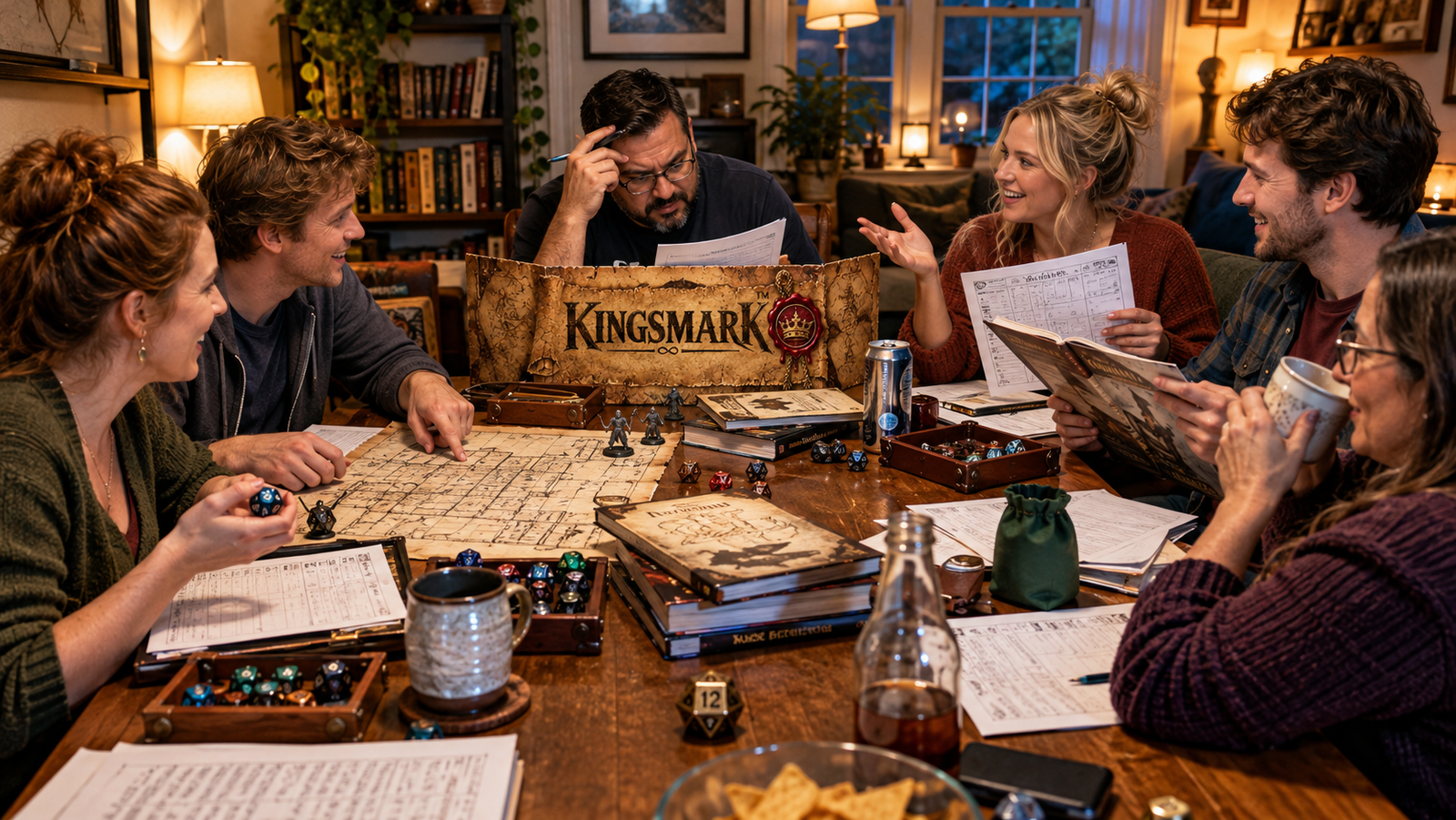
Six friends gather around a table to begin a new Dungeons & Dragons campaign. Everyone is excited. One player has already created an elaborate backstory for his Elven Wizard. Another has spent hours studying character classes, comparing abilities, and planning the perfect warrior. Someone has purchased new dice, another has been watching fantasy movies for inspiration, and everyone has ideas about the incredible adventures they want to experience. There is just one problem: nobody wants to be the Dungeon Master.
Suddenly, the enthusiasm becomes noticeably less enthusiastic. Someone suggests asking a friend who used to run games. Another recommends finding a Dungeon Master online. Perhaps they could pay someone to run the campaign. Perhaps an artificial intelligence could do it. Surely there must be somebody willing to create the world, prepare the adventures, learn the rules, portray the villains, organize the sessions, and take responsibility for keeping everyone entertained.
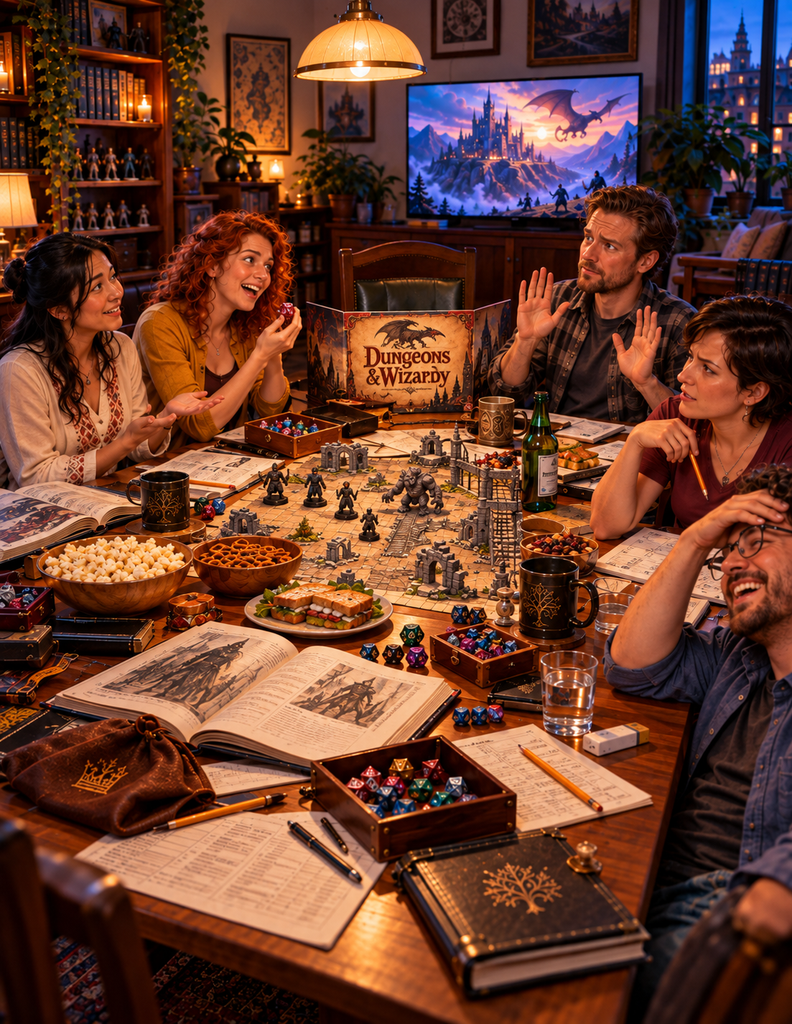
This situation has become familiar enough that tabletop role-playing communities regularly discuss the shortage of Dungeon Masters and Game Masters. Online groups are filled with players looking for campaigns, while experienced Game Masters sometimes describe feeling exhausted, unappreciated, or trapped in a responsibility nobody else wants to assume. The expression forever GM has become so common that many players immediately understand what it means.
Yet there is something peculiar about this situation. Game Mastering offers extraordinary opportunities for creativity, storytelling, improvisation, worldbuilding, and social interaction. A Game Master can create kingdoms, portray fascinating characters, unleash terrifying monsters, and watch an imaginary world develop through the decisions of real people. Those experiences can be just as rewarding as playing an individual character, and sometimes considerably more so.
So why do so many people hesitate to become Game Masters? Why do some experienced GMs eventually burn out? And what can players, publishers, and gaming groups do to make running a tabletop role-playing game enjoyable again?
The Hobby Has a Labor Problem, Not an Imagination Problem
The most obvious difference between being a player and being a Game Master is the amount of responsibility traditionally attached to each role. A player generally needs to understand his character, learn the relevant rules, participate in the adventure, and cooperate with the other players. A Game Master must understand the entire fictional situation. He portrays the inhabitants of the world, presents its dangers and opportunities, adjudicates uncertain outcomes, and responds when the adventuring party does something completely unexpected.
Those responsibilities are part of what makes Game Mastering enjoyable. The difficulty begins when the Game Master becomes responsible for practically everything else.
Consider the ordinary preparations for a four-hour session. A GM might need to read an adventure, construct encounters, study several unfamiliar monsters, prepare maps, develop NPC personalities, review what happened during the previous session, and decide how the world has changed because of the players’ actions. If the game is conducted online, additional work may involve configuring a virtual tabletop, preparing tokens, arranging character sheets, and making sure everyone can access the necessary resources.
Then there is scheduling. Someone must discover when everyone is available, remind the participants about the next session, handle cancellations, and determine whether the game can continue when a player cannot attend. In some groups, that person is automatically the Game Master, even though coordinating everyone’s calendar has little to do with actually running an adventure.
How much time does this additional work require? In April 2020, Mike Shea, the author behind Sly Flourish, conducted a Twitter poll asking Dungeon Masters how long they prepared for a roughly four-hour D&D session. Among 3,663 respondents, 10% reported preparing for thirty minutes or less, 33% spent approximately one hour, 28% spent approximately two hours, and 29% spent three hours or more.
These figures are not a comprehensive measurement of the hobby in 2026, but they illustrate an important point. For a substantial number of Dungeon Masters, four hours of gameplay represents a larger commitment than the four hours everyone spends together.
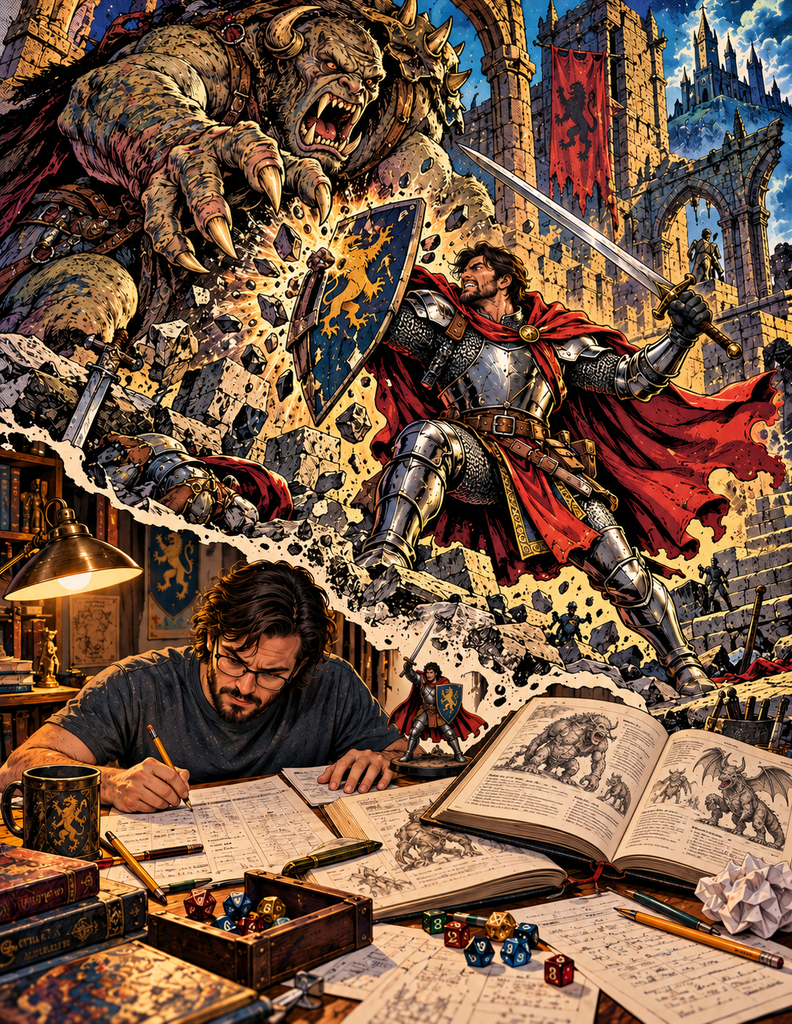
Preparation itself is not necessarily the problem. Many Game Masters genuinely enjoy designing castles, drawing maps, researching medieval history, constructing mysteries, and creating interesting adversaries. For those individuals, preparation is part of the hobby. Someone who spends Saturday afternoon designing an underground fortress may find that experience every bit as satisfying as running the resulting adventure.
The problem appears when preparation stops being a creative pleasure and becomes an obligation sustained primarily for other people’s benefit.
A Game Master who enjoys designing adventures may nevertheless resent being expected to chase down players who repeatedly fail to confirm their attendance. Someone who loves developing fictional characters may grow frustrated when nobody remembers important information from the previous session. An enthusiastic worldbuilder can eventually become discouraged when the players show little curiosity about the places and people he has spent weeks creating.
In a July 2025 discussion on r/rpg, a Game Master described the loneliness of investing enormous effort into learning systems, preparing adventures, and developing a fictional world while receiving comparatively little involvement from players outside the actual sessions. The discussion attracted responses from people who recognized similar experiences.
This is where a fundamental distinction becomes necessary. A Game Master should accept responsibility for running the game, but he should not automatically become the group’s secretary, event coordinator, technical support department, social mediator, and entertainment director.
Those responsibilities can be distributed among participants without undermining the Game Master’s authority over the fictional world. One player can manage scheduling. Another can maintain the campaign journal. Everyone can keep track of his own character’s abilities and equipment. The GM can then concentrate upon the aspects of the hobby that originally inspired him to take the role.
If gaming groups want more people to volunteer as Game Masters, making the position unnecessarily burdensome is a terrible recruitment strategy.
When the Game Master Becomes the Entire Entertainment Department
Modern tabletop role-playing games exist within an entertainment environment very different from the one that surrounded the hobby during its earliest decades. Fantasy role-playing is no longer experienced solely through rulebooks, miniature figures, graph paper, and friends gathered around a kitchen table. Millions of people have encountered the hobby through YouTube videos, podcasts, livestreamed campaigns, and professionally produced actual-play programs.
Productions such as Critical Role and Dimension 20 have demonstrated how compelling tabletop role-playing can be when talented performers create dramatic stories together. Their popularity has introduced new audiences to the hobby and helped demonstrate that role-playing games offer possibilities extending far beyond killing monsters and collecting treasure.
However, the production values and professional abilities associated with such entertainment can also create expectations that ordinary gaming groups may struggle to reproduce.
A professional performer may possess years of experience portraying characters, delivering dialogue, improvising under pressure, and entertaining an audience. A major actual-play production may also benefit from elaborate sets, specialized equipment, carefully planned presentations, technical staff, and sophisticated audiovisual production. An ordinary Game Master running a game for friends on Friday evening rarely possesses comparable resources.
The problem is not that professional performers have raised the standard of tabletop entertainment. The problem arises when people confuse professional entertainment with the minimum qualifications for running an enjoyable home campaign.
Mike Shea examined this issue in his February 2025 article, Are Actual Play Games Hurting Home-Game GMs?. He argued that the influence of professional actual-play productions may be less damaging than some commentators assume. Drawing upon extensive organized-play experience, he emphasized that ordinary players frequently enjoy games conducted without elaborate production resources or professional performances. His central recommendation was to establish realistic expectations with the people actually participating in the campaign.
That is a valuable distinction. There is nothing wrong with enjoying an expertly performed actual-play series, and there is nothing wrong with learning useful techniques from professional Game Masters. What matters is understanding that an enjoyable tabletop role-playing session does not need to resemble an entertainment production.
A competent GM does not necessarily need to perform twelve convincing accents. He does not need a different voice for every villager, three-dimensional scenery for every encounter, or a musical soundtrack accompanying every dramatic revelation. A mysterious stranger can be portrayed through carefully chosen words, distinctive behavior, and believable motivations without requiring professional acting ability.
There is another aspect of this problem that receives less attention: the expectation that the Game Master must provide all the creativity while the players merely consume it.
Imagine a party arriving in a strange medieval city. The Game Master describes its gates, market district, military patrols, and the political tensions troubling its inhabitants. He introduces several people who might offer employment, information, or assistance. Then he asks the players what they would like to do.
Silence.
Nobody has a particular objective. Nobody asks questions. Nobody investigates anything. Eventually, someone suggests finding a tavern because that is what adventurers are supposed to do. The GM must now invent another situation capable of motivating people who have brought almost no ambitions of their own into the fictional world.
Certainly, a Game Master has a responsibility to present interesting opportunities. Players should not be expected to manufacture an entire adventure from nothing. Nevertheless, compelling role-playing requires active participation from both sides of the screen.
A player portraying a Monster Hunter might arrive with an interest in investigating rumors about dangerous creatures. A Priestess might seek information concerning an abandoned sanctuary. A mercenary could be searching for employment, a missing relative, or someone who betrayed him. None of these objectives requires the player to dictate what happens next. They merely give the GM something meaningful to engage with.
Likewise, players can contribute to memorable scenes through their own decisions, dialogue, and relationships. A confrontation with an enemy becomes more interesting when characters possess conflicting ideas about whether to fight, negotiate, or retreat. An ordinary journey becomes more engaging when companions discuss their fears, ambitions, and experiences. A victory becomes more memorable when players decide how their characters celebrate, mourn, reconcile, or change.
The Game Master should not need to manufacture every dramatic moment personally. Some of the best moments in a role-playing campaign emerge when players surprise the GM with decisions that nobody anticipated.
Ultimately, tabletop role-playing is collaborative entertainment. The Game Master supplies the world and adjudicates its responses, but the players supply protagonists whose decisions give that world a story worth telling. When one participant is expected to create everything while everyone else waits to be entertained, the entire experience becomes unnecessarily demanding.
Rules, Preparation, and the Fear of Getting Everything Wrong
There is another reason many players hesitate to become Game Masters: they assume they are not sufficiently knowledgeable, talented, or experienced to do the job.
A prospective GM might worry about forgetting an important combat rule, misunderstanding a spell, selecting an inappropriate opponent, or accidentally creating an encounter the adventurers cannot survive. Others worry about improvising dialogue, portraying NPCs convincingly, or maintaining continuity when the players abandon the adventure’s expected direction.
These concerns are understandable. Game Mastering involves several skills that are not necessarily developed by playing individual characters. However, the expectation that these abilities must already be mastered before attempting to run a game creates an unnecessary barrier.
Nobody expects a beginner learning to play a musical instrument to perform an elaborate composition perfectly on the first attempt. A person learning to paint begins by practicing shapes, proportions, lighting, and color. Someone learning to write fiction develops an understanding of dialogue, characterization, pacing, and narrative structure over time.
Game Mastering deserves the same opportunity for gradual development.
In a February 2026 discussion asking hesitant players what prevented them from running games, participants identified concerns about creativity, knowledge, and confidence. One longtime D&D player explained that he had avoided Game Mastering because he did not consider himself particularly creative, but exploring other role-playing systems encouraged him to try running games himself.
Such experiences reveal how easily the perceived difficulty of Game Mastering can become greater than the actual difficulty of beginning.
The first adventure does not need to become an elaborate campaign. A new GM might begin with four adventurers hired to investigate disappearances near a ruined watchtower. There are several important locations, a handful of NPCs, a dangerous creature, and a mystery concerning what happened to the missing travelers. That is enough material to practice describing environments, handling conversations, resolving uncertain actions, and conducting combat.
The adventure can develop naturally as the GM gains confidence. Additional rules can be learned when the circumstances require them.
Game designers also possess considerable influence over how intimidating their systems become. Some games offer enormous collections of character abilities, spells, equipment, and combat options without providing equally accessible guidance for translating those options into actual play.
In an April 2026 discussion about D&D 5e burnout, several participants argued that player-facing character options receive extensive attention while practical Game Master support can feel comparatively insufficient. Other participants praised the encounter-building tools and procedural clarity of earlier editions, particularly D&D Fourth Edition.
These criticisms reflect individual experiences rather than a universal verdict on D&D, but they raise a useful design question: how much work must the Game Master perform before the rules actually become playable?
A complicated game is not necessarily a badly designed game. Detailed combat, elaborate magic, realistic injuries, and sophisticated character development can all contribute to an excellent role-playing experience. Complexity becomes troublesome when the rules require constant reconstruction, when common procedures remain difficult to reference, or when the GM is expected to invent solutions that the published material should have explained.
This is something I have considered carefully while developing Kingsmark, my heroic fantasy tabletop role-playing game.
Kingsmark uses ⭐Jack’s Cinematic d12 system, incorporating twelve 💪Attributes, five 🌈Attribute PRISMs, twenty-four ⚒Skills, a substantial menu of 🎬Actions, and detailed systems for combat, magic, 🩸Physical Trauma, 🧠Mental Trauma, and ❤️Healing Scenes. I deliberately created a game capable of resolving complex situations, but I also recognize that possessing hundreds of pages of rules does not mean someone should be expected to memorize hundreds of pages before playing.
The Player’s Handbook therefore recommends learning the system through practical exercises. A prospective Game Master can begin by running a simple fight between two characters. Determine ⏳Initiative, establish their Action Points, resolve attacks and defenses, apply damage, and observe how injuries influence what happens next. Repeat the exercise with different actions, and gradually introduce ranged combat, more complex maneuvers, and magical abilities.
This develops procedural fluency through experience rather than attempting to memorize an entire rulebook in advance.
Kingsmark also distinguishes between understanding the rules and knowing where to find them. A Game Master should understand how an ordinary Test works, how Target Numbers are established, and how to resolve common Actions. He does not need to memorize every spell, item, creature, or unusual circumstance. Reference tables, character records, and established examples exist precisely because people cannot reasonably retain every detail of a large system.
Another principle in the 👑Kingsmark Player’s Handbook concerns adjudication. When a character attempts something unusual, the GM should first determine whether an existing rule already addresses the situation. If one does, use it. If the exact circumstances require interpretation, apply the established mechanics alongside logic, realism, and reasonable judgment.
A missing rule is not automatically a reason to stop the adventure.
Suppose a character wants to overturn a heavy table to block a doorway while enemies are approaching. The GM should consider the weight of the table, the character’s abilities, the available time, and the relevant rules. There is no need to invent an elaborate new subsystem governing medieval furniture.
The objective is to give the Game Master enough structure to make consistent decisions without eliminating the freedom that makes tabletop role-playing worthwhile.
There is also a meaningful distinction between recreational and professional Game Mastering. Someone learning to run games for friends should be given room to experiment, consult the rules, and make occasional mistakes. Someone charging customers for a professional session should develop considerably greater fluency with the procedures likely to arise during the adventure being sold.
Both expectations are reasonable because the circumstances are different.
The solution to the fear of making mistakes is not to demand perfection. It is to make Game Mastering a skill that people can learn through manageable, increasingly challenging experiences.
How to Make Game Mastering Enjoyable Again
If gaming groups want more Game Masters, they should begin by changing the expectations surrounding the position. The objective is not to eliminate every responsibility associated with running a role-playing game. Many of those responsibilities are precisely what make the activity enjoyable. Instead, groups should identify which tasks genuinely require a Game Master and which can be handled by other participants.
Scheduling is an obvious example. There is little reason that the person preparing an adventure must also be the person organizing everyone’s calendar. A reliable player can establish the session schedule, collect confirmations, and communicate changes. Even transferring that relatively mundane responsibility can improve the experience of a GM who would rather spend his preparation time creating adventures.
Players should also maintain their own characters. A Game Master running a party of five adventurers already needs to manage the fictional environment, NPCs, adversaries, and uncertain outcomes. Requiring him to remember every player’s equipment, spell descriptions, special abilities, and personal objectives adds work that the players themselves are better positioned to handle.
This does not mean a beginner should be abandoned to decipher an unfamiliar rulebook alone. Experienced participants can help one another learn. But after several sessions, a player should ordinarily understand the abilities his character uses repeatedly and know where to find information about the others.
Campaign records offer another opportunity for cooperation. One participant might maintain a brief journal recording important discoveries, names, locations, promises, and unresolved mysteries. Another could maintain the party’s shared inventory or keep track of important contracts and rewards. Such records benefit everyone while reducing the amount of information the GM must reconstruct between sessions.
Equally important is establishing what kind of campaign everyone actually wants to play.
Some players prefer heroic combat and dangerous exploration. Others enjoy elaborate political intrigue, character relationships, mysteries, or supernatural horror. These preferences can coexist, but serious differences should be discussed before the Game Master spends weeks preparing material that the players may have little interest in experiencing.
A simple conversation before the campaign begins can establish its expected tone, subject matter, session length, attendance expectations, and approximate duration. It can also clarify what the GM enjoys running. Someone passionate about tactical combat should not feel obligated to provide an elaborate romantic drama merely because another participant enjoys watching that kind of role-playing.
One especially useful change is to stop assuming every campaign must continue indefinitely.
A short campaign lasting six or eight sessions can provide a complete and satisfying adventure. The characters accept a dangerous mission, investigate its mysteries, confront its opposition, and eventually succeed, fail, or discover that their original objective was misguided. The campaign reaches a natural conclusion, and everyone can decide what to do next.
For a beginner, a limited commitment is considerably less intimidating than agreeing to manage a sprawling fictional world for the next three years. Experienced GMs may also appreciate opportunities to experiment with unfamiliar systems, settings, and styles without abandoning an existing long-term campaign.
A shorter campaign creates a natural opportunity for someone else to try Game Mastering. One player might volunteer to run a haunted manor adventure lasting two sessions. Another might experiment with a wilderness survival mission. The original GM could participate as a player or simply take a break.
Importantly, the next person does not have to imitate the previous Game Master’s style. A person who enjoys tactical combat may run a different kind of adventure from someone who specializes in mystery and social interaction. That variety can make the gaming group more interesting rather than less.
Preparation should also become more deliberate. One of the most influential approaches to this problem comes from Mike Shea’s book Return of the Lazy Dungeon Master, which encourages Game Masters to concentrate upon preparation that meaningfully improves their sessions.
This philosophy does not mean abandoning preparation or improvising everything without understanding the adventure. It means identifying the elements that provide the greatest practical value.
Imagine a GM preparing a mission involving a merchant caravan traveling through dangerous territory. He could spend ten hours developing the genealogy of the regional nobility, drawing detailed maps of settlements the adventurers may never visit, and writing elaborate biographies for dozens of unrelated characters.
Alternatively, he could focus on the information most likely to matter: the merchant’s objective, the route, the surrounding terrain, the motivations of potential attackers, several important NPCs, and the consequences of different decisions. He can then develop additional details when the adventure moves in that direction.
The second approach leaves considerably more room for the unexpected.
One of the most frustrating experiences in Game Mastering occurs when hours of preparation become irrelevant because the players make an entirely reasonable decision the GM did not anticipate. Rather than entering the bandits’ hideout, they negotiate with the bandits’ enemies. Instead of accepting a contract, they investigate the person offering it. Rather than fighting a monster, they discover how to lure it away from the village.
These decisions are not necessarily disruptions. They are expressions of player agency, and the freedom to make them is one of the defining characteristics of tabletop role-playing games.
A GM who prepares situations, motivations, and consequences instead of rigid sequences of required events is better equipped to respond creatively. He knows what the bandits want, where their enemies operate, and how the local authorities are likely to react. He does not need to anticipate every possible plan because the world possesses enough internal consistency to respond logically.
Another practical solution is to establish an understanding that the Game Master is also a participant whose enjoyment matters. If a campaign has become exhausting, the GM should be able to explain which aspects are no longer satisfying. The group might shorten its sessions, change its schedule, conclude the current adventure, reduce preparation demands, or choose a different system.
In some circumstances, hiring a professional Game Master is also a reasonable solution. A group that wants consistent, prepared entertainment but lacks someone willing to run it can compensate an experienced person for providing that service. Professional Game Mastering creates opportunities for skilled GMs to turn a demanding creative ability into paid work. It does not replace recreational Game Mastering, but it offers another way for people to experience the hobby.
Most importantly, players should express appreciation through their behavior rather than relying exclusively upon compliments. Arrive prepared. Pay attention. Remember important events. Engage with other characters. Respect the agreed schedule. Participate in difficult decisions. Give useful feedback, and occasionally volunteer to take responsibility for something the Game Master would otherwise have to handle.
Those actions demonstrate that everyone values the shared experience enough to contribute to its success.
The Game Master Deserves to Have Fun, Too
Discussions about Game Master burnout sometimes overlook an essential fact: plenty of people genuinely prefer being Game Masters.
In a December 2025 r/rpg discussion asking why GMs continue running games, participants described the pleasure of worldbuilding, designing adventures, portraying different characters, experimenting with game systems, and sharing their creations with friends. Some explained that running games allowed them to experience genres and settings that other Game Masters in their communities rarely offered.
A separate August 2025 discussion challenged the negative assumptions surrounding the expression forever GM. Several participants argued that Game Mastering should not automatically be portrayed as an unfortunate responsibility from which everyone eventually hopes to escape.
I think that perspective deserves considerable attention.
A Game Master experiences the fictional world from a fundamentally different perspective than an individual player. The player sees the world primarily through one character’s experiences, relationships, and ambitions. The GM observes the larger situation. He portrays the village elder concealing a terrible secret, the mercenary captain preparing an ambush, the frightened child who knows something the adults have overlooked, and the monster whose behavior initially seems incomprehensible.
The Game Master also possesses the pleasure of discovery, although it takes a different form. He may know what lies beneath the abandoned monastery, but he does not know how the players will respond when they find it. He may understand the villain’s intentions, but he cannot predict every decision the adventurers will make. He may have prepared a confrontation involving swords and sorcery, only to discover that the players have developed a plausible plan to resolve the situation through negotiation, deception, or an ingenious use of the environment.
Those moments can be extraordinarily satisfying.
Running games also develops useful abilities beyond the hobby itself. A GM practices public speaking, improvisation, organization, creative writing, listening, problem-solving, and responding to unexpected situations. Portraying characters with conflicting motivations encourages the ability to examine circumstances from different perspectives. Managing an adventure requires attention to cause and effect, while adjudicating uncertain outcomes encourages consistent and reasoned judgment.
These are valuable skills, but their development should emerge from an enjoyable activity rather than turn the gaming table into another obligation.
The real objective is not to convince every player to become a permanent Game Master. Different people enjoy different roles, and a group with an enthusiastic lifelong GM has no reason to replace him merely for the sake of rotation.
The objective is to make Game Mastering approachable, respected, and genuinely enjoyable, so that people who might love the experience are willing to discover it for themselves.
Somewhere, another group of friends is preparing to begin a fantasy campaign. They have their dice, their character ideas, and their ambitions. Eventually, someone asks the familiar question: who is going to be the Dungeon Master?
Perhaps this time the answer will be different. Someone who has never run a game volunteers to try a short adventure. Another offers to help organize the sessions. The experienced players agree to assist with unfamiliar rules. Nobody expects a flawless performance, and everyone understands that they have a responsibility to contribute to the experience.
That is how more Game Masters are made: not by demanding that someone sacrifice his free time for everyone else’s entertainment, but by helping people discover the extraordinary pleasure of bringing an imaginary world to life.
That is how more Game Masters are made: not by demanding that someone sacrifice his free time for everyone else’s entertainment, but by helping people discover the extraordinary pleasure of bringing an imaginary world to life.
The best Game Masters do not simply entertain players. They create opportunities for players to participate in something remarkable. And the best gaming groups make certain the person behind the screen gets to enjoy that remarkable experience, too.
About The Author