Player characters are composed of 💪12 Attributes, 🌈5 Attribute PRISMs, and ⚒24 Skills. Players first determine their character’s 💪Attribute Ratings during Character Creation. Those Attributes are then combined in specific groups to produce 🌈Attribute PRISM Sums, which are compared against the PRISM Modifier Table to determine each 🌈Attribute PRISM modifier. The twelve 💪Attributes provide a detailed picture of a character’s physical, mental, social, and spiritual capabilities, both during dangerous adventures and in ordinary interaction.
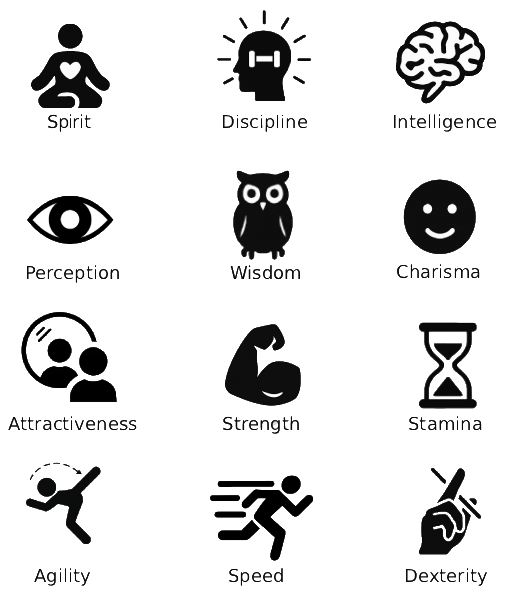
TWELVE ATTRIBUTES
A brief explanation of each Attribute is as follows:
🌬Spirit – metaphysical condition of the soul and connection to the spiritual aspect of the world
Discipline – mental fortitude, resistance to manipulation and mental attacks, ability to withstand the effects of injury, and resistance against mental trauma
Intelligence – mental aptitude and problem-solving ability
Perception – attention to detail, awareness of surroundings, and the ability to gather information through the senses
Wisdom – common sense, practical judgment, experience, and the ability to discern the truth
Charisma – charm, confidence, eloquence, and personal magnetism
Attractiveness – physical attractiveness, poise, and allure
Strength – raw physical power and feats of strength
Stamina – ability to sustain physical activity and resist exhaustion
Agility – balance, reflexes, acrobatic movement, jumping, leaping, and dodging
Speed – movement speed and rapid physical acceleration
Dexterity – fine motor skills and delicate, precise movement of the hands and fingers
💪Attribute Ratings
Attribute Ratings range from -3 to +8, with 0 representing the human average. Ratings of +1 and +2 indicate notable natural ability or development, while +3 and +4 represent extraordinary capability. Among Common Humans, a rating of +4 represents the ordinary natural ceiling of human achievement: the strongest soldiers, most disciplined monks, or most brilliant thinkers of their kind. Some Human Types possess biological advantages that allow particular Attributes to exceed +4, as shown on the Human Attribute Maximums table. Ratings above +4 are extraordinary even among those peoples and remain limited by Human Type. Ratings above +4 represent capabilities beyond the ordinary human maximum and are generally associated with extraordinary beings, supernatural influence, or other exceptional circumstances defined by the rules. A negative rating indicates weakness in that Attribute. No Attribute Rating normally falls below -3. Characters begin play with Attribute Ratings determined during Character Creation and modified by factors such as Human Type and Gender. Over time, characters may raise these values by investing ⭐Experience Points. When an uncertain action depends primarily upon a single natural ability rather than specialized training or a broader combination of abilities, the Game Master may call for a 💪Attribute Test rather than a ⚒Skill Test or 🌈Attribute PRISM Test.
💪ATTRIBUTE TEST
Roll: 1d12 + Attribute Rating
Goal: Meet or exceed a Realism Target Number determined by the Game Master.
Note: Attribute Tests do not add an Attribute PRISM or Skill Rating. Circumstances may still provide Advantage or Disadvantage by modifying the Target Number normally.
💪Attribute Defense Test
Not every challenge is an attempt to accomplish something. Sometimes the character is not trying to act upon the world—they are trying to resist the world acting upon them. In such situations, the Game Master may call for an 💪Attribute Defense Test.
An 💪Attribute Defense Test represents a character’s ability to withstand, endure, resist, avoid, or overcome an unwanted effect. This may include resisting fear, enduring pain, avoiding disease, shrugging off fatigue, maintaining concentration, resisting supernatural influence, enduring harsh environmental conditions, avoiding being knocked prone, resisting torture, surviving poison, or maintaining self-control under extreme pressure. Unlike an Attribute Test, which represents active effort, an 💪Attribute Defense Test represents a defensive response. The character is reacting to a threat rather than initiating an action.
💪ATTRIBUTE DEFENSE TEST
Roll 1d12 + Attribute Rating + Trained Attribute Bonus.
The goal is to meet or exceed the Defense Target Number assigned by the Game Master.
The Defense Target Number is typically determined by the severity of the threat. Minor effects may require a Target Number of 7, while powerful supernatural effects, deadly toxins, or overwhelming circumstances may require Target Numbers of 10, 12, or higher.
A character only adds a Trained Attribute Bonus (TAB) when that character has training in the Attribute being tested. For example, the Man-at-Arms Class has a TAB in Strength, Stamina, Discipline, and Perception. If a Man-at-Arms character has Strength +1 and must make a Strength Defense Test, he rolls 1d12 +1 for Strength and +1 for his TAB.
Different threats call upon different Attributes. The most appropriate Attribute is always determined by the Game Master based upon the nature of the danger. A Spirit Defense Test may be used to resist possession, curses, spiritual corruption, or soul-draining effects. A Discipline Defense Test may be used to resist intimidation, mental manipulation, pain, or loss of concentration. An Intelligence Defense Test may be used to resist confusion, deceptive information, or faulty reasoning. A Perception Defense Test may be used to notice hidden dangers, detect ambushes, or identify subtle environmental threats.
A Wisdom Defense Test may be used to discern truth from deception, recognize manipulation, judge consequences, or avoid reckless decisions under pressure. A Charisma Defense Test may be used to maintain confidence, resist humiliation, or preserve composure before a crowd. An Attractiveness Defense Test is rarely used, but may apply when physical appearance directly influences a social or supernatural effect. A Strength Defense Test may be used to resist being pushed, dragged, restrained, or physically overpowered. A Stamina Defense Test may be used to resist poison, disease, exhaustion, extreme temperatures, or bodily collapse. An Agility Defense Test may be used to avoid falling, keep balance, or react to sudden hazards. A Speed Defense Test may be used to escape collapsing structures, outrun environmental dangers, or avoid being overtaken by a threat. A Dexterity Defense Test may be used to avoid dropping an item, keep steady hands, or maintain precise control while under pressure.
💪Attribute Defense Tests are intended to be simple, fast, and intuitive. Whenever a character must resist an unwanted effect and no Skill is directly applicable, the Game Master should select the most appropriate Attribute and call for an 💪Attribute Defense Test.
🌬️Spirit SPI
🌬️Spirit (Ruach) represents the spiritual aspect of a person’s Nephesh (Soul)—the total living soul composed of both the physical vessel and the unseen essence that gives it life. Every human is a Nephesh, a complete being of body and spirit. The body acts in the physical world, while the spirit exists simultaneously upon the unseen, astral plane. Spirit measures the spiritual potency, resilience, and supernatural vitality of that inner self. It governs how a character endures despair, corruption, and supernatural influence, and how they channel sacred power or withstand direct assaults upon the Ruach. Spirit is the thread that connects mortal existence to higher realities.
🌬Spirit plays an important role in a character’s relationship with magic and the supernatural. Character Classes, supernatural traditions, spiritual practices, and other abilities may require particular 🌬Spirit Ratings, while individual supernatural effects may use 🌬Spirit to determine their strength, scope, or resistance. A stronger Spirit allows a character to interact with increasingly powerful spiritual forces, but 🌬Spirit alone does not grant access to magic or determine which Spells a character may cast.
A person’s spirit manifests on the astral plane as a childlike creature that perfectly embodies their essence. The condition of this innocent form mirrors the state of the soul—it may appear radiant and whole, frail and wounded, or twisted and predatory depending upon the spiritual condition and experiences of the person. The manifestation of the 🌬Spirit (Ruach) as a visible entity—either in the astral or physical planes—is referred to as the 🦖Animus.
🎬Example — 🌬Spirit (💪Attribute Defense Test)
As the sealed door of an ancient tomb creaks open, a wave of necromantic force pours through the chamber. The dead buried beneath the floor stir in their graves, and every living person nearby feels something cold reaching toward the soul. The Game Master calls for a 🌬Spirit 💪Attribute Defense Test to resist the supernatural force. Oscar, an experienced tomb scavenger, stands directly before the doorway. He has 🌬Spirit 0 and does not possess a Trained Attribute Bonus in Spirit. The Game Master determines that the ancient curse is exceptionally powerful and assigns it a Defense Target Number of 12. Oscar’s player rolls 1d12 + 🌬Spirit 0. The die shows 11, producing a final result of 11. He narrowly fails.* The cold force passes through Oscar like winter wind through an open door. His legs buckle, his eyes glaze over, and he drops to his knees as unseen voices whisper from beneath the stones. For several terrible moments, the restless dead hold his Nephesh motionless before the curse finally loosens its grip.
An Evil Soul
An evil entity may possess an underlying spiritual condition equivalent to 🌬Spirit -3 through -1, reflecting an inner essence that has been corrupted, hollowed, or spiritually degraded. This underlying condition is part of the fiction and is not a second Attribute Rating that must be calculated or recorded. When an evil being possesses a mechanical 🌬Spirit Rating of 0 or higher, some or all of that supernatural strength may instead come from the 🪱Gloom (Arafel) or another dark supernatural power. If a vampire lord has 🌬Spirit +4, for example, the creature simply has 🌬Spirit +4 during play. The Game Master does not divide that rating into points belonging to the vampire and points supplied by the Gloom. The +4 Rating represents the creature exactly as it presently exists and functions. Its corrupted inner condition explains the nature and source of that power without creating another game statistic.
You Are the Nephesh “Monster”
Every person is a Nephesh (Soul) and you are both a material and spiritual entity. This is not just a theological footnote—it’s part of the operating system of every player character. In Hebrew, nephesh (נֶפֶשׁ) is the life-self: the living person, the breath in the throat, the appetite, the “me.” The Tanakh consistently uses it this way: humans are a living Nephesh and animals are called nephesh chayah (“living beings”). Rabbis often stress that Nephesh means a living creature, not simply a ghost trapped in a body. Your Spirit isn’t a separate passenger—it’s the animating force (spirit), and the vehicle (body), and without either you would not be a Nephesh (Soul). You do not have a Soul (Nephesh), you are a Soul—which is a body animated by a spirit.
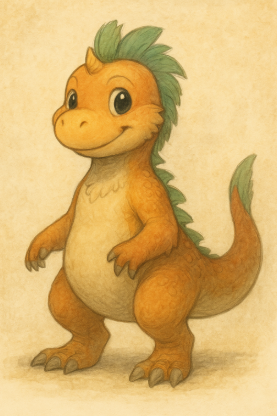
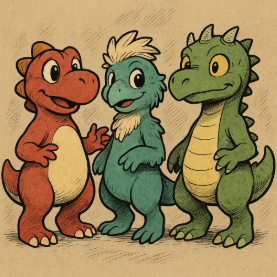
On the astral plane, the spiritual aspect of the Nephesh (Soul) appears as a creature with childlike proportions and disarming charm. The astral or spirit portion of a Nephesh (Soul) is referred to as “🌬Ruach (Spirit)” or “animating spirit”—but make no mistake, it is you—it is not something that you have, it is something that you are. When the 🌬Spirit is visible it is called the 🦖Animus. The 🦖Animus of every intelligent humanoid entity roughly has the same proportions or overall shape, but—much like the uniqueness of human bodies—each 🦖Animus is unique in its particulars. A person’s 🌬Ruach (Spirit) / 🦖Animus stands upright, usually between 3.5 – 4.5 feet tall, on two sturdy legs, often balanced by a thick, rounded tail that gives it a playful but steady posture. Its torso is plump at the waist, with a tapered upper torso, and small, almost comical arms that rarely look threatening—more suited for gestures of curiosity or affection. The head is disproportionately large and childlike, with a wide snout or beak-like mouth and oversized eyes that dominate its expression, making it appear innocent or menacing depending on the Nephesh’s (Soul’s) condition.
The overall silhouette of the 🦖Animus resembles that of a cartoonish raptor or small theropod dinosaur, but softened—less a predator and more a strange, endearing companion shaped like a child’s dream of a monster. A person’s astral or spirit “monster” waddles, bounds, and glides with an eager energy, an inner-child given form. This is the healthy state: a joyful, curious Spirit that mirrors a conscience at peace. The Spirit in the astral plane is almost always a blend of the characteristics we see in red-blooded creatures—mammals, reptiles, birds, and fish. Some may be more reptilian in appearance, while others more mammalian or fishlike, some may have little wings, while others aquatic fins. Some 🌬Ruachs (Spirits) / 🦖Animus have round cheeks, big eyes, a soft snout, and a playful, saddle-like ridge along the spine, while others might have downy tufts along the arms, a smooth-scaled tail, nubs of horns that are rounded rather than threatening, and perhaps a crest of feathers that bristle when startled.
But the spiritual aspect of the Nephesh (Soul) changes as a person changes. Spiritual and mental wounds leave marks; doing evil—or even seeing too much evil—etches scars. The more one indulges cruelty, deceit, or destruction, the more the 🦖Animus hardens. Soft teeth sharpen; round horns become points; the eyes gain a predatory glow; skin plates over with scales; the playful grin becomes a sneer. What began as a cuddly, childlike companion becomes a jaded street survivor or battlefield orphan—still the same being, but forced to grow teeth to keep from being eaten. This evolution is the moral biography of the person written in anatomy. The paradox is that a person usually cannot see the spiritual aspect of their Nephesh (Soul) because they are their 🦖Animus / 🌬Ruach (Spirit).
Asking someone to interact with it is like telling them to bite their own teeth or shake hands with their reflection. Yet brief crossovers occur. In moments of strong feeling—awe, terror, compassion, or rage—an onlooker might glimpse a ghostly after-image: an angelic shape leaning protectively behind the righteous, or a dark specter looming over the violent. Such impressions fade in a heartbeat, like heat-haze over stone. Rarely, a person may catch their own 🌬Ruach (Spirit) / 🦖Animus from the corner of their eye as a real-looking animal—a fox, hound, raven, or something else natural. That “totem animal” is an echo, a gentle illusion that inspired old shamanic language of animal guardians. It is not a separate spirit; it is the person’s own 🦖Animus / 🌬Ruach (Spirit), briefly translating itself for the waking world.
On the astral plane, a practitioner with an ability allowing Astral perception, Astral travel, or another fitting supernatural interaction may experience their own 🦖Animus from an unusual view. Such abilities come from a Character Class, Spell, supernatural gift, Bestiary ability, or another rule that grants them; being a priest, wizard, rabbi, prophet, magician, or person with a high 🌬Spirit Rating does not grant this ability by itself. When such an ability allows it, the practitioner may seem to step back just enough to witness their 🦖Animus without dividing from it. The practitioner might experience themselves as “riding” it across dream-sand or banking through star-wind, or directing it like a limb—not commanding another creature, but experiencing their own Nephesh acting from an Astral view. It remains one being making one choice; the supernatural ability merely lets the character experience that choice in this unusual way.
This has direct consequences for how magic appears. Many spells are Nephesh-actions wearing physical disguises. When a sorcerer “hurls” a fireball, the waking world may show flames pouring from their hands; on the astral, the 🌬Ruach (Spirit) / 🦖Animus leans forward and belches a bright comet from its mouth with childish delight. When a thaumaturge levitates, witnesses see a body rise; the astral shows the 🦖Animus lifting the physical-Nephesh like a parent hoisting a child to see over a crowd. When a healer mends a wound, you might glimpse hands closing skin; the astral shows the 🦖Animus licking the injury like a devoted house pet, warmth and love knitting the flesh from within.
Not all workings are 🦖Animus-driven—sometimes God, angels, lesser spirits, or demons intervene—but the spirit portion of a Nephesh (Soul) is the first ambassador at every gate between worlds. Because the 🌬Ruach (Spirit) / 🦖Animus is the person, its corruption or healing is not cosmetic.
In the Tanakh, “the life of the flesh is in the blood,” and moral action is often framed as a path to life or death. Choices carve channels in a person. Cruelty teaches the Nephesh (Soul) to bare its teeth. Habitual falsehood narrows its eyes and thins its voice to a hiss.
Conversely, mercy, truth-telling, and justice re-soften features that hardship hardened. Traumatized but righteous souls may show a curious blend: armored plates over tender places, not to menace but to shield. You can meet a scarred, weary 🦖Animus that is still gentle—a veteran’s compassion wrapped in mail. Evil is not the same as woundedness; the game world recognizes both, and the 🦖Animus shows the difference. This visibility gives a dramatic language for the 🌬Spirit Attribute. A high 🌬Spirit Rating represents spiritual potency, resilience, and supernatural force, but does not necessarily indicate righteousness. In an uncorrupted person, that strength may appear through a bright, responsive, vigorous 🦖Animus; in a corrupted being empowered by the 🪱Gloom (Arafel) or another dark force, the same Rating may appear as something powerful but twisted, predatory, or unnatural. Likewise, a low 🌬Spirit Rating represents spiritual weakness or vulnerability rather than automatic wickedness. In play, this affects how magic feels, how supernatural forces react, how easily a character can be lured by corrupt entities, and how much “astral noise” they broadcast to seers.
Not every change is permanent. ↩Repentance (Teshuvah), restitution, fasting, prayer, songs that lift the heart, shared meals, acts of kindness, keeping sacred rhythms—these are balms. Within the fiction, time spent repairing wrongs and tending the poor makes the Nephesh’s eyes brighter. A hard horn may round again; a jagged tooth may blunt. The creature never quite returns to untouched innocence—that would erase the story—but it can grow into noble adulthood: strong without cruelty, alert without paranoia, fierce without malice. The rulebook can guide GMs in narrating those changes so players feel the moral weight of choices without losing agency or hope.
🌬Ruach (Spirit) may also be perceptible to beings capable of supernatural or spiritual perception. A prophet, seer, spirit, or other entity with the right ability may perceive something about another being’s Spirit, though what can be discerned depends upon the ability used. A powerful Spirit may therefore matter beyond ordinary physical interaction, but Spirit does not automatically create an aura, reveal a character’s emotions or intentions, or make a character easier to detect or track. Real-world clergy understand this. A rabbi counseling a penitent might speak not of abstract guilt but of a tired creature in need of rest: “Your Nephesh hasn’t slept in days; let it breathe.” Biblical language supports the reality—the Nephesh (Soul) hungers, thirsts, longs, rests, rejoices. It’s the person doing those things. Kingsmark leans into that concreteness. When a character’s Spirit is wounded by atrocity witnessed, note the change and let the table describe how their 🌬Ruach (Spirit) / 🦖Animus looks when next glimpsed: feathers dulled, tail dragging, a protective croon replacing the usual chirp. When the same character spends a week feeding strangers, learning justice, and making peace, give them a scene where the Spirit laughs again—an audible trilling that rattles the lanterns in a holy place.
For clarity, remember two principles. First, the 🌬Ruach (Spirit) / 🦖Animus is not a separate NPC to bargain with; it is the character expressed in astral form. Second, it is normally visible only briefly and under unusual circumstances unless a scene shifts to an astral view. This preserves its mystery and prevents the 🦖Animus from being treated like a familiar. Its appearance provides a visual language for the Spirit Attribute: round horns and bright eyes suggest innocence, protective plates suggest endurance, while sharpened teeth and a predatory gleam suggest corruption. This also explains why supernatural powers appear differently through different characters. A bright 🌬Ruach / 🦖Animus harmonizes naturally with healing, blessing, revelation, and protection. It can still inspire terror—like a lioness defending her cubs—but its violence is purposeful rather than cruel. A twisted Spirit readily channels hexes, compulsions, and defilement. It may even heal, but its touch feels cold, transactional, and spiritually indebted. Game Masters can use these differences to describe identical spell effects in different ways, giving the Spirit Attribute a constant presence without adding new mechanics.
Role-Playing 🌬Spirit / 🦖Animus
The 🦖Animus is the visible form of a character’s 🌬Ruach (Spirit) when that spiritual self appears through Astral perception or another supernatural effect. It is not a separate creature, familiar, companion, guardian, or NPC. When the Ruach acts, the person acts. When it suffers, the person suffers. 🌬Spirit (Rauch) measures spiritual potency, resilience, sensitivity, and the Ruach’s condition. A high Spirit Rating does not grant Spellcasting, Astral Travel, Astral Combat, possession, manifestation, Animus control, or other powers. Those require the Class, Spell, gift, Bestiary ability, or rule that grants them. An Animus may reveal clues, but it is not an infallible morality detector. Trauma, corruption, resilience, supernatural influence, personality, and experience may alter its appearance.
🌬Spirit −3 to −1 — Spiritually Ruined
Negative Spirit represents severe spiritual damage, corruption, decay, or lost vitality. A living person in this range may have suffered supernatural attack, prolonged corruption, deliberate degradation, or grave mental or spiritual injury. Some beings sustained by unnatural forces may also possess negative Spirit. A negative Rating does not establish allegiance or morality. A victim can be spiritually devastated without serving evil.
🌬Spirit 0 — Ordinary Spirit
Most ordinary Humans possess Spirit 0. They have a genuine Ruach and can resist supernatural forces, but usually experience spiritual reality indirectly through religion, conscience, intuition, dreams, emotion, unexplained events, or rare supernatural encounters. Spirit 0 describes ordinary spiritual potency, not moral worth.
🌬Spirit +1 — Unusual Sensitivity
Spirit +1 represents sensitivity or resilience beyond the ordinary Human range. Such a person may experience vivid dreams, strong intuitions, fleeting supernatural awareness, strange recognition, or other signs that the boundary between physical and spiritual perception is thin.
🌬Spirit +2 — Strong Spirit
Spirit +2 represents substantial spiritual potency and is common among Classes trained to interact with supernatural reality. A practitioner may channel that strength through Class abilities and Spells. Another person with the same Rating may possess great resilience or sensitivity while knowing no conventional magic.
🌬Spirit +3 — Powerful Spirit
Spirit +3 represents exceptional mortal spiritual potency. With proper training, a character may interact powerfully with Astral reality, hostile spirits, magic, and the 🦖Animus.
🌬Spirit +4 — Extraordinary Spirit
Spirit +4 represents extraordinary mortal spiritual potency. Prophets and other powerful mortal practitioners may possess this Rating. When the rules permit, such a person may interact with Astral reality, supernatural beings, magic, or the 🦖Animus with exceptional intensity.
🌬Spirit +5 and Beyond
Spirit Ratings above +4 usually belong to beings beyond normal mortal Human limits: angels, demons, ancient spirits, supernatural entities, divine manifestations, and other exceptional beings. Their abilities come from their own rules and Bestiary entries.
Discipline DIS
Discipline is the measure of a person’s inner strength—their ability to endure, focus, and remain composed when others would break. It governs how well a character resists mental intrusion, maintains concentration in chaos, and continues functioning despite exhaustion, injury, fear, or overwhelming pressure. When wounds, pain, or Mental Trauma threaten a character’s ability to remain composed, Discipline may determine whether the character holds together or falters.
A disciplined character can fight through pain, focus through panic, and suppress the urge to flee when death seems certain. Discipline is used whenever a character must resist ordinary temptation, compulsive urges, psychic assault, intimidation, mental manipulation, or emotional collapse. It steadies the mind under pressure and anchors the will against both physical agony and supernatural dread. 🍎Temptations offered by the Gloom are different: accepting or refusing them is a player decision rather than a Discipline Test. When a priest resists a supernatural compulsion, when a warrior struggles through blood loss, or when a Wizard attempts to maintain concentration while enemies close around him, they rely upon their Discipline.
🎬Example — Using Discipline
In a burning temple, Sister Miriam kneels amid falling embers, whispering a prayer as black smoke swirls around her. A dark spirit claws into her mind, whispering lies meant to break her will. The Game Master calls for a 💪Discipline Attribute Defense Test to resist the spirit’s psychic assault. Miriam is a Priest with Discipline +2 and possesses a Trained Attribute Bonus in Discipline, giving her an additional +1. The Game Master determines that the dark spirit’s assault has a Defense Target Number of 10. Miriam rolls 1d12 + Discipline +2 +1 TAB. She rolls a 7, producing a final result of 10—a success. Though her lungs burn and her body shakes, Miriam steadies her breathing and remembers her vows. The whispers lose their grip, retreating back into the shadows. She rises through the smoke with calm defiance, her faith unbroken.
Intelligence INT
Intelligence is used to solve puzzles, gather information, or analyze complex data. Deciphering the logic of an unfamiliar riddle, analyzing a map of a labyrinthine dungeon to determine the best route, recognizing patterns among apparently unrelated clues, and developing a strategy to overcome a powerful enemy using limited resources may all require Intelligence when specialized training or knowledge is not the deciding factor. Intelligence does not replace a ⚒Skill when the task depends primarily upon learned knowledge or specialized training.
🎬Example — Using Intelligence
In the flickering lamplight of a collapsed observatory, the adventuring party discovers a series of massive, rotating brass rings—each etched with unfamiliar constellations. A mechanism hums faintly within the gears, and a sealed hatch lies beneath the structure. The rings appear misaligned, but there are no markings or clues to guide them. The Game Master calls for an Intelligence Test to see if anyone can discern the correct alignment purely through reasoning and pattern recognition. There’s no formula, no reference—just logic, memory, and intuition. The Target Number is 10 (Very Unlikely), reflecting the complexity of the mechanism. Seren Vale, the group’s navigator, steps forward. She rolls a d12 and adds her +3 Intelligence Rating. She rolls a 10, for a total of 13—a success. The Game Master narrates: Seren studies the rotating rings, counting their movements and noting how certain constellations briefly form recognizable shapes when the rings overlap. After a tense silence, she halts the central wheel at just the right moment. The brass rings lock into perfect alignment, and a hidden gear engages with a deep metallic click. The hatch below grinds open, releasing a gust of stale air from the depths.
Perception PER
Perception is used to detect and notice details within the surrounding environment—things most people overlook until it is too late. It governs awareness, attentiveness, and the ability to gather information through the senses. A character with sharp Perception can sense danger before it strikes, notice small inconsistencies, and recognize faint traces that reveal hidden truths. It allows adventurers to notice smoke drifting from an apparently abandoned ruin, catch movement behind a tapestry, hear breathing beyond a door, or realize that a smile does not reach someone’s eyes. Perception does not represent specialized training; it reflects awareness, attention, and instinct. In play, it can reveal traps, secret doors, concealed foes, unusual sounds, faint tracks, or subtle clues.
🎬Example — Using Perception
While investigating a series of ritual murders in a fog-covered coastal town, Watchman Aiden Sparrow examines a crumbling shrine where the latest victim was discovered. Priests have already carried away the body, but dried blood stains the floor and melted candles lie scattered around the chamber. Aiden circles the room while the other members of the adventuring party search the altar and adjoining chambers. The Game Master calls for a Perception Test with a Target Number of 8 (Questionable) to notice a nearly imperceptible sigil scratched into the stone floor. It can be seen only from a certain angle when candlelight passes across the shallow grooves. Aiden has Perception +1 and rolls 1d12. He rolls 7, and his +1 Perception gives him a total of 8—a success. The Game Master describes how Aiden crouches beside the bloodstained stones and notices a faint line catch the light. He shifts a candle closer. More lines appear. Beneath the dust lies a carved rune surrounding the place where the victim fell. Aiden does not yet know what it means, but he knows the murder occurred inside something carefully prepared rather than at a place chosen by chance.
Wisdom WIS
Wisdom is used to solve practical problems, exercise sound judgment, and recognize the likely consequences of a decision. It represents common sense, experience, discernment, and the ability to see the heart of a situation without specialized knowledge. Wise characters think before acting, recognize when a clever plan is likely to end badly, weigh competing risks, and choose practical courses of action under uncertainty. Examples include deciding which dangerous route presents less risk, recognizing that pursuing a fleeing enemy would leave a village undefended, rationing limited supplies during a crisis, or judging when retreat is wiser than continuing a fight. Wisdom does not replace ⚒Social Skills, ⚒Deceit, Investigation, or another specialized Skill when the situation falls within those areas of training.
🎬Example — Using Wisdom
In the gray dawn following a brutal goblin incursion, the survivors of Eldersburg discover that the enemy has withdrawn into the northern forest. Several armed villagers demand immediate pursuit before the goblins can escape with stolen livestock and supplies. Reverend Gideon Rusk studies the situation. The raiders fled in disorder, but the village walls are damaged, many defenders are wounded, and nobody knows whether the retreat is genuine or meant to draw the survivors into an ambush. The Game Master calls for a Wisdom Test at TN 7 (Reasonable) to judge the wisest course from the known circumstances. Rusk has Wisdom +2 and rolls 1d12. He rolls a 6, producing a total of 8—a success. The Game Master narrates: Rusk realizes that immediate pursuit would abandon the wounded, divide the defenders, and send exhausted villagers into terrain chosen by the goblins. He advises securing the village first and sending scouts to determine where the raiders have gone. Whether the others accept his advice is a separate social question; the Wisdom Test establishes that Rusk has correctly judged the practical danger.
Charisma CHA
Charisma measures natural presence, confidence, eloquence, and personal magnetism. It reflects how readily a character commands attention, projects confidence, speaks with authority, and makes an impression upon others before specialized social technique is considered. A charismatic person may naturally appear commanding, reassuring, fascinating, or difficult to ignore. A 💪Charisma Test may be appropriate when the question concerns raw presence rather than an attempt to persuade another person to take a particular action. When a character is negotiating, bargaining, persuading, interrogating, rallying, seducing, or otherwise attempting to influence another person’s decisions, the appropriate ⚒Social Skills rules apply instead.
🎬Example — Using Charisma
The doors of the crowded great hall swing open as Sir Samuel Reed enters to deliver an urgent warning from the frontier. Dozens of knights, servants, petitioners, and visiting merchants are already speaking over one another while the lord’s steward struggles to restore order. Reed has not yet asked anyone to agree with him or take any particular action; he simply needs to seize the room’s attention long enough to be heard. The Game Master calls for a Charisma Test at TN 8 (Questionable). Samuel has Charisma +3 and rolls 1d12. He rolls a 5, producing a total of 8—a success. The Game Master narrates: Reed walks directly to the center of the hall, removes his rain-soaked cloak, and waits without shouting. Something in his bearing gradually draws the room toward him. Conversations falter. Heads turn. Within moments the hall is quiet enough for him to speak. What Reed says next—and whether he can persuade the assembled nobles to act upon his warning—may require a 🗨️Dialog Scene and ⚒Social Skills, but his Charisma has ensured that everyone is listening.
Attractiveness ATT
Attractiveness measures physical beauty, poise, allure, and the immediate impression created by a character’s appearance and bearing. It reflects qualities that may cause others to notice, admire, remember, or become physically interested in the character before deliberate persuasion begins. A 💪Attractiveness Test may be appropriate when the uncertain question concerns appearance itself, such as whether a character stands out favorably at a formal gathering or successfully presents an especially striking appearance. Attractiveness does not replace Social Skills. Flirtation, seduction, bargaining, persuasion, distraction through deliberate social manipulation, or any other meaningful attempt to influence another person’s behavior is resolved using the appropriate 🗨️Dialog Scene rules.
🎬Example — Using Attractiveness
During a midsummer feast at Lord Hale’s manor, Clara Dawson enters a crowded great hall filled with knights, merchants, servants, musicians, and visiting nobles. She has dressed carefully for the occasion and hopes to make a striking first impression among people who have never seen her before. The question is not whether anyone will obey, trust, or assist her, but whether her appearance is remarkable enough to attract immediate attention in a hall crowded with wealthy and well-dressed guests. The Game Master calls for an Attractiveness Test at TN 7 (Reasonable). Clara has Attractiveness +2 and rolls 1d12. She rolls a 5, producing a total of 7—a success. The Game Master narrates: as Clara crosses the hall, several conversations briefly pause and more than one guest turns for a second look. She has made herself noticeable. If Clara now attempts to persuade, seduce, distract, or otherwise influence one of those people, that interaction is resolved normally through the 🗨️Dialog Scene rules.
Strength STR
Strength measures raw physical power and the ability to exert force under pressure. It determines how effectively a character can lift, push, pull, break, carry, or otherwise apply brute physical force. More than muscle alone, Strength represents determination in the body—the capacity to keep straining when others falter. Strong characters can lift enormous weights, force open sealed doors, drag injured companions to safety, bend or break stubborn objects, and haul critical supplies through hostile terrain. Strength contributes to many physical ⚒Skills through the appropriate 🌈Attribute PRISM, but a raw 💪Strength Test is used when the challenge depends primarily upon physical power rather than specialized training or technique.
🎬Example — Using Strength
Deep beneath the ruined fortress of Briar Hollow, Garran Voss and the other adventurers are crossing an ancient stone passage when the ceiling begins to collapse. A tremendous support beam tears loose and crashes across the corridor, pinning two members of the party beneath falling rubble. Another beam groans above them. They have only moments before the entire passage comes down. The Game Master calls for a Strength Test at TN 12 (Virtually Impossible). Lifting the enormous timber high enough for the trapped adventurers to crawl free would require extraordinary physical power. Garran rolls 1d12 and adds his +4 Strength. He rolls an 8, for a total of 12—just enough. The Game Master narrates: Garran wedges both hands beneath the beam and heaves. For an instant nothing happens. Then the timber rises a finger’s breadth from the stones. His arms shake violently as the others drag the trapped adventurers clear. Dust pours from the ceiling and another stone crashes beside him. The moment the last companion is free, Garran throws himself backward. The beam slams down where his hands had been, and a section of the passage collapses behind it. Garran lies coughing in the dust, but everyone is alive.
Stamina STA
Stamina measures a character’s endurance, resilience, and ability to sustain physical effort over time. It determines how long one can fight, run, climb, row, or labor before exhaustion sets in. More than muscle, Stamina represents the will to persist when the body protests, the steady rhythm of breath and heartbeat that carries a person through hardship. It’s the measure of the inner fire that keeps soldiers marching after nightfall and sailors hauling lines through storm and sleet. A high Stamina score reflects determination forged in experience—how far a character can go before breaking, not how much pain they can take.
🎬Example — Using Stamina
After a full day of marching through freezing rain, Thomas Reed and the other adventurers become trapped among flooded lowlands far from shelter. Night has fallen, their lantern oil is nearly spent, and the old bridge across the river has washed away. The only remaining crossing is a rope left hanging between two stone posts above the raging water. Several members of the party are already exhausted. Reed realizes that someone must cross first and secure another line before the river rises any farther. The Game Master calls for a Stamina Test at TN 9 (Unlikely)—a grueling physical effort after an entire day of travel through miserable conditions. Reed rolls 1d12 and adds his +3 Stamina. He rolls an 8, for a total of 11—a success. The Game Master narrates: Reed wraps both hands around the soaked rope and begins pulling himself over the black water. His shoulders burn almost immediately. Halfway across, his boots drag through the current and the river twists him sideways, but he refuses to release his grip. Hand over hand, he reaches the opposite bank, collapses into the mud, then forces himself upright long enough to secure the second rope around an old stone marker. One by one, the others begin crossing. By the time Reed finally allows himself to lie still, his entire body is trembling with exhaustion—but the party has a way across.
Agility AGI
Agility measures balance, reflexes, and the elegance of motion—the body’s ability to adapt when precision decides survival. It governs leaps, dodges, dives, rolls, and quick changes of direction. Characters with high Agility move a heartbeat ahead of danger: sidestepping falling beams, slipping beyond a blade’s reach, twisting away from a charging animal, or turning a dangerous fall into a controlled landing. It is not mere speed, but harmony between thought and movement—the knack for recovering footing upon treacherous ground and threading through tight spaces under pressure. Examples include dodging a sword stroke, leaping from a crumbling balcony, weaving through a collapsing tavern, or keeping balance upon the deck of a storm-tossed ship.
🎬Example — Using Agility
The adventuring party is crossing an old wooden bridge above a mountain gorge when one of the rotten planks suddenly snaps beneath Lio Quenn’s boot. His foot drops through the opening and his body pitches sideways toward the edge. There is no time for a trained maneuver or deliberate technique; the question is simply whether Lio’s natural balance and reflexes allow him to recover before his momentum carries him over the railing. The Game Master calls for an Agility Test at TN 8 (Questionable). Lio has Agility +3 and rolls 1d12. He rolls a 6, producing a total of 9—a success. The Game Master narrates: Lio throws his weight backward, catches the rope railing with one hand, and twists onto the remaining planks before the broken board disappears into the gorge below. Had he been attempting a deliberate leap, climb, vault, or Parkour maneuver, the appropriate ⚒Infantry Athletics rules would have applied instead.
Speed SPD
Speed reflects how quickly a character crosses space—stride, acceleration, and decisive bursts of movement. In pursuit or retreat, moments matter. A fast character closes distance before foes can respond, reaches an endangered companion in time, escapes a collapsing structure, or outruns something that would otherwise overtake them. Speed is concerned primarily with covering distance quickly rather than balancing, dodging, or moving precisely. Examples include outrunning an enemy across a burning bridge, sprinting through falling masonry to reach safety, racing for a closing gate, or reaching a relic before it disappears beneath the rising sea.
🎬Example — Using Speed
The outer bailey of Fort Dunmarrow has become chaos. Enemy soldiers have broken through a damaged section of wall, and defenders are retreating toward the inner gate. Across the courtyard, Samuel Carter sees that the enormous timber bar has been left lying beside the gatehouse. If someone does not reach it before the attackers cross the bailey, the inner ward will be open. The Game Master calls for a Speed Test at TN 9 (Unlikely). Carter must cross the courtyard before the advancing enemy reaches the gate. Carter rolls 1d12 and adds his +2 Speed. He rolls a 10, giving him a total of 12—a success.
The Game Master narrates: Carter breaks into a full sprint. He bounds over a fallen shield, narrowly avoids two fleeing defenders, and races beneath the gatehouse as arrows strike the earth behind him. His lungs burn by the time he reaches the timber bar, but he arrives several heartbeats ahead of the enemy. He drags the bar into its brackets just as soldiers slam against the other side of the gate. The doors shudder violently, but they remain closed. Carter bends forward, gasping for air, while the defenders rush to reinforce him.
Dexterity DEX
Dexterity governs fine motor control, steadiness, precision, and careful manipulation. It reflects the ability to make small, exact movements when a clumsy hand, sudden twitch, or slight misjudgment could ruin the task. A character with high Dexterity can thread a needle by poor light, keep a tiny object steady while everything around them moves, manipulate a fragile mechanism, balance a small item on the tip of a blade, guide a tool through a narrow opening, or perform other precise physical actions requiring close control of the hands and fingers. It may also be used when timing and delicate coordination matter more than strength, speed, or broad athletic movement. Dexterity does not replace specialized training. Picking a lock ordinarily requires ⚒Mechanisms, performing surgery requires ⚒Medicine, using sleight of hand requires ⚒Thievery, and repairing a complex device may call for another trained Skill. A character may have exceptionally steady hands without knowing what to do with a lock, a wound, or an unfamiliar machine. Conversely, a skilled expert may understand a task perfectly but still struggle when success depends upon unusually fine control. A 💪Dexterity Test is therefore most appropriate when the challenge lies primarily in raw steadiness, delicate manipulation, or exact physical control rather than learned technique. The Game Master should ask what is actually making the task difficult: knowledge, training, force, speed, or precision. If the answer is precision, Dexterity may be the right Attribute.
🎬Example — Using Dexterity
Inside an ancient burial chamber beneath Stonebrook, Elias Ward discovers a tiny silver key lying at the bottom of a narrow crack between two stone slabs. The opening is too small for his hand, and the key rests at an awkward angle several inches below the floor. Beyond it, the crack widens into darkness.
Ward first tries to reach it with the tip of his dagger, but the blade is too broad. He then tears a short length of wire from an abandoned lantern frame and bends one end into a narrow hook. Kneeling beside the fissure, he lowers the wire into the gap while another adventurer holds the lantern close.
The key is visible by lantern light, but barely. Its silver edge flashes whenever the flame moves. The slightest careless motion could knock it into the deeper fissure, where it might vanish beyond reach. The problem does not require knowledge of locks, traps, engineering, or ancient tombs. Ward already knows exactly what he wants to do. The challenge is whether his hands are steady enough to do it.
Because the task depends upon precise movement rather than specialized knowledge, the Game Master calls for a Dexterity Test at TN 8 (Questionable).
Ward has Dexterity +4 and rolls 1d12. He rolls a 5.
5 + 4 = 9. Success!
The Game Master narrates: Ward holds his breath and lowers the hooked wire until it touches the key’s narrow bow. The first contact makes the key shift against the stone. Everyone freezes. Ward stops moving entirely and waits for it to settle. Then he turns his wrist by a fraction and eases the hook beneath the silver loop. This time it catches.
He begins lifting the key one inch at a time. Halfway up, the wire bends and the key swings toward the open fissure. Ward steadies his hand before it can slip free. The key scrapes once against the stone, rises above the crack, and finally drops safely into his waiting palm.
Only then does Ward notice the strange symbol engraved along its stem.