Corporate Diversity Agendas vs My Family Reality
Why I Put My Family Photograph “The Four Js” in the 👑Kingsmark Player’s Handbook
The human story behind 👑Kingsmark’s artwork, its philosophy of heroism, and the psychological wounds that helped shape its design.
Four Children at the End of a Fantasy Book
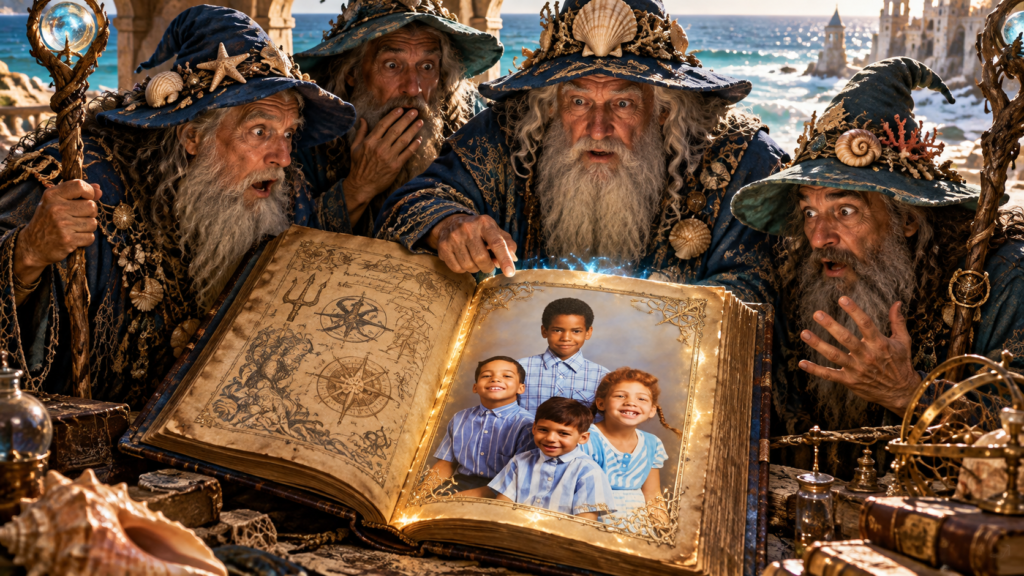
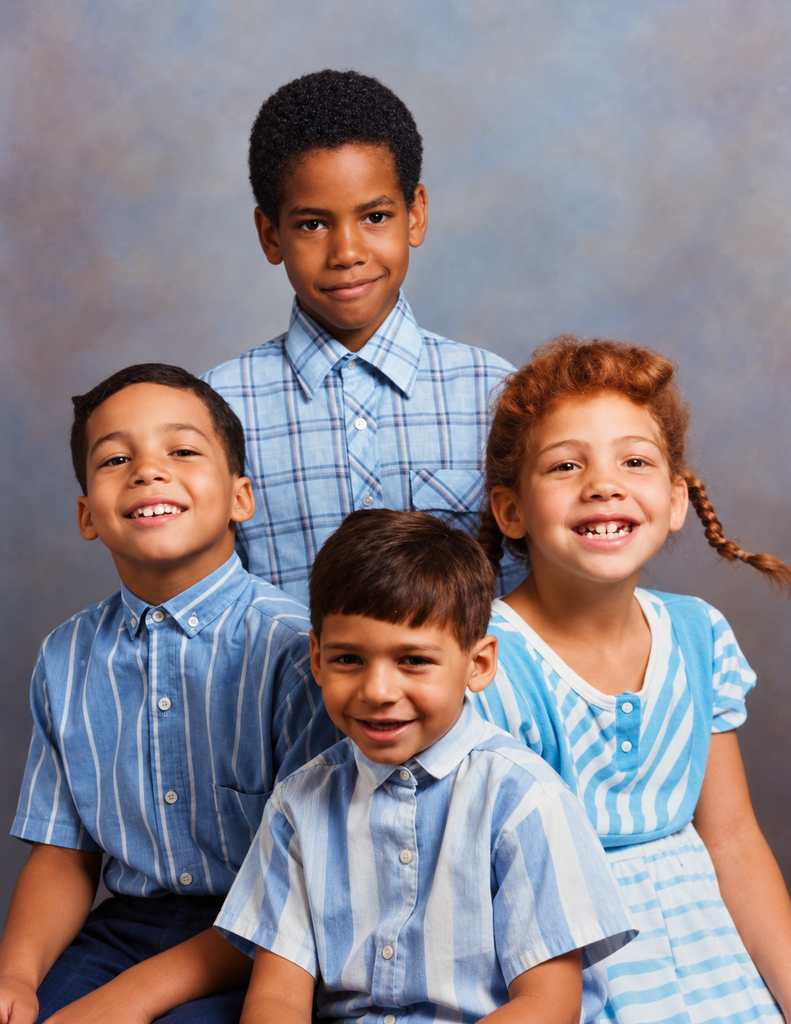
At the very back of the 556-page Kingsmark Player’s Handbook, I included something that might seem unusual in a heroic fantasy tabletop role-playing game: a photograph of four children. They are my older brother Jason, myself, my younger sister Julie, and my younger brother Jeremy. Together, we are the Four Js: Jason, John, Julie, and Jeremy. Readers can see the original photograph on the Family Photo: The Four J’s page.
Looking at the photograph, you’ll immediately notice that we don’t all look alike. Jason, my older half brother, has two Black American parents, our mother and his father. Julie and Jeremy have the same white father as I do, and that is why my sister has beautiful red hair. What you’re seeing is one dark-skinned child and three mixed-race children, all belonging to the same family.
I didn’t put that photograph in my book to make a political statement about diversity, equity, inclusion, or whatever terminology happens to be fashionable this year, and I’m not taking guidance from company wide email written by a corporate douche bag at Wizard’s of the Coast or Hasbro.
The children in the picture are my family, and growing up in that family influenced my understanding of what human beings look like, how they relate to one another, and what they can endure. When I began developing Kingsmark, the diversity of human appearance was never something I needed to be persuaded to appreciate. It was something I had known since childhood, because I could see it whenever I looked at my brothers, my sister, or myself.
However, there’s considerably more to that photograph than different skin complexions, hairstyles, and inherited physical characteristics. It also represents a childhood marked by love, hardship, fear, and experiences that shaped my understanding of psychological suffering. Those experiences influenced not only how I portrayed human beings in Kingsmark, but also how I approached heroism, violence, injury, trauma, and the sometimes extraordinary courage required simply to survive.
One Humanity, Five Human Types
One of my earliest decisions when developing Kingsmark concerned the traditional fantasy classification of elves, dwarves, and other peoples as different “races.” I dislike that terminology because it often confuses entirely different concepts: ancestry, ethnicity, physical variation, and biological species. I also didn’t want to replace it with species, because that would contradict the kind of humanity I was creating. Instead, I introduced the concept of 🫀 Human Types.
Kingsmark features five Human Types: Anashim (Common Humans), Tzurim (Hardy Humans, Dwarves), Elyonim (Perfected Humans, Elves), Qatan (Little Humans), and Gibborim (Human Giants). These peoples belong to a shared fictional humanity and can interbreed, even though their physical characteristics and other traits differ. Some draw inspiration from real variations in human stature and appearance, while others, particularly the Elyonim, incorporate distinctly fantastical characteristics.
I also deliberately avoided populating Kingsmark with an endless parade of insect humanoids, animal-headed civilizations, and increasingly bizarre playable species. There’s certainly room for extraordinary creatures in fantasy, and the game’s 📎 Bestiary contains plenty of them, but I wanted the central protagonists to be recognizably human beings. Kingsmark is largely about human beings confronting monsters, supernatural horrors, wicked people, and morally complicated situations where the difference between good and evil isn’t always immediately apparent. Whatever their Human Type, these characters experience the same fundamental struggles with fear, ambition, temptation, suffering, loyalty, and courage.
Representing the People Around Me
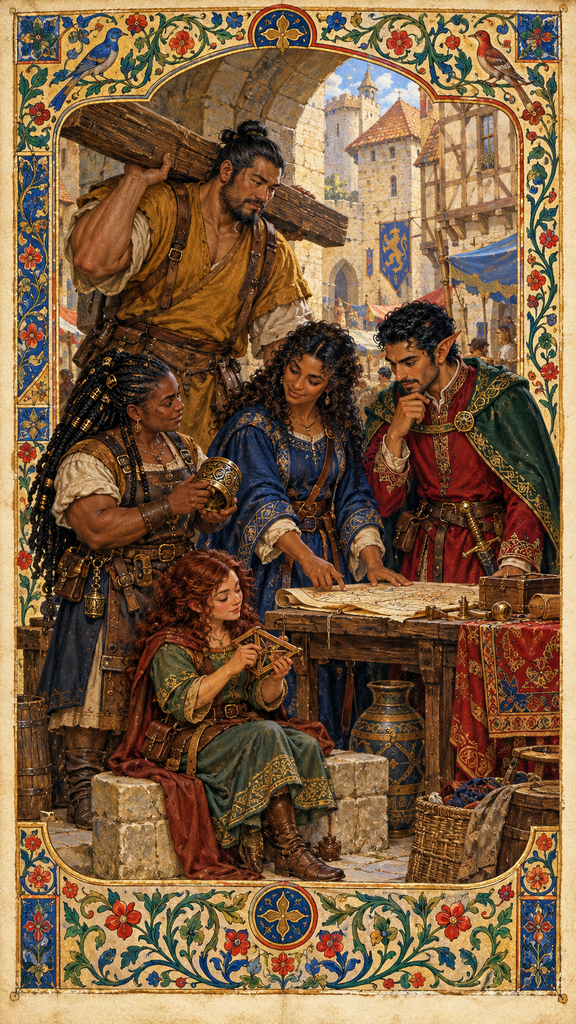
When I began generating illustrations for Kingsmark, I needed a practical starting point for portraying the population of my fantasy world. My initial commercial focus was the United States, although my ambition is for Kingsmark to find players throughout the world. It therefore seemed reasonable to use contemporary American ethnic demographics as a broad reference for the human appearances depicted in the artwork. According to the U.S. Census Bureau, approximately 56% of Americans are non-Hispanic white, 20.5% are Hispanic or Latino, and 13.5% are Black, although Hispanic origin overlaps the racial classifications.
These figures weren’t instructions to make every adventuring party conform to a particular mathematical formula. In fact, I frequently made changes to the AI-generated illustrations because a different character appearance, group composition, or artistic arrangement simply felt more appropriate. A party consisting entirely of Black adventurers is perfectly reasonable, just as a party consisting entirely of white adventurers is perfectly reasonable. There are also countless possibilities for mixed groups, families, military units, traveling merchants, and communities whose appearances reflect their particular histories and circumstances.
One visual convention that especially irritates me is the obligatory token Black character. We’ve all seen it: a collection of otherwise white characters with exactly one Black person seemingly inserted to demonstrate that somebody remembered diversity. There’s nothing inherently wrong with that composition, but when it becomes a repetitive formula, it begins to look artificial. Why not have two Black characters, three Black characters, or an entirely Black group when the circumstances make that arrangement natural?
My point isn’t that every group should be mixed, or that every group should be homogeneous. I oppose the artificial enforcement of both integration and segregation in artistic representation, because neither approach necessarily produces believable characters or convincing worlds. A storyteller should be free to depict human populations according to the requirements of the fictional setting, the circumstances of a particular scene, and the artistic judgment behind the work. Nobody’s appearance should automatically earn them a place in an illustration, and nobody’s appearance should automatically exclude them.
The Biases That Appear in AI Artwork
Working extensively with AI illustration tools introduced another interesting complication: artificial intelligence doesn’t necessarily produce neutral or demographically representative images. Sometimes it defaults to pale-skinned characters, familiar European medieval appearances, or repetitive facial features, unless specifying other people. Other times, it appears to overcorrect in ways that make a scene feel deliberately assembled around demographic categories. Whatever the direction of the bias, I don’t want a machine deciding the appearance of my characters simply because that’s what it most readily generates.
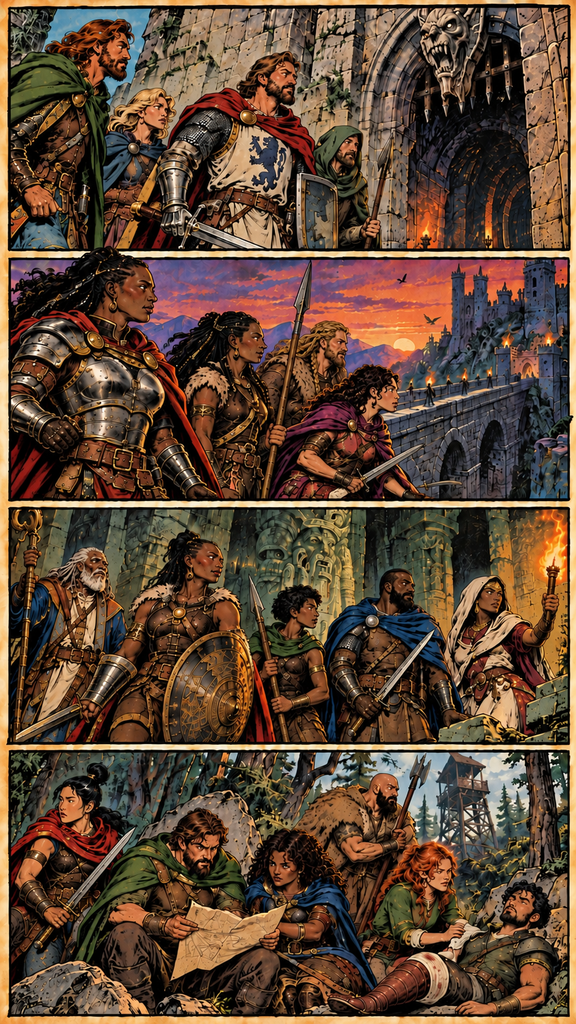
These tendencies aren’t imaginary. A 2025 study published in Scientific Reports documented racial and gender stereotypes in AI-generated faces, including a tendency to homogenize the appearances of people placed within particular demographic categories. Another study published in AI & Society found racial differences in how accurately an image-generation system reproduced people’s appearances. Such outcomes can arise through training data, inherited cultural stereotypes, technical design choices, and attempts to modify model behavior after training.
In that respect, some of the prejudices appearing in artificial intelligence come from human beings, which is the foundation of how and what these systems learn. AI developers and users also influence the results by making certain repeated demands or instituting certain policies to protect the corporation. That’s why I remained actively involved in choosing, rejecting, revising, and directing the artwork throughout the development of Kingsmark. I used AI as an artistic instrument, not as an authority over my creative decisions.
The Day My Mother Watched Predator 2
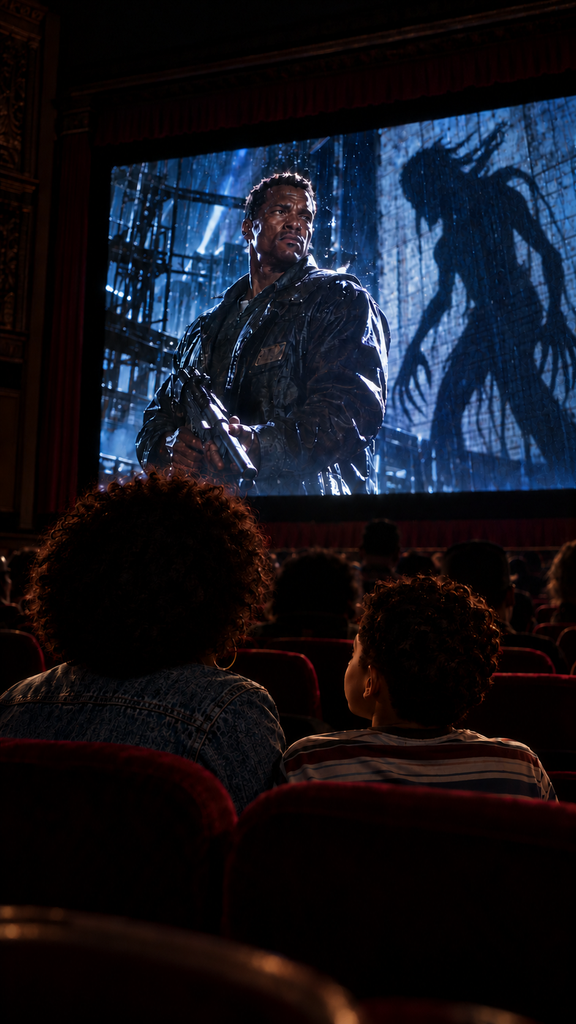
I remember watching the 1990 science-fiction action film Predator 2 with my mother, who was born in 1951. The protagonist, Lieutenant Mike Harrigan, is played by Danny Glover, a Black actor taking on the central heroic role in a major Hollywood action movie. At one point, my mother made a joke that has remained with me for decades: “You know, I was just waiting for him to die and for the white guy to step in.” She was laughing, but there was a recognizable historical experience behind her observation.
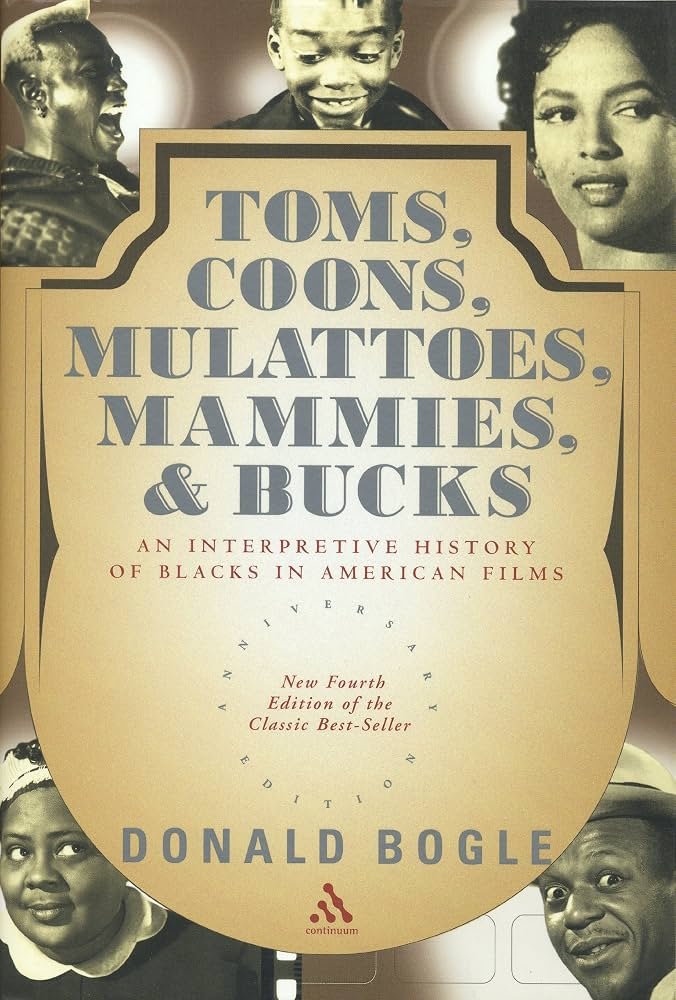
My mother belonged to a generation that had experienced substantial racial discrimination and had grown accustomed to Hollywood conventions that often treated white men as the natural protagonists of heroic adventures. Black performers certainly achieved important leading roles long before Predator 2, but the industry’s history also contained persistent limitations on the kinds of characters they were permitted to portray. Film historian Donald Bogle documented these patterns in his influential 1973 book, Toms, Coons, Mulattoes, Mammies, and Bucks: An Interpretive History of Blacks in American Films. His research examined recurring stereotypes that reduced Black characters to servants, comic figures, threatening caricatures, and other restrictive roles instead of allowing them the full range of human characterization.
This history matters to me because entertainment helps shape our expectations about who can be courageous, intelligent, beautiful, powerful, or worthy of admiration. A Black child should be able to see Black heroes, just as a white child should be able to see white heroes, without either child’s appearance becoming the defining measure of their worth. The same applies to Asian children, Hispanic children, mixed-race children, and people whose physical characteristics differ from conventional expectations. Although Kingsmark is a heroic fantasy tabletop role-playing game for mature players, I recognize that teenagers may also encounter its stories and illustrations, and I want them to see human greatness portrayed in many different forms, forms that they can identify with.
The Difference Between Representation and Ideology
My appreciation for human variety doesn’t mean I agree with the contemporary diversity movement or the artistic decisions being made by every entertainment corporation. I have serious disagreements with the direction Wizards of the Coast has taken Dungeons & Dragons, particularly when modern cultural priorities appear to influence the identity, appearance, and characterization of its fantasy peoples. The company has openly acknowledged revising its treatment of these subjects, including its 2022 announcement that the 2024 core rulebooks would replace “race” with “species”. I understand the objection to the old terminology, but I don’t believe every corporate solution to a genuine problem is necessarily a good one.
Commentators such as Diversity & Dragons have also criticized the demographic composition of artwork in the revised D&D Player’s Handbook. In one widely circulated criticism, the commentator claimed to count only seventeen illustrations centered on white male characters, compared with more than one hundred featuring characters from other categories. I haven’t independently verified those figures, and an illustration count alone cannot establish that the dickheads at Wizards of the Coast instructed artists to discriminate against anybody. Nevertheless, I consider the broader question legitimate: when a publisher deliberately changes its artistic direction to reflect contemporary cultural priorities, players have every right to examine the results and question whether those priorities serve the game.
The douchebags at Wizards of the Coast have also drawn criticism for artwork portraying fantasy peoples through recognizable cultural influences, including an orc family whose appearance some observers associated with Mexican traditions. Cultural inspiration isn’t inherently objectionable, and fantasy artists have always borrowed from historical societies, but the results deserve the same critical examination regardless of which population is being represented. I don’t want fantasy characters reduced to modern ethnic stereotypes, nor do I want every character designed as an ideological response to the demographics of previous editions. The creative objective should be a convincing fantasy world populated by compelling individuals, rather than a collection of illustrations that seems preoccupied with demonstrating political virtue.
For Kingsmark, my position is straightforward: I oppose racial prejudice whether it is directed toward Black people, white people, or anyone else. Being mixed-race doesn’t require me to approve of discrimination against one part of my ancestry while condemning discrimination against another. Nobody chooses their ancestry, inherited physical characteristics, or skin complexion, and I reject the idea that those things should determine their moral standing or whether they deserve recognition. Human dignity should not depend on which demographic category happens to be fashionable, favored, or condemned.
The Childhood Behind the Photograph
Returning to that photograph of the Four Js, there’s something important that the camera cannot reveal. Those four children grew up in circumstances that involved serious hardship, including physical abuse by my father and other deeply harmful experiences within the family, as well as terrible thing done to my sister by an evil neighbor. Some of those events are private, involving people whose stories belong to them, and I don’t intend to expose every painful detail for public consumption. Nevertheless, the fact that those experiences occurred is important to understanding why psychological suffering became such a significant aspect of Kingsmark.
My mother was a wonderful, loving woman who raised us and gave us affection during circumstances that were often terribly difficult. Her love remains an important part of how I remember my childhood, and it stands in contrast to the cruelty that children can experience at the hands of people who should protect them. Looking at that old photograph, I don’t simply see four children with different appearances. I see four vulnerable human beings who deserved to grow up in safety, surrounded by people committed to their well-being.
That experience gives the fantasy dungeon a particular significance for me, although I recognize that other players may approach it differently. A dungeon can be an entertaining underground complex filled with monsters, traps, treasure, and exciting tactical challenges, but it can also become a symbolic representation of the human psyche. Its darkness may represent fear, its locked chambers may suggest memories that remain inaccessible, and its monsters may embody threatening experiences that someone has struggled to confront. Entering such a place can therefore become something more meaningful than an expedition to acquire treasure or defeat another enemy.
Why Kingsmark Has Mental Trauma
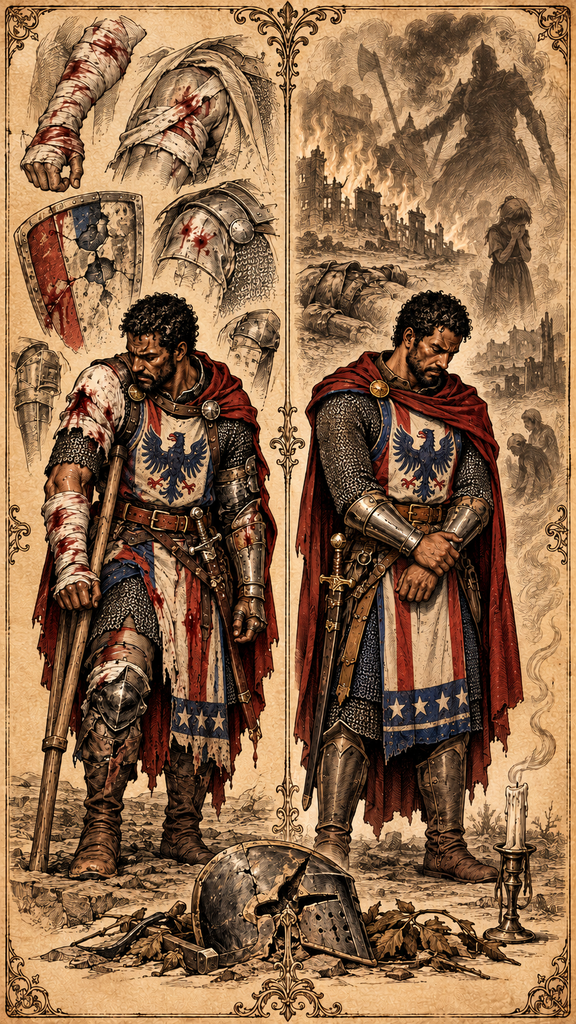
When I designed Kingsmark’s combat and injury mechanics, I wanted to move beyond the conventional approach of reducing an adventurer’s physical condition to a pool of Hit Points. The game instead distinguishes between 🩸 Physical Wounds and 🧠 Mental Trauma, acknowledging that harmful experiences can have consequences that aren’t visible on the body. As explained in Chapter 13: 💥 Damage & Defense, Kingsmark incorporates different degrees of injury and psychological harm rather than treating every dangerous encounter as a simple subtraction from a numerical resource. Its Mental Trauma conditions include Shaken, Impaired, Unstable, and Broken.
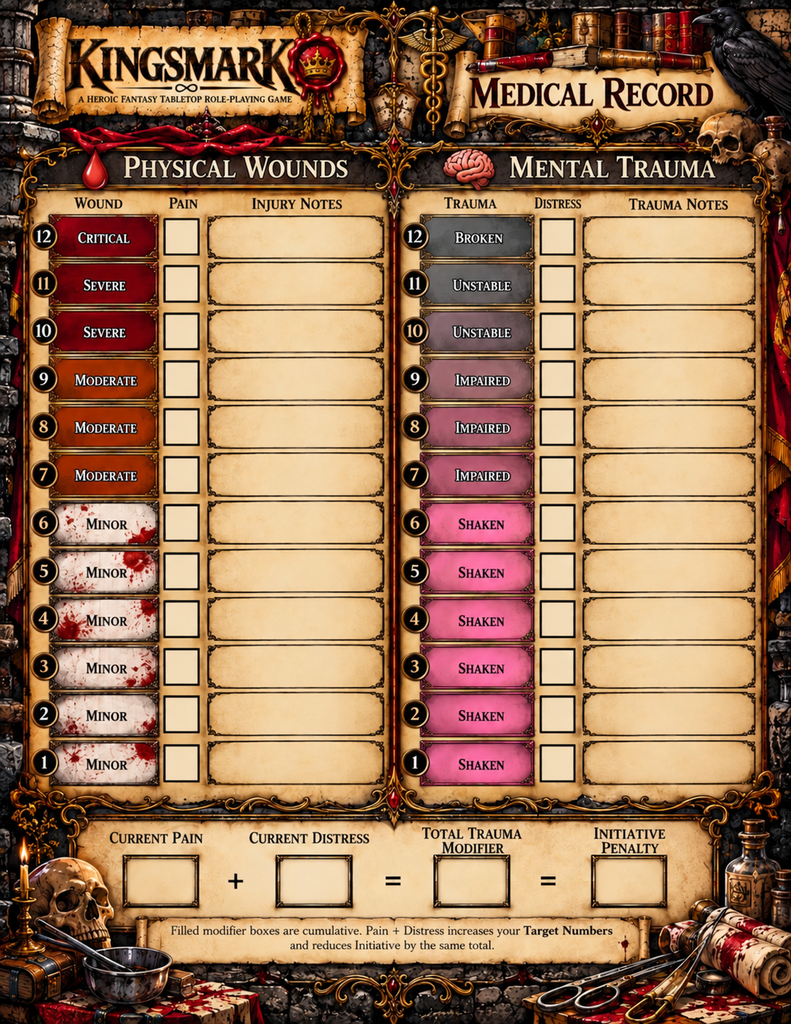
This approach reflects something that is familiar to people who have worked in dangerous professions, including soldiers, police officers, bodyguards, and emergency responders. Someone may survive a violent confrontation without suffering a serious bodily injury and nevertheless experience profound psychological consequences. The U.S. Department of Veterans Affairs explains that traumatic experiences can produce a wide range of reactions, although not everyone exposed to trauma develops post-traumatic stress disorder (PTSD). Human beings differ in their experiences, resilience, vulnerabilities, relationships, and recovery, which makes psychological suffering a complicated subject rather than something easily represented by a single statistic.
Kingsmark isn’t the first role-playing game to recognize these consequences. Call of Cthulhu has long featured Sanity mechanics, Delta Green explores the psychological costs of confronting extraordinary horrors, and Blades in the Dark uses Stress and Trauma to represent the lasting consequences of dangerous activities. What I wanted was to incorporate the psychological dimension directly into a general heroic fantasy system, alongside physical injury, combat, supernatural encounters, and the broader consequences of adventuring. Kingsmark isn’t a substitute for psychological treatment, but I believe mature storytelling can provide opportunities to contemplate difficult experiences through fictional characters and events, including the possibilities represented by ❤️ Healing Scenes.
Descending into Hell to Rescue a Child
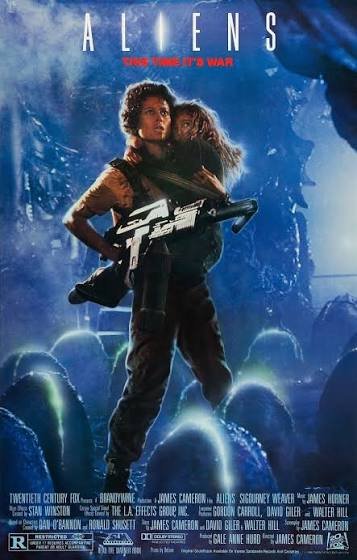
One of my favorite examples of heroic storytelling appears in James Cameron’s 1986 film Aliens, starring Sigourney Weaver as Ellen Ripley. Near the climax, Ripley descends into the terrifying alien hive to rescue Newt, a young girl who has already survived extraordinary horrors. The environment is a nightmare of darkness, predatory creatures, and overwhelming danger, yet Ripley voluntarily enters it because an innocent child needs her. The rescue becomes something much greater than another spectacular action sequence.
I see a powerful psychological and spiritual symbolism in this story. Newt can be interpreted as Ripley’s vulnerable inner child, the part of herself threatened by fear, loss, and experiences she cannot simply forget. Ripley’s descent becomes an act of confronting the monstrous darkness in order to recover that endangered innocence, while Bishop, whose name carries religious associations, can be interpreted as a Christ-like assisting figure whose intervention helps make their deliverance possible. I’m not suggesting that these symbolic interpretations were necessarily the filmmakers’ intentions, only that the story supports an extraordinarily rich reading beyond its literal events.
This is one of the reasons I believe heroic fantasy can be meaningful without sacrificing excitement, danger, or entertainment. Whether the adventure involves rescuing prisoners, defending a village, searching for a missing child, or confronting some terrible creature, its moral significance often comes from the people whose lives are at stake. Players exploring a location such as the adventure presented in Appendix D: Dungeon may simply enjoy the tactical challenges, and there’s nothing wrong with that. But when the story gives those challenges human significance, defeating the monster can become secondary to saving the person who needs protection.
A Human Being Created This Game
Since releasing Kingsmark, I’ve already encountered people who dismissed the game simply because I used AI-generated illustrations. Some have looked at the cover and assumed the entire book must have been produced by a machine, without seriously examining its rules, mechanical design, or the ideas underlying its creation. I did use artificial intelligence to generate artwork and to improve the clarity, grammar, organization, and presentation of my writing, and I have no intention of concealing that. But the underlying concepts, mechanical systems, character classes, magical disciplines, and creative direction are my work, developed through years of thought, experimentation, and revision.
I included an extensive About the Author section, a photograph of my wife and myself, and the childhood photograph because I wanted readers to see the human being behind the publication. Kingsmark is designed to support traditional group adventures, solo role-playing, creative writing, and storytelling applications that can extend into novels and screenplays. Its 🎭 Character Classes, 📜 Magic System, and other mechanics are parts of a larger creative instrument intended to make imagined experiences richer and more meaningful. Readers are free to criticize my design decisions or the use of AI, but judging the substance of a 556-page game without exploring what it contains overlooks the human imagination and personal experiences that went into its creation.
Four Children Worth Saving
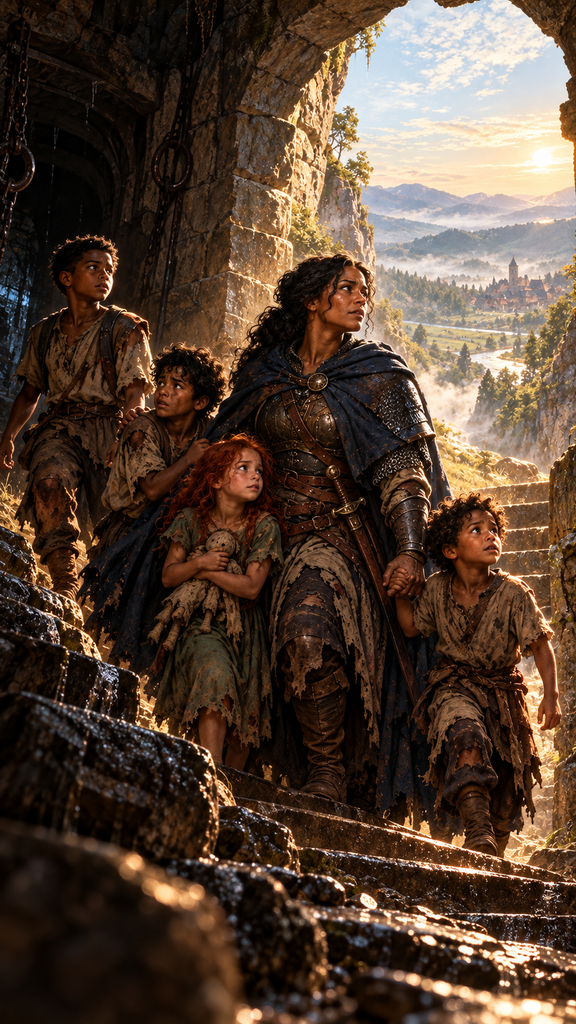
Ultimately, that’s why Jason, John, Julie, and Jeremy appear at the end of Kingsmark. Their photograph represents more than human diversity, more than an artistic philosophy, and more than the personal history of the person who designed the game. Those children remind me that human beings are vulnerable, that suffering can leave wounds we cannot see, and that protecting someone from cruelty can be a far greater achievement than defeating the most terrifying monster. I created Kingsmark because I love heroic fantasy, but my understanding of heroism reaches beyond swords, spells, spectacular battles, and extraordinary adventures.
Sometimes the greatest thing a hero can accomplish is to sacrifice a bit of his own sanity in his descent into the darkness, so that the prayers of the frightened children waiting there might be answered, and brought home safely.
About The Author