How to Create a Dungeon Adventure
How to Make Dungeons Dangerous, Mysterious, and Exciting Again
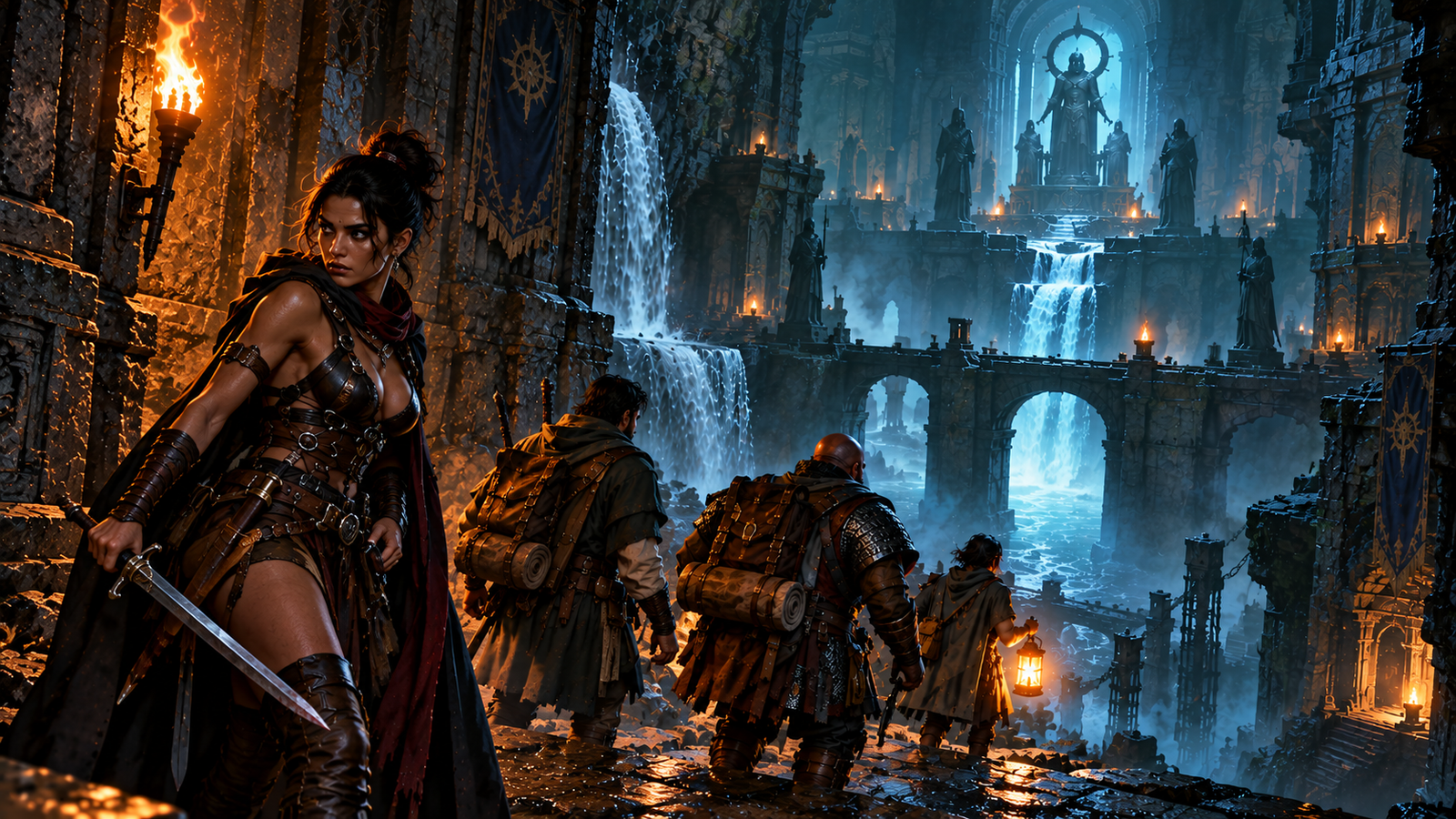
The adventurers descend a narrow staircase beneath an abandoned fortress. The steps are worn smooth by centuries of use, and cold water runs down the walls. Somewhere below, something heavy scrapes against stone. Their torches reveal old military carvings, broken weapons, and the remains of a barricade that appears to have been constructed from the wrong side of a doorway. Someone was trying to keep something from getting out. One of the adventurers notices that the barricade was eventually torn apart. The others exchange uneasy glances. Whatever destroyed it might still be down there.
Nobody has drawn a weapon. No monster has attacked. The Game Master has not demanded an Initiative roll or introduced a single combat encounter. Yet the players have already encountered something far more valuable than another room full of enemies: a mystery worth investigating, accompanied by a threat they cannot yet understand.
This is what dungeon exploration should feel like. Unfortunately, dungeons can become predictable when Game Masters design them primarily as sequences of encounters. The adventurers enter a chamber, fight whatever occupies it, search for treasure, and continue to the next chamber. A locked door interrupts their progress, a conveniently placed trap threatens to injure someone, and a particularly powerful monster waits at the end. The players gradually stop thinking like explorers and start thinking like contestants completing a series of challenges prepared specifically for them.
There is nothing inherently wrong with combat encounters, treasure rooms, traps, or powerful monsters. All belong in fantasy adventure. The problem emerges when these elements cease to feel like parts of an actual place and instead become transparent game mechanics. An exciting dungeon should inspire curiosity, caution, anticipation, and occasionally genuine fear. Its greatest challenges should encourage players to investigate their surroundings, exercise judgment, devise clever plans, and sometimes decide that survival is more important than victory.
Design a Place, Not an Obstacle Course
The first question a Game Master should ask when designing a dungeon is not how many rooms it contains, how many monsters inhabit it, or how much treasure the adventurers might recover. The first question should be why the place exists. Someone constructed an underground fortress, excavated a mine, established a subterranean monastery, or buried an important person in an elaborate tomb. Even a natural cave system possesses a geological history. Establishing that original purpose gives the dungeon an identity, and that identity should influence nearly everything the adventurers discover.
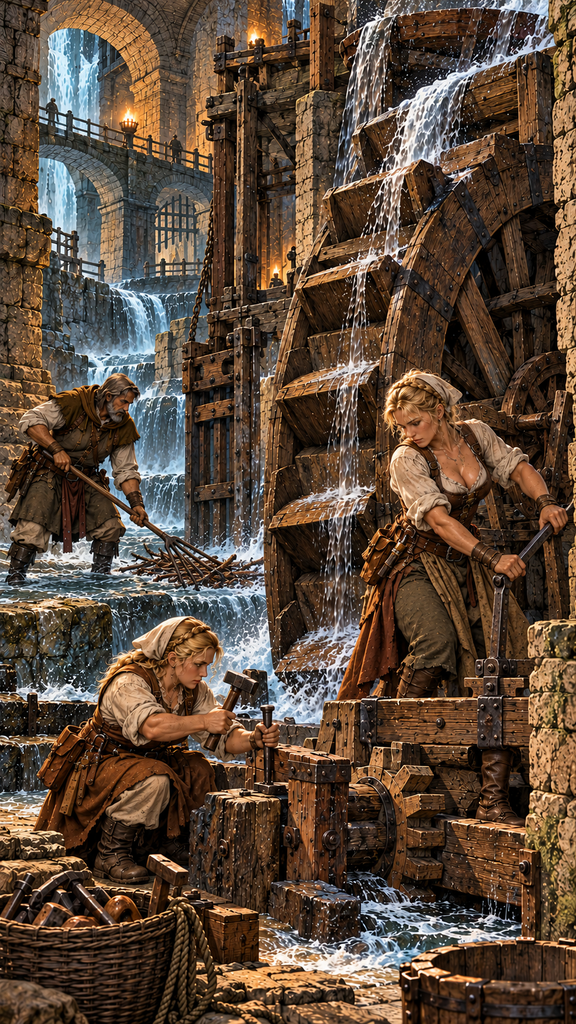
Consider an ancient fortress constructed to defend a strategically important river crossing. Its builders required barracks, storerooms, armories, workshops, kitchens, latrines, water storage, and defensive positions. Underground passages might connect the fortress to concealed observation posts or provide escape routes during a siege. Its engineers may have constructed sluice gates to regulate the river or flood particular approaches. Religious inhabitants might have maintained a modest sanctuary, while commanders stored valuable documents in chambers protected against fire and unauthorized access. None of these features exists merely to entertain future adventurers. Each originally served a practical purpose.
Centuries later, that same fortress might have become a dungeon. The river has changed course, one of the towers has collapsed, and tree roots have penetrated its foundations. Underground chambers that were once dry have flooded. An earthquake has opened a passage into natural caverns beneath the original construction. Some doors remain sealed, while others have been broken open by scavengers, treasure hunters, or creatures seeking shelter. The original architecture remains recognizable, but time has transformed its function. The Game Master now possesses something much more interesting than an arbitrary collection of rooms: a location with an understandable history.
That history should become visible through exploration. The adventurers might discover military insignia carved into a doorway, a collapsed staircase leading toward an inaccessible level, or faded markings indicating where supplies were once stored. Old repairs reveal that the fortress survived several sieges. A barricade constructed from furniture suggests a desperate final defense. Skeletons wearing similar armor are found on both sides of a sealed chamber, raising questions about whether the defenders turned against one another. Every discovery should help the players construct an increasingly sophisticated understanding of what happened.
Architecture also creates opportunities for practical problem-solving. Underground spaces require supporting structures, drainage, and ventilation when their purpose demands them. A mine might contain timber supports, vertical shafts, abandoned equipment, and pockets of dangerous air. An ancient burial complex might have narrow passages designed to discourage intruders. A natural cavern might feature underground streams, unstable rock, deep crevices, and chambers accessible only through climbing or swimming. These features create challenges that arise naturally from the environment rather than appearing because the Game Master wants another obstacle.
The current inhabitants deserve similar consideration. Creatures living underground need some explanation for their presence. Ordinary animals require food, water, shelter, and routes into and out of their territory. Intelligent occupants may require sleeping quarters, sanitation, defensive positions, storage, and access to the surface. A group of bandits occupying the upper chambers might depend upon supplies brought through a concealed entrance. Deeper underground, blind predators could inhabit a network of flooded caves, feeding upon fish or animals that wander into the water. Supernatural entities may have entirely different requirements, but their exceptional nature should be part of the mystery rather than an excuse to disregard every question about their existence.
Not every dungeon needs to be realistic in the mundane sense. Fantasy permits impossible architecture, ancient magical construction, supernatural transformations, and creatures that defy ordinary biology. Nevertheless, the extraordinary becomes more convincing when the ordinary world behaves consistently around it. A stone staircase that climbs upward for three miles without apparent structural support might be a remarkable supernatural mystery. A completely conventional wooden door floating unsupported in the middle of a chamber is merely confusing unless there is some reason for it.
One particularly useful design technique is to imagine three distinct periods in the dungeon’s history: what it was originally, what happened to change it, and what occupies it now. An underground temple may have begun as a peaceful sanctuary, suffered desecration during a war, and eventually become the refuge of desperate fugitives who know nothing about its original religion. A mine might have been abandoned following a catastrophic collapse, occupied by predatory creatures, and later partially reopened by criminals seeking access to something buried beneath its deepest shafts. The resulting layers of history generate mysteries, conflicts, hazards, and opportunities for discovery almost automatically.
A believable dungeon does not need hundreds of rooms. A dozen carefully imagined chambers, connected by passages whose arrangement makes sense, may provide more memorable exploration than an enormous labyrinth filled with unrelated encounters. What matters is whether the players can gradually understand the environment well enough to make intelligent decisions within it.
Make Exploration a Series of Meaningful Decisions
A mysterious dungeon should not merely conceal information. It should present choices that become increasingly meaningful as the players learn more about their surroundings. If every passage leads to the next mandatory encounter, exploration becomes an illusion. The players might decide whether to turn left or right, but if both directions eventually lead to the same predetermined sequence, their decisions accomplish very little. Genuine exploration requires the possibility of discovering different routes, approaching problems from unexpected directions, avoiding certain dangers, and accepting others.
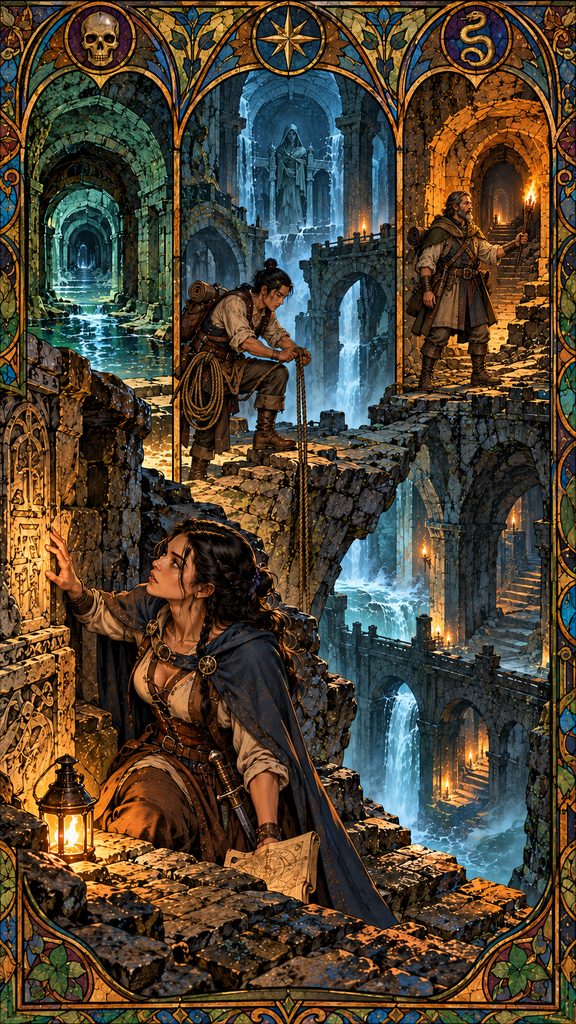
Returning to our abandoned fortress, imagine that the adventurers reach an underground intersection. One passage descends toward the sound of running water. Another climbs toward the ruined commander’s quarters, where someone recently carried a torch. A third leads through a partially collapsed wall into older stonework predating the fortress itself. Each direction offers something different. The flooded passage might provide access to the fortress’s mechanical systems. The commander’s quarters could contain historical records or present-day intruders. The oldest passage may lead toward the unexplained threat that caused the fortress to be abandoned.
The Game Master should understand what exists along these routes, but the players should determine which risks they are willing to accept. They might spend an hour examining the flooded passage, decide that the water is too dangerous, and return to investigate the commander’s quarters. Later, they may discover that the flooded chamber contains a mechanism capable of opening an alternate escape route. Their earlier decision suddenly matters. The dungeon has rewarded exploration by allowing previously discovered information to become useful.
Interconnected routes are especially valuable. A narrow maintenance shaft might bypass a guarded corridor. An elevated gallery may overlook a chamber the adventurers explored earlier. A concealed staircase could connect two otherwise distant levels, allowing a clever party to evade an enemy patrol or approach an objective from behind. Such connections make the dungeon feel like an actual three-dimensional environment. They also encourage players to draw maps, remember landmarks, and develop their own understanding of the place.
Information is essential to making these choices meaningful. A passage containing a lethal trap should offer something the players might notice, investigate, or deduce. Scratches on stone, broken bones, bloodstains, disturbed dust, unusual air currents, and the remains of previous victims can all communicate danger. The clues need not reveal exactly what will happen. Their purpose is to give observant players an opportunity to recognize that something deserves attention.
Suppose the adventurers discover a corridor lined with ancient statues. Several statues are missing their hands, and fragments of stone lie scattered across the floor. The walls contain narrow openings, barely visible beneath centuries of grime. A character might suspect that a mechanical defense system was once installed there. Another might conclude that the corridor was damaged during a battle. A third may examine the fragments and discover that some appear to have been broken quite recently. The Game Master has introduced a mystery through physical evidence, and the players must decide whether to investigate further, proceed cautiously, or find another route.
An important distinction exists between withholding information and withholding the entire adventure. If the players must discover a particular inscription to understand the dungeon’s central mystery, that information should not depend upon a single obscure clue and one successful roll. The same truth might be suggested by a damaged mural, described in a surviving journal, and corroborated by the testimony of a frightened prisoner. Players who miss one opportunity can still reach a useful conclusion through another. They may discover different pieces of the larger picture in different orders, allowing the mystery to develop naturally.
This does not mean that every secret must eventually be revealed. Some mysteries should remain unresolved, particularly when the players abandon an investigation or fail to recognize the significance of their discoveries. The objective is to avoid situations where the entire adventure becomes impossible because someone overlooked a single object the Game Master expected them to examine.
Puzzles should follow the same philosophy. A sealed stone door might be opened through mechanical expertise, knowledge of its builders, a recovered key, an alternate passage, or simply sufficient force and appropriate equipment. Each solution may carry different costs and consequences. Forcing the door could make considerable noise. Manipulating its mechanism might risk damaging something valuable. Locating the original key could require exploring another dangerous chamber. A magically sealed doorway might demand specialized knowledge or assistance. The important feature is not that every problem possesses five convenient solutions, but that players can attempt reasonable approaches and discover what works within the established circumstances.
This is particularly important in tabletop role-playing games because their greatest strength is the freedom to attempt actions nobody anticipated. A player who proposes climbing through a ventilation shaft, diverting a stream, negotiating with an enemy, or using a captured mechanism against its original owners should not be punished merely because the Game Master prepared a different solution.
In 👑Kingsmark, the Player’s Handbook explicitly encourages Game Masters to use existing rules, logic, realism, and reasonable judgment when players attempt something unusual. That approach is valuable in dungeon design because it allows the environment to become an interactive place rather than a series of prescribed encounters. An iron chain can be climbed if it can reasonably support a person’s weight. A wooden support can be destroyed if the characters possess the means to damage it. A guarded passage might be crossed through stealth, deception, combat, or careful observation. The consequences follow from the fictional situation and the appropriate rules, not from whether the players guessed the solution their Game Master had imagined.
Make Danger Real Without Making It Arbitrary
Danger is one of the most important ingredients in dungeon exploration, but there is a fundamental difference between danger and arbitrary punishment. A Game Master can make a dungeon deadly by placing impossible opponents behind every door, introducing invisible traps without warning, or suddenly announcing that a character has been killed. None of these techniques necessarily makes the adventure exciting. Genuine suspense emerges when players understand that serious consequences are possible and believe their decisions can influence what happens.

Traps illustrate this distinction particularly well. An ancient fortress might reasonably contain concealed defensive mechanisms, murder holes, portcullises, reinforced doors, and passages designed to expose invaders to missile fire. A wealthy tomb might feature elaborate devices intended to discourage grave robbers. A mine could contain hazards that were never designed as traps at all: rotten supports, unstable ledges, abandoned explosives, or machinery that becomes dangerous when improperly operated. The purpose of these features should make sense within the dungeon’s history.
A trap becomes interesting when the players interact with it. Imagine that the adventurers discover an enormous iron gate suspended above a passage. Beneath its supports lie fragments of old chains, and the surrounding stone bears impact marks. Someone examining the mechanism might recognize that the counterweight system is still connected to a pressure plate concealed beneath the floor. The party must now decide what to do. They could attempt to disable the mechanism, jam the gate with heavy timber, cross the passage individually, or search for another entrance. A clever player might even consider whether the gate could be activated deliberately against pursuing enemies.
Notice that the trap is dangerous before anyone triggers it. The threat exists as a physical part of the world, and the adventurers have an opportunity to investigate its workings. If they proceed recklessly, they may suffer the consequences. If they recognize the danger and develop an effective solution, the satisfaction comes from their own ingenuity. The Game Master does not need to guarantee that every solution succeeds, but players should be able to recognize the relationship between their actions and the outcome.
Some traps will be exceedingly difficult to discover. Certain devices might have been constructed by extraordinary engineers or concealed through powerful magic. Kingsmark includes guidance for detecting increasingly sophisticated traps and environmental hazards, including concealed mechanisms and magical dangers. Nevertheless, an almost imperceptible trap should remain exceptional rather than becoming the standard method of threatening adventurers. When everything is secretly dangerous and observation provides no useful information, players eventually stop investigating because their decisions appear irrelevant.
Monsters should be handled with similar care. An unknown creature becomes more frightening when the players encounter evidence of its existence before confronting it directly. They might discover enormous claw marks along a stone wall, find an abandoned camp containing partially eaten supplies, or hear something moving through the flooded passages beneath them. Local survivors might describe conflicting encounters. One insists the creature is blind. Another believes it hunts by scent. A third claims that fire drove it away. The players cannot immediately know which account is reliable, but they can gather evidence and prepare.
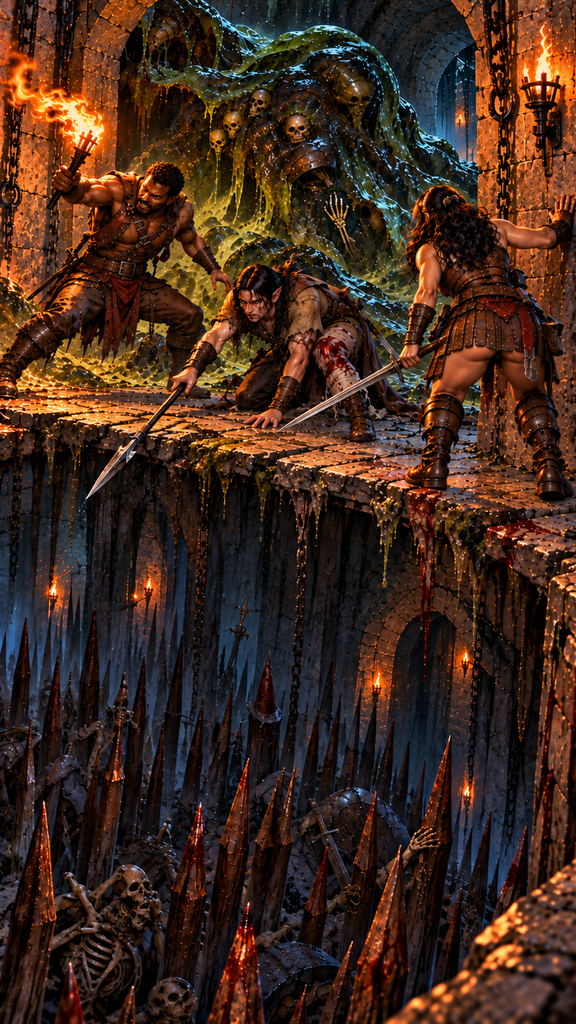
When the confrontation finally occurs, the creature should behave according to its nature. A territorial predator may attempt to drive intruders away rather than fight to the death. An intelligent monster might negotiate, deceive, or retreat to a better defensive position. A supernatural horror could possess motives the party does not initially understand. Not every encounter should culminate in combat, and not every enemy should patiently remain in its assigned room until the adventurers arrive.
Another common mistake is assuming that every challenge must be carefully balanced to the party’s present combat abilities. Fairness in dungeon exploration does not require the world to guarantee a survivable fight. It requires the Game Master to portray circumstances honestly and give players reasonable opportunities to recognize, assess, and respond to danger. A vastly superior enemy might be avoided, deceived, distracted, negotiated with, or escaped. If the adventurers knowingly attack a creature capable of destroying them, the world should not suddenly weaken that creature merely because the players have made a disastrous decision.
This philosophy is central to Kingsmark. Characters do not possess conventional pools of Hit Points that disappear during combat and return almost automatically afterward. Instead, the game distinguishes between 🩸Physical Trauma and 🧠Mental Trauma. Physical injuries range from Minor and Moderate wounds to Severe and Critical wounds, while Mental Trauma progresses through Shaken, Impaired, Unstable, and Broken states. Injuries have specific consequences, and sufficiently serious Trauma can compromise a character’s ability to continue fighting or surviving.
The implications for dungeon exploration are substantial. A badly wounded warrior may have difficulty moving through the remaining chambers. A fractured ankle becomes a genuine concern when the nearest settlement is two days away. A terrifying supernatural encounter can affect the party even when nobody suffers a physical injury. Adventurers must consider whether to continue, retreat, seek treatment, or alter their objectives. Surviving an encounter may be a victory even when the characters leave empty-handed.
Kingsmark’s ❤️Healing Scenes reinforce these consequences by making recovery part of the character’s continuing experience. A serious wound is not necessarily erased after a brief rest. Treatment, appropriate facilities, recovery time, and sometimes magical assistance may become necessary. For the Game Master, this creates opportunities for meaningful decisions rather than merely increasing punishment. An adventuring party might abandon a valuable treasure to carry an injured companion to safety. A healer might negotiate access to a secluded sanctuary. The survivors may return to the dungeon weeks later with better equipment, new allies, and a personal reason to finish what they started.
Scarcity can contribute to danger, but it should be used deliberately. Kingsmark normally abstracts ordinary provisions, ammunition, and minor equipment rather than forcing players to count every candle, arrow, and mouthful of food. However, the Player’s Handbook permits closer tracking when the circumstances make limited supplies genuinely important. Adventurers trapped deep underground with no reliable exit might suddenly care very much about drinking water, light sources, medicine, and the amount of food remaining. A slowly flooding chamber can transform an apparently routine expedition into a desperate struggle against time.
The Game Master should also consider the emotional rhythm of exploration. Constant attacks eventually become exhausting rather than frightening. A quiet chamber, a strange inscription, the discovery of an unexpected survivor, or an opportunity to rest can make the next dangerous encounter considerably more effective. Suspense develops through anticipation and uncertainty. Sometimes the most disturbing discovery is a room that should contain something terrible but is completely empty.
Make the Dungeon a Living Place That Remembers
A dungeon becomes more convincing when its inhabitants behave as though they possess lives and priorities independent of the adventurers. Guards maintain watches. Predators hunt. Intelligent enemies investigate disturbances. Prisoners attempt to escape. Scavengers search for abandoned valuables. Rival factions compete for territory, food, information, or control of strategically important passages. These activities need not be simulated minute by minute, but the Game Master should understand enough about them to respond sensibly when the players interfere.
Imagine that our abandoned fortress is occupied by a small band of treasure hunters who entered several weeks before the adventuring party. They established a camp in the surviving barracks, blocked a dangerous stairwell, and discovered historical documents suggesting that a sealed treasury lies beneath the old commander’s quarters. They have also lost several companions while exploring the lowest levels. The survivors are frightened, suspicious, and increasingly divided over whether to continue their expedition. Their behavior now has understandable motivations.
When the adventurers encounter these people, combat is only one possibility. The treasure hunters might offer information in exchange for assistance, attempt to deceive the party, demand payment for access to a passage, or attack because they fear losing their discovery. An injured member might be desperate for medical attention. Another could secretly believe that something beneath the fortress must remain sealed. These differences create opportunities for negotiation, betrayal, cooperation, and conflict without requiring every inhabitant to become an enemy.
The dungeon should also respond to intrusion. If the players kill several guards and leave the bodies in plain sight, surviving defenders may discover them. If an alarm sounds, patrols may converge upon the disturbance. If the party destroys a bridge, inhabitants who depend upon that route must find another way across. A massive fire could drive creatures from their territory. Opening a floodgate might make one section inaccessible while exposing a previously submerged entrance somewhere else. The dungeon changes because the adventurers have acted upon it.
Such changes are particularly satisfying when players recognize them. A barricade constructed by the party during an earlier expedition may still be standing when they return. A creature they spared might remember the encounter. A section they flooded could now contain sediment, wreckage, and unfamiliar aquatic life. The remains of a defeated enemy might have been collected and buried by surviving companions. These details communicate that the dungeon is not simply resetting itself between sessions.
Supernatural corruption introduces another possibility. In Kingsmark, the world of Sylva contains regions influenced by The 🪱Gloom, a pervasive spiritual darkness associated with supernatural evil. The Player’s Handbook describes Domains ranging from places of profound Tranquility to increasingly corrupted Cursed, Desecrated, and Abysmal locations. A dungeon may contain several such conditions within its different chambers or levels. An otherwise ordinary fortress might conceal a Desecrated sanctuary, while a deeply corrupted underground complex could contain a small Sacred refuge preserved against the surrounding darkness.
These Domain Ratings are descriptive rather than automatic numerical penalties or bonuses. Their purpose is to help the Game Master portray the changing spiritual condition of the world. An abandoned dungeon might initially appear merely unpleasant, with stagnant water, crumbling masonry, and the ordinary evidence of decay. Deeper chambers could reveal increasingly unnatural phenomena. Animals refuse to enter certain passages. Ancient inscriptions describe rituals nobody remembers. Corpses remain strangely preserved. Visitors begin experiencing disturbing dreams. Eventually, the party discovers a place where something profoundly unnatural has taken hold.
The advantage of this approach is that supernatural horror becomes part of the environment’s developing history rather than a collection of unrelated frightening decorations. The players can investigate its origin, discover who contributed to its spread, and perhaps find a way to remove or contain its influence. Their victory may accomplish more than defeating a monster. It could make the surrounding countryside safer, allow a ruined sanctuary to be reclaimed, or permit people to return to territory they abandoned generations earlier.
Not every dungeon requires such supernatural forces. A fortress occupied by desperate soldiers, a mine controlled by criminals, or a natural cavern inhabited by dangerous animals can provide an excellent adventure without curses or evil sorcerers. The essential principle is consistency. Whatever occupies the dungeon should possess believable motives and produce consequences that remain meaningful after the immediate encounter ends.
Consider how our fortress adventure might conclude. The party discovers that the ancient flood-control machinery was deliberately sabotaged during the fortress’s final siege. Repairing it would drain the lower passages, allowing access to the buried treasury. Unfortunately, restoring the mechanism would also open a sealed chamber containing the creature responsible for the fortress’s abandonment. The surviving treasure hunters want the machinery activated, while an old inscription warns against disturbing the lowest level. The adventurers must decide whether to pursue the treasure, permanently seal the chamber, investigate further, or abandon the fortress entirely.
There need not be one correct answer. Activating the machinery might reveal extraordinary wealth while releasing a terrible danger. Sealing the lower chambers could protect nearby settlements but leave valuable historical knowledge inaccessible. A careful investigation might uncover another solution, although discovering it could require substantial time and additional risk. Whichever course the players choose, the decision should influence the future of the fortress and its surrounding region.
This is ultimately what separates a memorable dungeon from a disposable collection of encounters. A dungeon should be more than a location the adventurers enter, clear, loot, and forget. It should possess a history they gradually uncover, dangers they learn to respect, inhabitants whose actions make sense, and secrets capable of changing their understanding of the world.
The most memorable adventures are not necessarily those in which the party defeats the largest monster or discovers the most valuable treasure. Sometimes the story players remember for years concerns a desperate retreat through a flooding passage, a companion who risked everything to save someone else, a mystery they never completely solved, or the terrible discovery that opening the final door was a mistake.
That is the kind of heroic fantasy adventure I designed 👑Kingsmark to support: a world where exploration requires judgment, danger carries consequences, and survival is an achievement rather than an expectation. Its rules encourage characters to approach peril with the intelligence of experienced adventurers while leaving room for courage, ingenuity, sacrifice, and extraordinary heroism.
You can learn more about Kingsmark and its approach to cinematic, consequential fantasy adventure at Kingsmark.games.
Make your dungeons places worth exploring, dangerous enough to respect, and mysterious enough that the players will want to return—even when every sensible instinct tells their characters to stay away.
About The Author