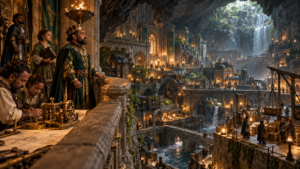
They Built the “Dungeons” to Survive the Dragons
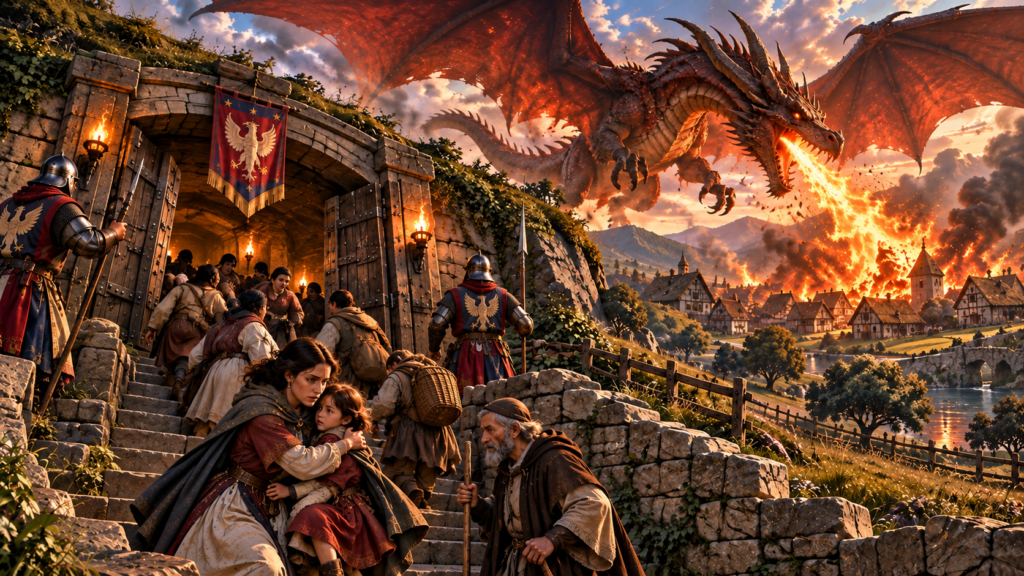
The Terrifying History of Dragons in Sylva
Imagine living in a world where stepping outside your home could mean exposing yourself to a creature capable of destroying your entire village from the sky. You might possess a sword, a spear, or a sturdy shield, but none of these would offer much protection against an enormous flying predator whose scales resist ordinary weapons and whose breath can reduce buildings to flames. When such a creature appeared on the horizon, the sensible response would not necessarily be to assemble the bravest warriors and charge into battle. It would be to gather your family, abandon whatever you were doing, and disappear beneath the earth.
For centuries, this was a familiar reality for many of the inhabitants of Sylva, the medieval fantasy world of 👑Kingsmark.
Dragons and other aerial threats exerted an extraordinary influence upon the development of human civilization, encouraging entire populations to construct underground settlements, concealed transportation networks, fortified refuges, and enormous subterranean communities. Some of these structures eventually became so extensive that they contained hundreds of chambers, multiple levels, and miles of interconnected passages. Their builders were not creating mysterious labyrinths for future adventurers to explore; they were attempting to preserve their families, livelihoods, and civilizations.
This historical background provides my explanation for one of the most recognizable traditions in fantasy gaming: the dungeon. Anyone familiar with Dungeons & Dragons, Gauntlet, Legend of Grimrock, or the vast subterranean environments of The Lord of the Rings understands the appeal of descending into an ancient underground complex filled with mysteries, monsters, traps, and forgotten treasures. Yet I have often wondered why these extraordinary structures were built in the first place, why so many have been abandoned, and why different kinds of creatures now inhabit their depths.
When designing Kingsmark, I wanted to preserve the traditions that make heroic fantasy enjoyable while giving familiar conventions more convincing explanations. The 🍺Adventurers’ Tavern, for example, is not simply a convenient gathering place where strangers inexplicably assemble before an adventure. Kingsmark explains how professional Adventurers’ Taverns function within society, why people advertise Contracts through them, and how these establishments support an actual adventuring profession. I wanted to apply similar reasoning to dungeons, making them part of the world’s history rather than collections of rooms that exist solely because a Game Master needs somewhere to put monsters.
🐉 What Exactly Is a Dragon in Sylva?
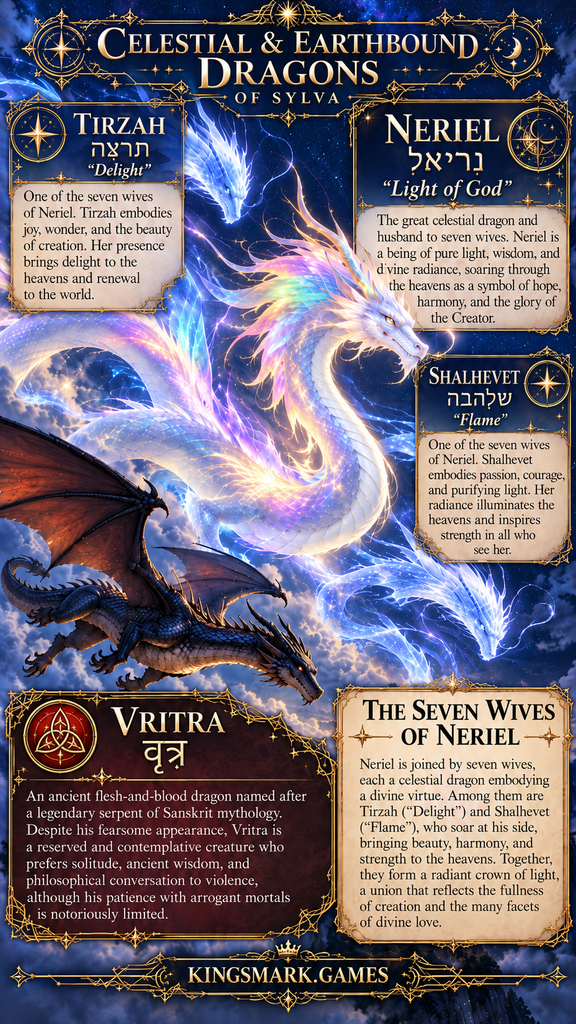
Understanding the origins of Sylva’s dungeons requires understanding the creatures largely responsible for their construction. Dragons in Kingsmark are not ordinary reptiles that happen to possess wings and breathe fire, nor are they universally evil monsters waiting to be slain. Their existence is connected to much older spiritual mysteries, involving extraordinary celestial beings associated with natural forces and elemental processes. These celestial dragons are spiritual entities whose manifestations may resemble luminous apparitions, radiant serpentine forms, or immense creatures composed of otherworldly light.
Physical dragons originate from celestial dragons that have descended into embodied existence. Whether this descent represents punishment, a voluntary decision, or some purpose not yet understood by humanity remains a subject of religious and philosophical speculation. The dragons may know why some of them are now in physical form, but if they do they haven’t told any human the truth of it. What is certain within the setting is that physical dragons possess their own wills and are capable of developing individual personalities, ambitions, moral convictions, and relationships. Their celestial origins do not automatically make them righteous, any more than their physical condition automatically makes them wicked.
Their intelligence also develops over time. A young physical dragon may begin life possessing comparatively primitive, animal-like intelligence, but its capacity for reasoning increases as it matures. Eventually, an ancient dragon may understand human languages, negotiate sophisticated agreements, accumulate extraordinary historical knowledge, and develop plans extending across generations. The 🐉 Dragon entry in the Player’s Handbook Bestiary establishes that mature dragons can reason, remember, deceive, negotiate, recognize political circumstances, and pursue complicated objectives.
Consider what this means for an individual dragon possessing extraordinary physical strength, immense longevity, and the ability to travel wherever it pleases. Such a creature might become a guardian, scholar, philosopher, tyrant, predator, or something considerably more difficult to categorize. It may regard ordinary people with curiosity, affection, indifference, or contempt, and centuries of accumulated experience do not necessarily guarantee moral wisdom. A creature capable of contemplating the rise and fall of human kingdoms may nevertheless enjoy frightening a village simply because it possesses the power to do so.
When Dragons Ruled Humanity
During earlier periods of Sylva’s history, powerful dragons could exercise enormous influence over entire territories. A dragon did not need an army of soldiers or a complicated bureaucracy to dominate a region, because the threat of destruction could be sufficient to compel obedience. Villages might surrender valuable goods, rulers might pay tribute, and religious leaders might encourage their followers to worship or appease a creature they regarded as possessing divine authority. The occasional devastating attack could remind surrounding communities why resistance was considered foolish.
Some dragons entered into agreements with human rulers, establishing arrangements that could persist for generations. A king might appear to govern an independent nation while actually serving as the intermediary of an ancient dragon whose authority nobody dared challenge. Such agreements could become increasingly complicated as successive rulers inherited obligations established by their ancestors, perhaps without fully understanding their original purpose. A dynasty whose earliest members had obtained protection from a dragon might eventually discover that its supposed protector regarded the entire kingdom as personal property.
Other dragons might behave like particularly cruel landlords, demanding tribute while displaying little interest in the daily activities of their subjects. An ancient creature could establish ownership over mountains, rivers, forests, or entire valleys, treating the inhabitants as creatures permitted to remain there only through its tolerance. Some communities might even regard this arrangement as preferable to living under a dragon that openly delighted in destruction. The political consequences could be extraordinary, especially when a human ruler discovered that the dragon’s interests conflicted with those of his people.
Not every dragon participated in such tyranny, and at least one benevolent non-celestial dragon is known within the traditions of Sylva. Others may have preferred isolation, scholarship, contemplation, or relationships with particular individuals rather than attempts to dominate civilizations. Nevertheless, the existence of honorable dragons did not eliminate the dangers posed by their less benevolent counterparts. Humanity had to develop ways of surviving in a world where an extraordinarily powerful creature might decide, for reasons nobody understood, to destroy a settlement that had existed peacefully for generations.
Dragons were not the only dangers descending from the sky. Goblins occasionally conducted raids while riding relatively small flying reptiles capable of supporting a Goblin and a modest quantity of equipment. Such creatures were difficult to acquire, breed, and train, limiting their military usefulness and preventing these aerial raiders from becoming ordinary sights throughout the world. Other flying predators also existed, but none exerted the same enormous historical influence as dragonkind.
The greatest advantage enjoyed by these creatures was that ordinary people could do very little to stop them once they approached from above. A fortified gate might prevent an invading army from entering a town, but walls designed to repel soldiers were of limited value against a dragon capable of flying over them. An exposed marketplace, farmstead, military formation, or crowded road could become dangerously vulnerable during an aerial attack. Humanity needed protection that was not dependent upon defeating the attacker.
The Beginning of Underground Civilization
The most straightforward solution was to place substantial barriers between the population and whatever threatened it from the sky. Natural caves offered shelter where suitable formations existed, while cellars, mines, and other excavated spaces provided additional possibilities. Communities gradually learned to construct protective entrances, concealed chambers, connecting passages, and reinforced underground refuges. What initially served as an emergency shelter might eventually become a permanent part of the settlement’s architecture.
Generations of repeated danger encouraged increasingly elaborate construction. A village might connect its principal buildings through underground passages, allowing families to move toward protected chambers without crossing exposed streets. Neighboring settlements might establish concealed routes for moving supplies, transporting important individuals, or maintaining communication when ordinary roads were unsafe. Over time, some of these networks developed into enormous subterranean communities containing workshops, storage facilities, residential chambers, religious institutions, and underground roads.
This did not mean that humanity simply abandoned the surface. Fields still needed cultivation, livestock required grazing, timber had to be collected, and merchants had to transport goods between communities. Human civilization remained dependent upon resources found above ground, but everyday life became an exhausting compromise between exposure and protection. People might work beneath the sunlight for hours while remaining acutely aware of the nearest refuge and the warning signals announcing approaching danger.
Imagine what this meant for children raised within such communities. They might regard descending beneath the earth during an emergency as something perfectly ordinary, just as children in other societies become accustomed to dangerous weather or the possibility of military attack. Underground passages would be familiar places associated with family, neighbors, work, and safety rather than mysterious environments awaiting discovery. The same chambers that would eventually terrify an adventurer might once have contained laughing children, family meals, and ordinary conversations.
The Difficult Reality of Living Underground
There are obvious advantages to living beneath the surface when powerful aerial predators are nearby, but underground habitation presents enormous practical difficulties. People require fresh air, clean water, food, sanitation, light, and sufficient space to perform ordinary activities. Excavating passages and chambers demands considerable labor, while maintaining them requires knowledge of geology, drainage, construction, and structural stability. A subterranean refuge that protects its inhabitants from attacks may expose them to entirely different dangers if those problems are neglected.
The geological environment makes a tremendous difference. Stable rock can permit extensive chambers and durable passages, while unsuitable ground may collapse, flood, or require substantial structural reinforcement. Underground construction also creates difficulties concerning the removal of excavated material, the transportation of supplies, and access to distant portions of an expanding settlement. Such complications would have encouraged communities to develop specialized builders, engineers, miners, and craftsmen whose knowledge became increasingly valuable.
Light presented another problem, especially in communities whose inhabitants were accustomed to spending considerable time above ground. Lamps, candles, torches, and other sources of illumination required fuel, created smoke, and demanded additional maintenance. Food storage could become advantageous in suitable underground conditions, but large populations still depended upon agricultural production and reliable supply networks. Even relatively comfortable subterranean settlements could never entirely escape the limitations imposed by their environment.
These difficulties provide an important historical distinction within Kingsmark. Humanity’s underground civilizations were not necessarily pleasant places where everyone preferred to spend their lives, nor were they uniformly primitive emergency shelters. Some undoubtedly became prosperous, sophisticated communities, particularly where geography and generations of engineering permitted substantial development. Others remained uncomfortable refuges whose inhabitants dreamed of the day they could establish permanent homes beneath the open sky without fearing destruction.
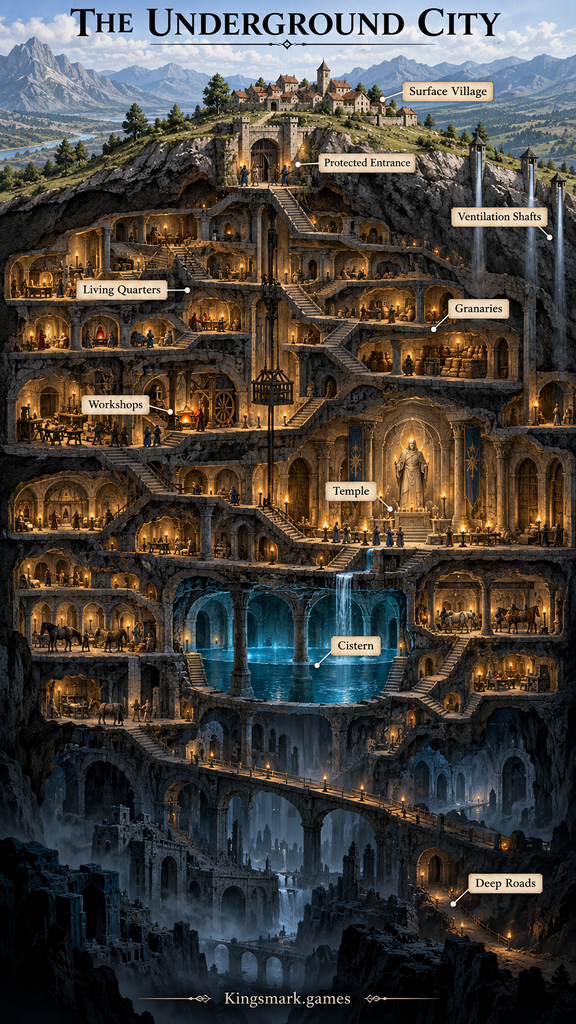
Real Underground Cities Actually Exist
One reason I find this aspect of Kingsmark so interesting is that the real world contains subterranean structures more extraordinary than many fictional dungeon descriptions. Ancient and medieval communities constructed elaborate underground settlements, defensive refuges, transportation passages, and fortified chambers long before the invention of modern excavation machinery. Some of these complexes contain so many rooms and passages that they resemble the enormous dungeons associated with fantasy literature and role-playing games. Their existence demonstrates that substantial subterranean construction is historically plausible when geography, engineering, and necessity come together.
Consider Derinkuyu Underground City in Cappadocia, Türkiye. The Turkish Ministry of Culture and Tourism describes a remarkable complex excavated into relatively workable rock, with narrow connecting passages, chambers, ventilation facilities, storage spaces, and a water supply. The broader Turkish cultural heritage authorities describe the underground city as extending approximately 85 meters beneath the surface. Whatever uncertainties remain about its earliest stages of construction, the surviving structures demonstrate a remarkable achievement of preindustrial engineering.
Derinkuyu was not merely a hole in the ground where frightened people waited for danger to disappear. Its surviving spaces reveal the importance of ordinary community activities, storage, religious life, transportation, and the practical requirements of an inhabited underground environment. The scale is extraordinary, particularly when considering that people undertook such projects without powered excavators, modern tunnel-boring machines, or the logistical advantages enjoyed by contemporary construction projects. It is easy to imagine a fantasy civilization gradually producing something even more elaborate after centuries of repeated supernatural threats.
Another fascinating example is the Underground City of Naours in northern France. Its historical galleries were excavated in chalk and served as refuges during periods of warfare and invasion. The local tourism authority identifies approximately 28 galleries and nearly 300 chambers, an astonishing number of underground spaces developed without modern machinery. It is difficult to argue that a dungeon containing hundreds of rooms is inherently ridiculous when actual human beings constructed comparable complexes for practical reasons.
These examples also suggest why not every dungeon in Sylva should be architecturally identical. Some were excavated through suitable rock, others incorporated natural caves, and still others developed beneath fortresses, religious settlements, or established cities. Their internal arrangements would reflect their original purposes, the resources available to their builders, and the requirements of the populations they protected. A settlement designed for thousands of inhabitants should possess very different features from a concealed military outpost or an emergency refuge beneath an isolated farming community.
Vietnam and the Military Logic of Underground Survival
The history of modern warfare provides another remarkable comparison, particularly when considering the relationship between aerial bombardment and subterranean infrastructure. Although a dragon is not a military aircraft, a population threatened by powerful attacks from above confronts a recognizable set of problems involving exposure, movement, observation, and protection. A community that cannot reliably destroy the attacking force may attempt to reduce its vulnerability by moving people and important resources beneath the surface. This is not merely a hypothetical fantasy solution; variations of the same reasoning have influenced actual military and civilian construction.
During the wars in Vietnam, extensive tunnel systems were developed for shelter, concealed transportation, storage, communication, defensive activities, and ordinary life. The Củ Chi tunnels provide a particularly impressive example. Vietnam’s 2026 submission to UNESCO’s World Heritage Tentative List describes their gradual development from relatively small concealed shelters into extensive interconnected networks that supported both civilians and combatants. These underground structures included passages, meeting areas, medical facilities, storage chambers, wells, and other spaces necessary for extended habitation and military activities.
Something especially interesting about the Củ Chi tunnels is that they developed progressively rather than appearing as one enormous construction project. Initial shelters were expanded, neighboring passages were connected, and additional facilities became necessary as military circumstances changed. This process continued over many years, producing a network far more complicated than the modest refuges from which portions of it originated. Similar developments could easily have occurred in Sylva as successive generations improved upon the protective infrastructure constructed by their ancestors.
The tunnels also reveal the tremendous work involved in creating and maintaining such places. Excavation required labor, suitable ground, organization, and an understanding of the conditions in which the inhabitants would be living. Underground routes could offer protection from observation and certain kinds of attacks, but they remained vulnerable to collapse, flooding, environmental deterioration, and other dangers. Their historical significance is not that subterranean construction provides perfect protection, but that people were willing to undertake extraordinary hardship when circumstances made underground life preferable to remaining exposed.
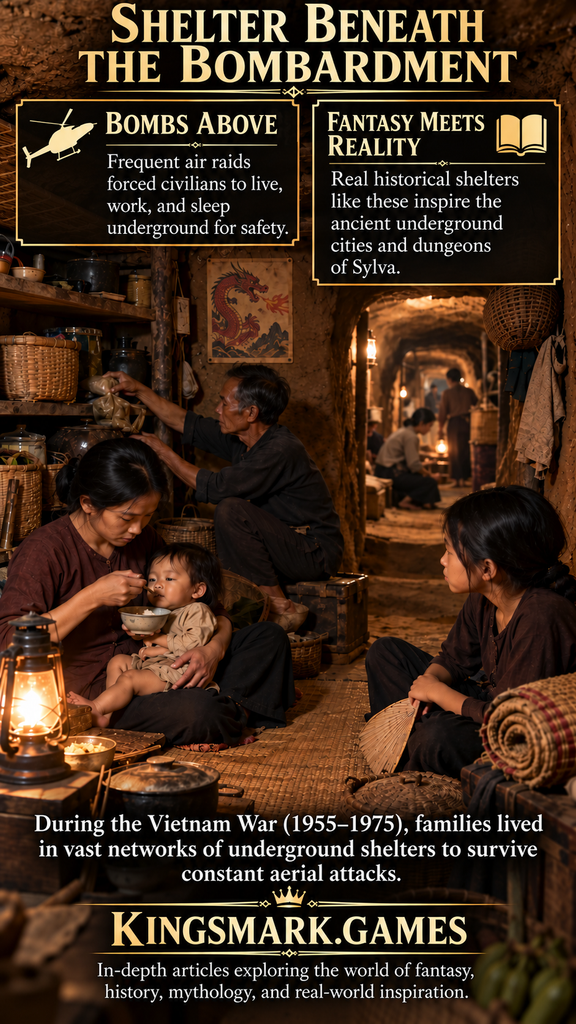
Vĩnh Mốc: A Village Where Children Were Born Underground
Perhaps the most emotionally powerful example comes from the Vĩnh Mốc tunnels in central Vietnam. During the 1960s, people living in a region subjected to intense bombardment constructed an underground settlement where families could seek refuge and continue essential aspects of their lives. The complex developed into an interconnected community containing living spaces, meeting areas, water facilities, storage chambers, and places where medical treatment could be provided. Vietnamese historical accounts describe approximately sixty families living in the tunnels during the war.
One extraordinary detail deserves particular attention: seventeen children were born underground. These were not fictional characters appearing in an adventure story, but actual human beings whose earliest experiences of life occurred inside subterranean shelters because conditions above ground were so dangerous. Their families continued raising children, preparing food, helping neighbors, and maintaining ordinary human relationships despite the terrible circumstances surrounding them. It is difficult to imagine a more powerful demonstration of why an entire community might choose to construct and inhabit an underground settlement.
When I consider the ancient inhabitants of Sylva, this is the kind of human experience I want the history to suggest. Imagine a mother giving birth in a chamber beneath a mountain because a dragon has dominated the surrounding countryside for generations. Her child might grow up accustomed to stone corridors, communal storage chambers, and the sound of footsteps approaching through concealed passages. The world above would remain beautiful and desirable, but the family’s safety would depend upon the structures their ancestors had constructed beneath it.
Such experiences would influence architecture, customs, social relationships, and collective memory. Families might preserve stories about the construction of particular passages, while religious traditions could develop around the protection of underground communities. Certain entrances might become important symbols of survival, and the people responsible for expanding or defending a settlement might be remembered for generations. Centuries later, an adventurer entering those same chambers might know nothing about the families who once regarded them as home.
Underground Warfare Is Not Merely Ancient History
The importance of subterranean environments has not disappeared with the development of modern military technology. The United States Army continues to study underground operations, including the special problems associated with tunnels, concealed facilities, restricted movement, and communication beneath populated areas. In a 2020 Army report about subterranean warfare training, the military described facilities intended to prepare soldiers for the distinctive difficulties encountered underground. Those difficulties are sufficiently important that subterranean environments receive specialized attention rather than being treated as ordinary buildings with unusually low ceilings.
The Cheyenne Mountain Complex in Colorado provides another example of the continuing value of protected underground infrastructure. Constructed during the Cold War, the complex placed important military facilities inside a mountain and incorporated substantial protective systems. Modern nations possess technologies that medieval societies could scarcely imagine, yet they have still invested extraordinary resources in protected facilities beneath the earth. That fact alone should make the idea of underground civilizations in a dragon-haunted fantasy world considerably easier to appreciate.
These historical comparisons are not intended to suggest that Vietnam’s wars, modern military operations, and the fictional history of Sylva are equivalent. They demonstrate something more fundamental about human behavior: when people face dangers they cannot easily overcome, they adapt their environments to improve their chances of survival. Sometimes that adaptation requires fortifications, sometimes it requires transportation networks, and sometimes it requires moving considerable portions of ordinary life beneath the surface. In Sylva, the existence of dragons provided one of the most powerful reasons imaginable for taking such measures.
⚔️ The Weapons That Finally Threatened Dragons
For much of humanity’s early history, the greatest obstacle to ending dragon domination was the enormous difference in physical power between the species. A dragon could fly, choose when and where to attack, withdraw from unfavorable circumstances, and unleash supernatural fire upon exposed targets. Its scales provided extraordinary protection against ordinary weapons, while its size and strength made close combat almost unimaginably dangerous. Even a capable army could suffer terrible losses while attempting to confront a creature that possessed no obligation to land and fight according to human expectations.
Over the centuries, however, human civilizations developed increasingly sophisticated engineering and military technologies. Among these were powerful mechanical projectile weapons capable of launching substantial bolts or other missiles with force far beyond that available to an ordinary archer. Such devices were not inherently beyond medieval technological capabilities. The historical Museum of Ancient Greek Technology describes the development of ancient catapult technology in Syracuse around 399 BCE, followed by subsequent improvements using more sophisticated mechanical systems.
This means that the existence of substantial bolt-throwing artillery in Sylva several centuries before the game’s starting year of 1200 presents no serious historical difficulty. Human engineers could plausibly have developed increasingly powerful versions of such weapons, especially when motivated by generations of danger from enormous flying creatures. However, developing an artillery engine capable of launching an unusually heavy projectile is not the same thing as developing a reliable method of killing a dragon. Accuracy, positioning, extraordinary physical defenses, and the intelligence of the target would still present formidable problems.
Kingsmark’s 🐉 Dragon Bestiary entry makes this distinction particularly important. Dragon scales provide complete immunity to ordinary projectile and blade damage, although exceptional circumstances involving vulnerable anatomical locations can still matter. Consequently, I would not suggest that humanity simply invented a larger crossbow and suddenly discovered that dragons were easy to kill. Whatever permitted the two recorded victories required something more exceptional than the ordinary operation of a conventional siege weapon.
Perhaps the crucial development involved a particular vulnerability, an extraordinary weapon, careful preparation, unusual circumstances, or several factors working together. The exact accounts of these victories belong to Sylva’s deeper historical traditions and need not be completely explained here. What matters is that humanity eventually developed the knowledge and capabilities necessary to accomplish something previously regarded as impossible. For the first time in recorded history, human beings killed a dragon.
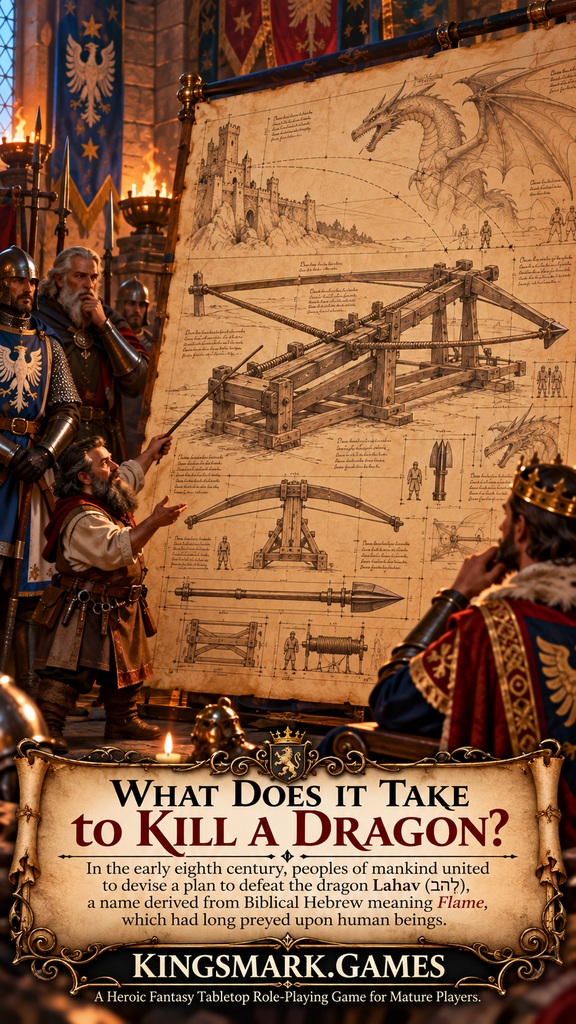
🐉 The First Dragon Falls
Imagine the consequences of such an event in a world where dragons had dominated human populations for centuries. Generations had grown up believing that resistance was hopeless, rulers had paid tribute to creatures they regarded as virtually invincible, and entire communities had learned to live beneath the ground. Then news began spreading that a dragon had been killed by human beings. Even people who doubted the reports would have understood the extraordinary significance of what was being claimed.
The death of a dragon would not necessarily have ended the suffering of the surrounding population immediately. A region previously dominated by such a creature might remain politically unstable, particularly if human authorities had served the dragon for generations. Rival rulers could compete for control, former servants might conceal their involvement, and neighboring populations might disagree about what had actually happened. Yet the greatest consequence would extend far beyond the territory once controlled by the dead creature.
Humanity had demonstrated that dragons could die.
The second recorded dragon death occurred within twelve years of the first, transforming an extraordinary event into something far more consequential. One death might conceivably be dismissed as an accident, an exceptional coincidence, or the result of circumstances that could never be repeated. Two deaths within such a short historical interval provided considerably stronger evidence that humanity had developed capabilities worth taking seriously. For creatures accustomed to extraordinary longevity and overwhelming superiority, this represented a disturbing change in their relationship with the people they had once dominated.
The End of an Age of Terror
Only two dragons are recorded as having been killed by human beings, and their deaths remain among the most significant events in Sylva’s history. Their importance does not depend upon humanity suddenly acquiring the capacity to defeat dragons routinely. The surviving dragons simply had to recognize that their physical existence was no longer beyond all conceivable danger from human civilization. A creature that could potentially live for centuries might reasonably reconsider whether tormenting a village was worth exposing itself to an organized military response.
The reactions of individual dragons undoubtedly differed. Some may have withdrawn from populated territories, established more cautious relationships with human rulers, or abandoned practices that had once seemed inconsequential. Others might have continued exercising influence through intermediaries, recognizing that diplomacy and manipulation could accomplish objectives previously pursued through open intimidation. A dragon whose interests involved scholarship, isolation, or peaceful relationships with humanity would have had little reason to regard the change as a personal catastrophe.
By the beginning of Kingsmark’s principal adventuring period around the year 1200, dragons have become extraordinarily rare. Perhaps a dozen remain across the entire world, and possibly fewer, although no human scholar possesses an authoritative census of such elusive creatures. Some are known through historical accounts and occasional sightings, while others may have withdrawn into territories where human beings seldom travel. Their existence is not entirely forgotten, but their former domination of human civilization belongs increasingly to history.
This transition did not occur overnight. Even after the second dragon death, communities had considerable reasons to remain cautious, particularly when some dragons were still capable of terrible destruction. The gradual movement toward surface habitation would have unfolded across generations, influenced by local circumstances, existing infrastructure, and the behavior of nearby creatures. In some regions the change may have been rapid, while others continued maintaining extensive underground populations long after comparable settlements elsewhere had been abandoned.
Humanity Returns to the Sunlight
As the danger of frequent dragon attacks diminished, the practical advantages of ordinary surface life became increasingly attractive. Cities expanded, new settlements appeared, agricultural production developed, and commercial roads connected growing populations. People who had spent generations treating the surface as a place of unavoidable danger gradually became more comfortable constructing substantial homes and institutions above ground. Underground chambers that had once sheltered entire communities increasingly served secondary purposes.
Some subterranean facilities became storehouses, military installations, prisons, religious sanctuaries, or secure repositories for valuable possessions. Others were retained as emergency refuges even when their surrounding populations preferred ordinary aboveground habitation. Established underground transportation networks might continue serving merchants, miners, and communities that possessed good reasons to keep their movements concealed. Still others were abandoned when their maintenance became more expensive than their continued usefulness.
Time did the rest. Political changes, economic decline, warfare, natural disasters, migration, and the disappearance of particular institutions gradually erased knowledge about many ancient complexes. Entrances collapsed or were sealed, maps disappeared, and subsequent generations inherited stories about places their ancestors had once understood intimately. An underground settlement that originally contained a thriving population could eventually become little more than a collection of mysterious passages beneath a ruined building.
Yet not everyone returned to the surface, and not every subterranean civilization regarded that change as desirable. Some peoples had developed distinctive cultural traditions around underground habitation and continued maintaining extraordinary networks beneath mountains, forests, and settled countryside. Their reasons for remaining underground were not always identical to those that had originally driven humanity beneath the earth. Security remained important, but commerce, engineering, mining, secrecy, and cultural preference also played substantial roles.
⛏️ The Tzurim: Masters of the Deep
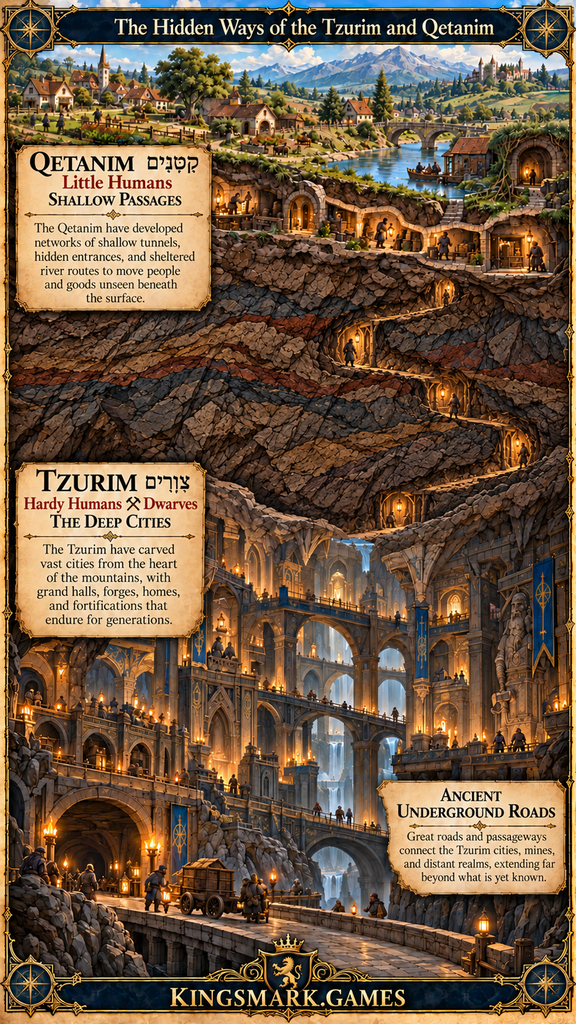
The Tzurim, commonly called Dwarves, are the great subterranean people of Sylva. Their ancestral strongholds, cities, mines, fortifications, and roads are closely associated with mountainous regions and the inhabited depths beneath them. Generations of underground life have produced cultures possessing extraordinary practical knowledge of stone, construction, mining, and subterranean engineering. Many Dwarven communities regard these environments not as temporary refuges, but as the natural foundations of their civilizations.
The scale of Dwarven infrastructure may be astonishing. Deep underground roads can connect settlements, mining districts, workshops, fortifications, and commercial centers that remain largely unknown to ordinary surface populations. A traveling merchant might deal with Dwarven intermediaries for years without discovering the location of the principal cities from which their merchandise originates. Concealed entrances and carefully controlled transportation routes can preserve both commercial advantages and the security of communities whose inhabitants have little desire to welcome every stranger who arrives at their gates.
The Player’s Handbook establishes that some ancient Dwarven passages descend farther than any living Dwarf fully understands. Miners occasionally discover structures belonging to forgotten periods, while certain underground halls have been abandoned after expeditions opened passages that should perhaps have remained sealed. This means that even a civilization famous for its subterranean expertise may possess mysteries beneath its own foundations. The distinctions between inhabited territory, abandoned infrastructure, and unexplored depths create extraordinary opportunities for adventure.
🏡 The Qetanim: Little Humans and Hidden Roads
The Qetanim, known individually as Qatan, approach subterranean habitation rather differently. These Little Humans generally favor concealed settlements, protected approaches, shallow underground passages, and waterways that permit transportation without attracting unnecessary attention. Many Qatan communities maintain ordinary houses and agricultural activities above ground, using underground infrastructure as an extension of their settlements rather than attempting to construct enormous cities deep beneath mountains. Their smaller stature also permits the construction of passages unsuitable for larger human travelers.
Secrecy has understandable practical advantages for communities whose inhabitants are considerably smaller than most of the people surrounding them. A settlement that can conceal its entrances, transport valuable goods through protected passages, and avoid exposing travelers unnecessarily possesses advantages that have little to do with conventional military strength. Small boats and waterways are especially useful because they may permit movement without leaving the same evidence associated with overland roads. Such practices have encouraged cultural traditions involving careful planning, mechanical ingenuity, concealed architecture, and defensive engineering.
These characteristics do not mean that every Qatan lives in a tunnel or that every Dwarf prefers remaining beneath the ground. Both Human Types possess substantial cultural diversity, and individual circumstances remain important. Nevertheless, their established traditions provide two very different approaches to subterranean civilization, both described in 🫀Chapter 8: Human Type. They also help explain why extensive underground transportation networks continue operating in Sylva long after ordinary human populations have largely returned to the surface.
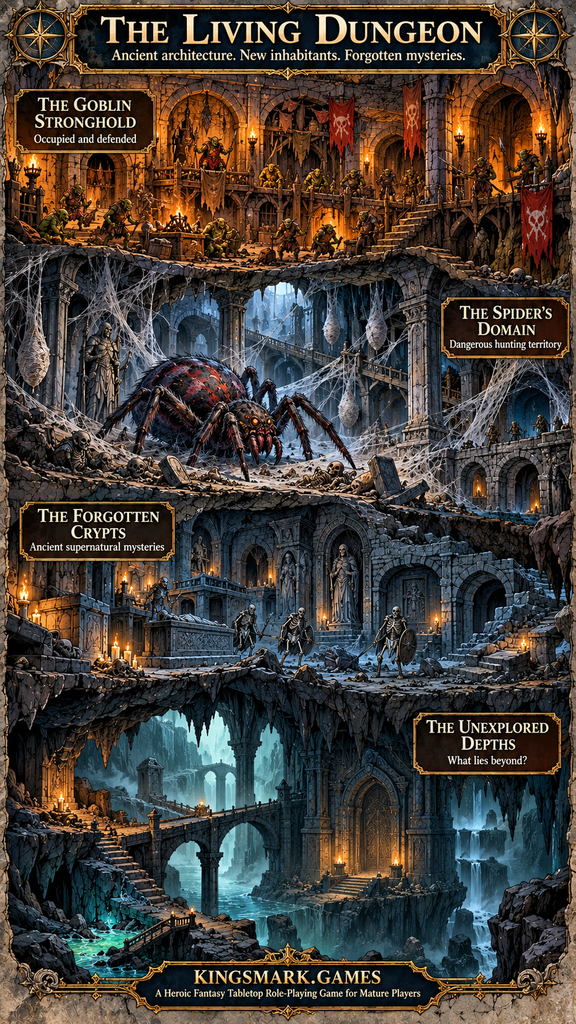
How an Underground City Becomes a Dungeon
We now arrive at the point where Sylva’s ancient history begins producing the familiar dungeons of heroic fantasy. Imagine an underground settlement originally constructed to shelter thousands of people from dragon attacks. Over several centuries, successive generations expand its residential chambers, storage facilities, workshops, defensive structures, and transportation passages. Eventually the original population leaves, perhaps because surface habitation becomes safer or because the settlement’s political and economic circumstances change.
The underground complex does not disappear simply because its original inhabitants no longer need it. Its chambers remain, its roads lead toward forgotten destinations, and its abandoned buildings become part of an enormous architectural environment gradually altered by time. Some passages flood or collapse, while others remain structurally sound enough to provide shelter for centuries. Eventually, new inhabitants discover the site and begin adapting portions of it to their own requirements.
A group of Goblins might occupy several chambers near an accessible entrance, constructing defenses and using former storage rooms for food, equipment, and stolen merchandise. The Goblins may understand only a small portion of the original complex, particularly if dangerous creatures inhabit the passages beyond their territory. They might know that the old eastern corridor leads toward an enormous cavern, for example, without having any desire to investigate what lives there. Their ignorance of the deeper structure does not prevent them from maintaining a prosperous little stronghold within the portion they control.
Elsewhere, a Giant Spider might establish its hunting territory among abandoned halls where structural collapse has created convenient connections with natural caverns. Old burial chambers might contain supernatural dangers that were not present when the original inhabitants abandoned the settlement. A small group of human criminals could occupy another entrance, unaware that Goblins live several hundred yards away through passages neither population has completely explored. Meanwhile, an ancient lower level might remain sealed behind masonry constructed by people whose names disappeared from history long ago.
There is no reason for all these inhabitants to belong to the same organization or behave as though they have gathered together for the purpose of confronting adventurers. Their territories, rivalries, food supplies, fears, and practical needs should influence the way they behave. Some may negotiate or avoid conflict, while others might defend their territory aggressively or exploit opportunities created by disturbances elsewhere in the complex. A creature that survives by remaining hidden may have little interest in participating in a battle taking place several chambers away.
This is how an underground settlement becomes a living dungeon. Its original architecture supplies the environment, successive generations establish its historical layers, and later occupants create new circumstances within structures they did not build. The resulting complex may contain hundreds of rooms and several levels without being controlled by one group or understood by any single inhabitant. It becomes a place with a history rather than a collection of conveniently arranged encounters.
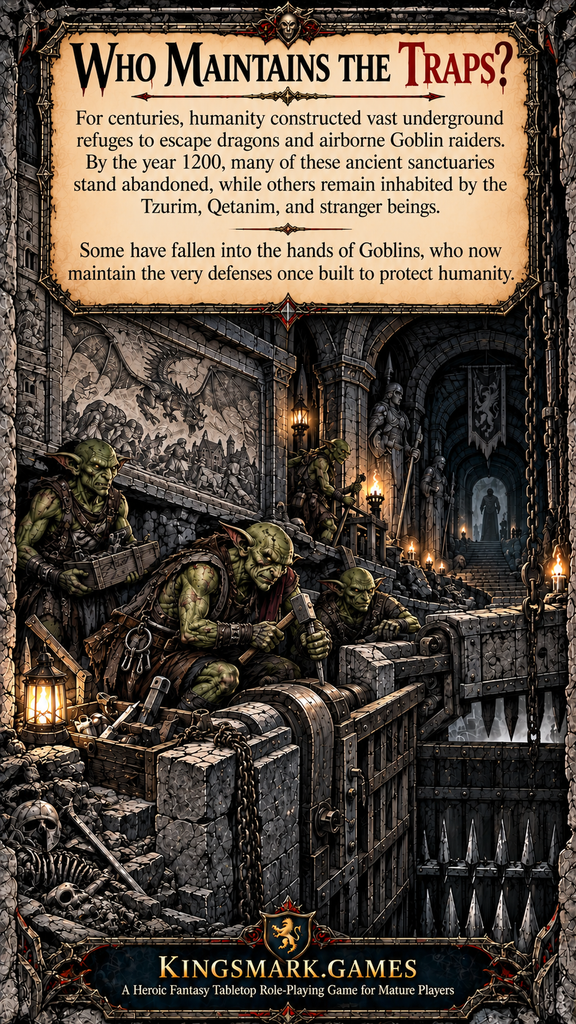
⚒️ Who Maintains All Those Ancient Traps?
There is another familiar fantasy tradition that deserves consideration: the astonishing reliability of ancient dungeon traps. An adventurer enters a structure that has supposedly been abandoned for five hundred years, opens a door, and immediately activates an elaborate mechanism that works as perfectly as the day it was constructed. Apparently, the mysterious engineers of ancient civilizations possessed mechanical maintenance standards that would be the envy of modern manufacturers. It is an entertaining convention, but one that deserves a more substantial explanation when building a believable fantasy world.
Some defensive systems can remain effective for enormous periods because their basic architecture requires relatively little maintenance. Heavy stone barriers, narrow entrances, defensive passageways, concealed chambers, and other carefully constructed features may retain their usefulness long after their builders disappear. A stone passage designed to restrict movement does not require a complicated mechanism to remain narrow, and a concealed chamber can remain difficult to discover even after its original occupants have been forgotten. Architectural defenses are therefore among the most plausible surviving features of an ancient dungeon.
Mechanical systems present more complicated questions. Wood can deteriorate, metal can corrode, supports can weaken, and moving components can become obstructed by centuries of accumulated debris. Temperature, humidity, groundwater, and the nature of the surrounding rock all influence the preservation of underground structures. A sophisticated mechanism hidden within a flooded chamber may be considerably less likely to function than one preserved in a relatively dry environment.
Fortunately, an ancient dungeon does not need to rely entirely upon untouched mechanisms surviving for centuries. Its current inhabitants may actively maintain, repair, replace, or modify the defenses surrounding their territories. Goblins occupying an old military complex might discover that certain barriers remain useful, while restoring other systems with materials scavenged from nearby chambers. They could construct new defenses based upon the original architecture without fully understanding who built the place or why.
Imagine a group of adventurers discovering a relatively well-maintained defensive passage near a Goblin settlement. Farther into the underground complex, they encounter deteriorating mechanisms, collapsed barriers, and chambers whose original functions have become difficult to recognize. The contrast provides information about the present inhabitants and the history of the location. Instead of assuming that every device is functioning because ancient dungeon machinery is inexplicably indestructible, the Game Master can consider who constructed it, how it survived, and whether anyone has maintained it.
Other hazards need not be deliberate traps at all. Flooded passages, unstable masonry, weakened floors, abandoned waterworks, dangerous creatures, and supernatural disturbances can create threats that have developed naturally over time. Some ancient devices may also remain functional through genuinely supernatural means, provided those effects make sense within the history of the location. The essential principle is that dungeon hazards should emerge from the environment rather than appearing arbitrarily because the Game Master wants the players to roll dice.
Why the Monsters Remain Mysterious
Although dragons once played an enormous role in humanity’s history, supernatural creatures are not necessarily common experiences for ordinary inhabitants of Sylva. Most people have never personally encountered a dragon, and many who believe in Goblins, Orcs, or other monsters know them principally through stories, historical traditions, and reports from distant communities. A creature may exist within a particular wilderness while remaining entirely unknown to people living only a short distance beyond its territory. Geography, limited communication, and the difficulties of preserving reliable evidence all contribute to this uncertainty.
Imagine a village suffering a Goblin raid in an isolated region. The immediate victims may know exactly what attacked them, but news of the event must travel through a world where reports are often distorted, witnesses disagree, and physical evidence may disappear before anyone examines it. People in distant settlements might interpret the event as an attack by ordinary bandits, a story exaggerated by frightened travelers, or a deliberate deception. The resulting uncertainty does not make the monsters imaginary; it demonstrates the difference between a creature existing and a society possessing universally accepted knowledge of its existence.
There may also be deeper supernatural influences affecting how people understand extraordinary events. Certain traditions speculate that spiritual entities participate in maintaining something resembling a veil around consensus reality, encouraging humanity to interpret unusual experiences according to familiar expectations. Whether such forces exist, how they operate, and what purposes they might serve remain mysteries rather than settled facts available to every scholar. This uncertainty allows Kingsmark to maintain a world where supernatural creatures are real without making every farmer, merchant, and traveling official an expert in monster identification.
For adventurers, that distinction matters enormously. A Monster Hunter might devote years to investigating creatures that most people regard as legends, while a frightened villager might genuinely struggle to describe something he has encountered for the first time. The scarcity of reliable information can create opportunities for investigation, deception, scholarship, and discovery. It also means that descending into an ancient dungeon may reveal things the surrounding population has never had good reason to believe were possible.
🏰 Greywatch: A Small Example of Sylva’s Enormous History
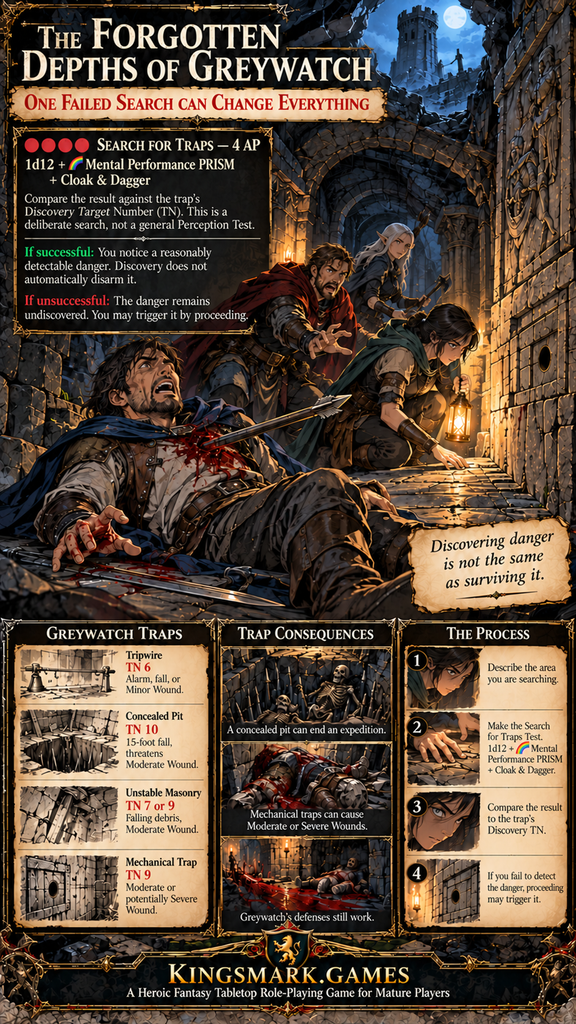
The Player’s Handbook already contains a playable example of this approach in Greywatch, the abandoned fortified watch-post described in 📎Appendix D — Dungeon. Greywatch stands approximately one hour northwest of Willowcreek, upon slightly elevated ground overlooking an old road and the surrounding marshland. From the outside, it appears to be little more than broken stone walls, a roofless tower, and the remains of an abandoned defensive position. Its visible ruins conceal a considerably older and more complicated history.
Greywatch was constructed upon foundations that were already ancient when the watch-post itself was built. Its builders incorporated existing walls, stairs, drainage systems, burial chambers, and underground rooms into their later construction. Some passages descend farther than the surviving surface structures would suggest, while differences in masonry reveal that portions of the complex belong to entirely different periods. The result is a small defensive ruin connected to architectural remains whose original purpose has largely disappeared from living memory.
The watch-post eventually became unnecessary as transportation routes changed, and its maintenance gradually declined. Later inhabitants scavenged usable stone and timber from the ruins, while flooding, collapse, dangerous creatures, and unsettling stories discouraged extensive underground exploration. Some passages became inaccessible, although subsequent erosion and structural changes eventually reopened portions of the buried complex. The site continued changing long after the soldiers who once occupied it had disappeared.
Greywatch also illustrates why a dungeon should not always contain the same creatures, hazards, and discoveries. Before running the introductory Missions, the Game Master makes a series of 1d12 rolls determining important aspects of the dungeon’s current condition, including possible inhabitants, hazards, entrances, hidden routes, and treasure. The physical location remains recognizable, but the particular circumstances confronting adventurers vary between campaigns. This allows Greywatch to function as a place with its own history rather than a rigid sequence of predetermined encounters.
The nearby city of Willowcreek supplies opportunities for obtaining equipment, gathering information, accepting Contracts, seeking companions, and preparing for expeditions. Its famous Rusty’s Adventurers’ Tavern provides a natural location for arranging such work, while the surrounding roads, farms, marshes, and settlements create a believable regional environment. The introductory Missions do not require characters to explore every chamber, defeat every creature, or discover every secret. Their choices determine which parts of the dungeon become important during play.
I particularly enjoy this approach because it allows even a relatively modest dungeon to suggest an enormous world extending beyond the immediate adventure. A strange piece of masonry, a forgotten manuscript, an unfamiliar symbol, or a sealed passage might reveal that something far older exists beneath the location. The Game Master does not need to explain the complete history of every buried civilization before the characters enter. The history becomes interesting when the characters encounter evidence of it and decide whether they want to investigate further.
Dungeons Are More Than Places to Fight Monsters
There is certainly nothing wrong with enjoying a traditional dungeon expedition involving dangerous monsters, hidden treasure, and hard-fought battles. Those experiences are among the enduring pleasures of heroic fantasy, and Kingsmark is designed to support them. Nevertheless, I find dungeon exploration considerably more interesting when the environment offers opportunities for investigation, negotiation, creative problem-solving, and decisions extending beyond combat. The best underground adventures can involve many different kinds of characters without requiring every challenge to be overcome with a sword.
A party might descend into an abandoned city to recover historical documents, investigate a missing expedition, rescue captives, locate valuable resources, or determine why unusual creatures have begun appearing near the surface. A Wizard might recognize supernatural influences within an ancient chamber, while a skilled engineer could identify architectural features that reveal something about the original builders. A Ranger might distinguish the movements of different underground creatures, and a Healer could become indispensable when an expedition encounters injured survivors. None of these situations requires every inhabitant of the dungeon to be an enemy.
The ▶️Action Scenes, 🎬Example Actions, and 💥Damage & Defense chapters provide procedures for resolving the demanding situations that arise during exploration. Yet the rules are ultimately supporting the decisions made by the characters rather than dictating one correct path through the environment. Adventurers may negotiate with inhabitants, retreat from overwhelming danger, search for alternate routes, or abandon an expedition entirely when circumstances change. An enormous dungeon should provide possibilities, not force the party to explore every chamber merely because those rooms happen to exist on the Game Master’s map.
The Forgotten Depths Beneath Sylva
The subterranean history of Sylva also creates opportunities for mysteries extending far beyond ordinary abandoned human settlements. Dwarven roads may connect places whose existence has disappeared from surface records, while ancient passages occasionally descend into regions unexplored by living inhabitants. Some underground structures may have been constructed by civilizations whose origins are no longer remembered, and others may contain evidence of historical events that contemporary scholars misunderstand. Even a well-established kingdom could possess extraordinary secrets beneath its own oldest settlements.
The possibilities become especially interesting when several generations of construction have created an immense network whose full extent is unknown. A later fortress might occupy only the upper levels of a far older settlement, while natural caverns connect the ruins to abandoned mines or distant subterranean roads. One chamber might contain ordinary historical artifacts, another might shelter creatures seeking refuge from the surface, and a third might preserve evidence of something considerably stranger. The complex need not possess one great villain controlling everything from the deepest room.
Most importantly, I want such places to reward curiosity. An adventurer who notices unfamiliar stonework should have a reason to wonder who constructed it, just as a scholar examining an ancient manuscript might discover that a supposedly ordinary fortress once belonged to a much larger civilization. The dungeon’s history can gradually reveal itself through exploration, observation, conversations, and the consequences of the players’ decisions. It should feel like a real place whose mysteries existed long before the characters arrived.
The People Who Built the Dungeons Were Trying to Survive
Return for a moment to the ancient settlement where we began. Centuries ago, a mother carried her frightened children down a stone staircase while an enormous dragon circled above the village. The chambers beneath the ground contained her neighbors, their belongings, stored provisions, and the ordinary necessities of a community struggling to survive. Generations of engineers, laborers, craftsmen, and families had contributed to the enormous structure because they understood that civilization sometimes depended upon remaining hidden beneath the earth.
Hundreds of years later, a party of adventurers might descend that same staircase without knowing anything about the people who constructed it. They would encounter broken walls, unfamiliar masonry, forgotten rooms, deteriorating defenses, and perhaps creatures that had occupied the complex long after its original inhabitants departed. Somewhere among the abandoned chambers might remain evidence of the settlement’s former life: a child’s possession, a damaged religious text, a forgotten family record, or a passage leading toward rooms that nobody has entered for centuries.
The adventurers may discover valuable treasure, confront dangerous monsters, recover something of extraordinary importance, or abandon the exploration after deciding that the risks are too great. Whatever happens, they are moving through the remains of a civilization whose struggles and accomplishments preceded their own adventures by generations. The underground environment possesses a history independent of the characters, and discovering even a small portion of that history may become one of the most memorable parts of the campaign.
That is why I wanted humanity’s history with dragons to explain the existence of so many dungeons in Sylva. The underground world is not simply a convenient collection of monster lairs, nor is it an enormous arrangement of traps created for the entertainment of wandering adventurers. It represents centuries of human ingenuity, fear, adaptation, suffering, and determination, followed by generations of abandonment, rediscovery, and changing occupation. The dragons of Sylva helped shape not only the world’s legends, but the very architecture of its civilizations.
The people who built those dungeons were not trying to create an adventure. They were trying to survive.
Explore the complete 👑Kingsmark Player’s Handbook online for free, including its 📎Bestiary and the introductory 📎Dungeon Adventure, and discover what may be waiting beneath the world of Sylva.
John Alan Martinson
Creator of Kingsmark and Jack’s Cinematic d12
A Heroic Fantasy TTRPG for Mature Players
About The Author