
Creating Memorable Fantasy Heroes

How to Create a Memorable Fantasy Character with a Believable Personality and Backstory
Consider this scenario:
The merchant’s offer is generous. Fifty silver pieces to escort his caravan through the mountains, with an additional reward if everyone arrives before winter closes the passes. Your companions have already agreed to the Contract, and the journey has gone reasonably well until an overturned wagon blocks the road. Beneath its shattered wooden frame lies an injured traveler, calling desperately for help. Somewhere among the trees, something large is moving toward the sound of his voice. The merchant insists that everyone abandon the wagon immediately. He is paying you to protect his cargo, not risk your lives rescuing strangers. Your companions begin preparing to leave, but you hesitate.
What does your character do?
The answer depends upon considerably more than the numbers recorded on a character sheet. A courageous warrior might refuse to abandon the injured traveler. Another equally courageous warrior might recognize that attempting a rescue would endanger everyone else and reluctantly obey the merchant. A third might demand additional payment before risking his life, while a fourth might act without considering the consequences. None of these decisions necessarily reveals which character is the strongest, fastest, or most experienced fighter. They reveal something much more interesting: what kind of person the character has become.
Creating a memorable fantasy character begins with understanding that an adventurer is not simply a collection of combat abilities, magical powers, impressive equipment, and unusual physical characteristics. An adventurer is a person with experiences, ambitions, relationships, convictions, weaknesses, and an individual understanding of the world. Those qualities influence decisions when the obvious course of action conflicts with something the character believes or desires. They also determine whether your companions remember your character as an interesting individual or merely as the warrior who carried the biggest sword.
A believable personality does not require an elaborate biography, professional acting experience, or dozens of pages explaining everything that happened before the campaign began. What matters is creating enough personal history to understand why your character thinks and behaves as he or she does, while leaving room for experiences that have not happened yet. The goal is not to write an entire life in advance. It is to create someone capable of living an interesting one.
Creating a Personality That Feels Human
Many players begin creating characters with a few descriptive words. Their adventurer is brave, honorable, clever, suspicious, arrogant, compassionate, reckless, or unusually charming. These descriptions provide a starting point, but they tell us relatively little about how the individual actually behaves. Two characters may both be considered honorable while disagreeing passionately about what honor requires. One considers keeping a promise sacred, even when the promise was foolish. The other believes that honoring an unjust promise is itself dishonorable. When circumstances force these individuals to choose between their competing interpretations of honor, their personalities become recognizable through their actions.
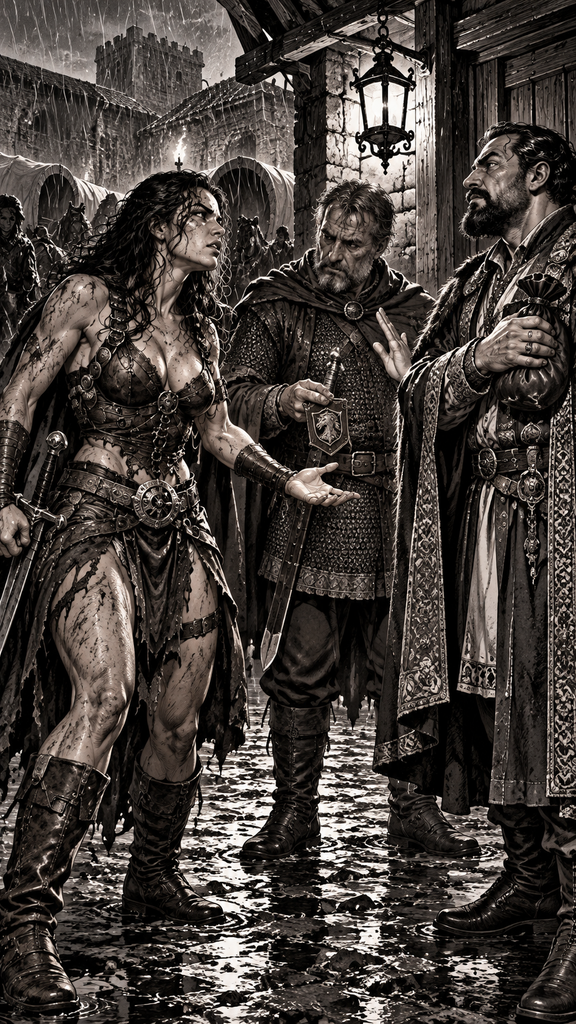
The most useful personality traits are therefore those that produce observable behavior. A cautious character might always inspect a room before entering, insist on establishing watches during wilderness expeditions, or quietly position himself near the exit whenever negotiations become tense. A generous character might routinely purchase meals for strangers, give money to beggars, or offer assistance to people who cannot afford to repay him. An ambitious character might study the clothing and manners of influential nobles, ask inconvenient questions about opportunities for advancement, or quietly compare his accomplishments with those of more successful adventurers. These small decisions make personality visible without requiring dramatic speeches.
Consider why those habits exist. Perhaps the cautious character once survived an ambush that killed several companions. Perhaps the generous character remembers being hungry and dependent upon strangers. The ambitious character may have grown up in a prosperous family that expected extraordinary achievements, or in poverty where advancement seemed the only escape. Each explanation introduces a connection between the character’s past and present behavior. The explanation does not have to be tragic or extraordinary. Sometimes a person is generous because generosity was practiced throughout a happy childhood, or confident because years of successful work provided good reasons for confidence.
An especially effective technique is to connect a formative experience to a belief, that belief to a habitual behavior, and that behavior to the consequences it creates. Imagine someone who once lost an important opportunity because he trusted an unscrupulous employer. He concludes that promises mean little without evidence. Consequently, he insists upon written Contracts, asks detailed questions about payment, and becomes suspicious whenever a wealthy patron demands unquestioning loyalty. These habits may protect the adventuring party from exploitation, but they could also offend someone genuinely trustworthy. One relatively ordinary experience has produced a conviction, recognizable behavior, practical strengths, and opportunities for conflict.
Believable personalities also contain contradictions. A warrior may be fearless in combat but terrified of disappointing his family. A religious Priest might demonstrate extraordinary compassion toward enemies while remaining unforgiving toward himself. A Thief may lie effortlessly to strangers yet regard dishonesty between friends as an unforgivable betrayal. A celebrated Minstrel might entertain hundreds of people without hesitation but struggle to express affection privately. Such contradictions do not automatically make characters inconsistent. Real people frequently behave differently according to circumstances, relationships, and the particular things they value.
It is equally useful to imagine your character during ordinary moments. How does this person behave while eating breakfast, bargaining with a merchant, listening to an elderly traveler, or discovering that a companion has borrowed something without permission? Does your character enjoy conversation, prefer solitude, laugh easily, complain frequently, maintain meticulous equipment, or become visibly impatient when others waste time? Consider how the individual treats people who possess no wealth, authority, or useful information. These interactions may reveal more about someone’s personality than an elaborate declaration of personal philosophy.
Avoid confusing personality with constant theatrical performance. Distinctive speech patterns, accents, gestures, and mannerisms can be entertaining, particularly when they arise naturally from the character’s background. However, they are not prerequisites for good role-playing. A player who quietly explains that his character speaks respectfully but firmly to a suspicious guard can portray a convincing personality without performing an accent or delivering an elaborate speech. The important consideration is whether the character has a recognizable perspective and behaves accordingly.
Turning a Backstory into a Believable Life
Kingsmark’s Character Creation rules separate a character’s abilities from the experiences that shaped the individual possessing them. Your 🫀Human Type establishes certain natural characteristics and limitations, while your 🎭Character Class describes the training and abilities you bring to an adventure. Neither automatically determines your personality, morality, beliefs, or personal history. A Man-at-Arms might be a disciplined veteran, an impatient young mercenary, a reluctant soldier, or a devoted family member who considers military service an unfortunate necessity. Two adventurers of the same Class can possess vastly different personalities because they have lived different lives.
The Player’s Handbook develops this distinction through its Backstory Engine, which uses seven connected elements to establish the important circumstances of an adventurer’s life. These are Roots, Former Life, Turning Point, What Did It Mean to You?, Someone Who Matters, Unfinished Business, and Direction. Players can determine their histories with 1d12 rolls, choose results that suit their concept, combine possibilities, or expand upon the results through their own imagination. The purpose is not to generate random biographical trivia. It is to discover enough about a character’s past to understand the person entering the campaign.
To demonstrate how these elements work together, consider an ordinary Human woman named Nadia, a newly created Shieldmaiden. Rather than imagining her as an already famous warrior who has defeated countless enemies, we will establish a plausible history explaining her training, personality, and reasons for seeking adventure.
Nadia grew up in a modest household in a busy riverside settlement. Her family had little money, but her parents worked hard, treated their neighbors decently, and expected their children to contribute. This corresponds to the Backstory Engine’s Hard but Honest upbringing. As a girl, Nadia helped her family transport goods, listened to merchants arguing over prices, and learned how easily an unexpected expense could threaten an otherwise respectable household. She enjoyed the independence of working around travelers and developed an easy familiarity with people from different backgrounds. Nothing particularly extraordinary happened during her childhood, yet these experiences established her practical outlook, appreciation for honest work, and concern for financial security.
Her Former Life was spent guarding caravans. Initially hired for relatively undemanding journeys, she gradually acquired professional military skills, learned to handle weapons, and discovered that she possessed both the courage and discipline necessary for dangerous work. She also learned the less glamorous realities of guarding travelers: maintaining equipment, watching horses, enduring miserable weather, inspecting roads, recognizing suspicious behavior, and staying awake when everyone else desperately wanted to sleep. Her experience explains why she has become a Man-at-Arms, commonly called a Shieldmaiden, without requiring that she begin her adventuring career as a legendary warrior.
Then came her Turning Point. During a journey through dangerous country, an attack scattered the caravan and overturned a wagon carrying several travelers. Nadia’s captain ordered the surviving guards to retreat with the merchant’s valuable cargo rather than risk further casualties. Nadia believed that abandoning the trapped passengers would violate the purpose of their employment. She disobeyed, returned to the damaged wagon, and helped the travelers escape. Her intervention saved lives, but the merchant blamed her for lost property and withheld her wages. Her captain dismissed her for insubordination.
This incident becomes considerably more interesting when we consider what Nadia believes it meant. She might conclude that protecting human life takes precedence over obedience to authority. Alternatively, she might believe that acting honorably requires accepting personal consequences, even when others behave dishonorably. Perhaps she recognizes that her captain had legitimate responsibilities to the remaining travelers and still wonders whether she made the right decision. Any of these interpretations could become an enduring conviction without determining every future choice she will make.
Nadia’s younger sister remains Someone Who Matters. Her sister has stayed in their hometown, working to establish a respectable trade while helping their aging parents. The sisters correspond regularly, although Nadia sometimes conceals how dangerous her work has become. Nadia also has Unfinished Business: she owes money borrowed after losing her caravan employment. Her larger Direction is Security. She hopes to earn enough wealth to provide her family with stability and eventually establish a home of her own. Her Immediate Want is more practical: find profitable employment, settle her outstanding debt, and prove that her dismissal does not define her professional reputation.
Now Nadia possesses a coherent history rather than an assortment of unrelated facts. Her financial anxieties arise naturally from her upbringing and recent unemployment. Her confidence comes from professional experience. Her skepticism toward wealthy employers comes from a specific incident rather than an arbitrary dislike of authority. Her affection for her sister gives her a reason to survive dangerous adventures, while her outstanding debt gives her a reason to accept them. She might appear outwardly cheerful, practical, and approachable while privately worrying that another principled decision could destroy everything she is trying to build.
None of these details requires additional 💪Attributes, ⚒Skills, Blessings, or equipment beyond what the rules permit. In Kingsmark, backstory may explain reasonable knowledge, relationships, reputation, and circumstances, but it does not independently grant mechanical advantages. Players who want official 🪵Burdens or 🕊Blessings should use their established ✍Character Creation rules rather than treating ordinary personality flaws as automatic sources of benefits. A character may be stubborn, impatient, or distrustful without those qualities necessarily becoming formal mechanical disadvantages.
The same principles apply to every Human Type and Character Class. A Dwarf need not be a miner or blacksmith, an Elf need not be a graceful archer, and a Qatan need not possess a particular occupation simply because of cultural expectations. A Human Giant might be a gentle scholar who finds his immense size socially inconvenient. A Witch might come from a wealthy scholarly household, while a Wizard might have learned the importance of magic through a childhood spent among impoverished farmers. Cultural background can provide meaningful context, but individuals remain capable of embracing, questioning, rejecting, or transforming the traditions that shaped them.
One frequent weakness in fantasy backstories is the assumption that every interesting adventurer must have suffered extraordinary tragedy. Dead parents, destroyed villages, murderous rivals, ancient prophecies, and mysterious curses can provide compelling material when used thoughtfully. However, they become monotonous when every character has experienced several of them before play begins. A loving family, prosperous childhood, successful apprenticeship, or happy marriage can be equally useful. Someone who has enjoyed a good life may undertake dangerous adventures precisely because there are people and places worth protecting. Others may seek discovery, knowledge, service, achievement, or the simple pleasure of seeing the world beyond their homeland.
Another weakness is giving a beginning adventurer accomplishments that would already make the character one of the most remarkable people in the kingdom. A player might imagine having slain a dragon, commanded armies, defeated legendary warriors, or mastered forgotten magical secrets before joining the campaign. Such achievements can conflict with the abilities established during Character Creation and leave little room for meaningful advancement. A more convincing beginning often involves someone competent within a limited profession who now confronts dangers beyond previous experience. An experienced hunter who decides to pursue monsters may discover that stalking deer has not prepared him for everything lurking in Sylva’s wilderness.
The strongest backstories provide explanations and possibilities without attempting to dictate the future. Nadia’s former captain could eventually reappear, but he need not become her lifelong enemy. Her sister could require assistance, become successful independently, or surprise Nadia by making decisions she does not understand. Her outstanding debt might lead to a difficult Contract, an unexpected opportunity, or a confrontation with someone who considers her dishonest. These possibilities give the Game Master material for adventures without requiring a predetermined story.
Making Personality Matter During Adventures
A memorable character needs more than a past. That history must occasionally influence decisions made during actual play. One useful approach is to distinguish between what a character wants immediately, what the character hopes to achieve eventually, and what the character fears losing along the way. These desires need not be equally powerful, and they may sometimes contradict one another.
Nadia wants silver because she needs to repay her debt. She seeks long-term security because she remembers how vulnerable her family was to financial hardship. Yet she also considers herself someone who protects others when circumstances become dangerous. Returning to the injured traveler in our opening example might satisfy her conscience while threatening the financial future she desperately wants to secure. Continuing with the caravan might preserve her income while forcing her to confront the possibility that she has become the kind of guard she once disobeyed.
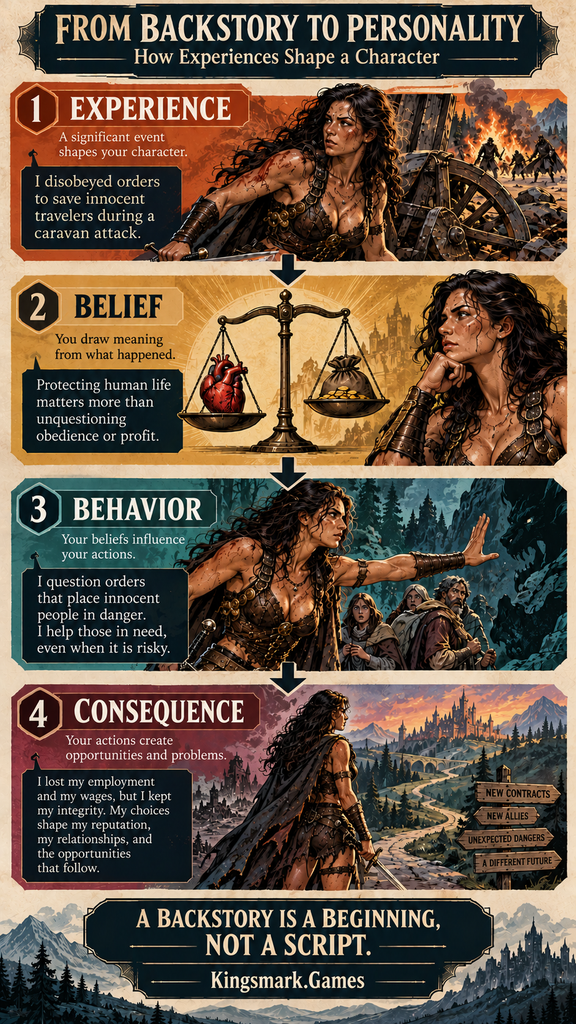
Neither decision should be predetermined merely because of something written in her backstory. Perhaps Nadia has become more cautious since losing her employment. Perhaps she attempts to negotiate with the merchant, organizes a rescue that minimizes danger, or convinces her companions to help. Perhaps she decides to abandon the traveler and spends the following weeks wondering whether she has betrayed her principles. The interesting part is not whether she always behaves heroically. It is whether the decision makes sense for the person she has become and creates consequences worth exploring.
Relationships make these decisions more compelling. An adventurer’s relatives, friends, mentors, lovers, rivals, employers, and former companions represent more than names on a page. Each relationship creates expectations, obligations, emotional attachments, and opportunities for change. Someone may admire your character’s courage while resenting his recklessness. A former mentor might remain affectionate but disapprove of his present occupation. A spouse might understand the need for dangerous work while fearing that each departure could be the last.
The relationships between Player Characters are particularly important because the adventuring party must function as something more than a collection of strangers sharing expenses. Kingsmark’s Party Connection options establish plausible reasons for cooperation, including former employment, shared acquaintances, previous assistance, common enemies, personal recommendations, and dangers survived together. Characters need not begin as friends. Mutual respect, professional obligation, shared interests, or simple necessity may be sufficient. What matters is giving them believable reasons to continue working together even when disagreements arise.
Personality conflicts can make a campaign richer when players remember that disagreement between characters need not become disagreement between players. A cautious Thief might object to a Shieldmaiden’s willingness to risk everything for a stranger. A Priest might challenge a companion’s desire for revenge. A practical Healer might question whether rescuing one injured person justifies risking the lives of several others. These disagreements can lead to memorable conversations, compromises, and changing relationships. However, repeatedly refusing to cooperate, sabotaging companions, or using personality traits to excuse destructive behavior rarely produces enjoyable role-playing. A character can possess strong convictions while still recognizing the importance of friendship, necessity, and shared responsibility.
Kingsmark’s 🗨️Dialog Scenes reinforce another valuable principle: players should make decisions appropriate to their characters without needing to possess all their characters’ personal abilities. Someone portraying a persuasive Minstrel need not personally deliver a brilliant speech. The player can explain the argument, offer, or emotional appeal being attempted, allowing the character’s Social Skills and other relevant abilities to determine effectiveness when a Test is appropriate. Similarly, a player portraying an experienced warrior need not possess professional military knowledge to describe the general tactical intention behind an action. Good role-playing involves making meaningful choices from a character’s perspective, not proving that the player possesses the same expertise.
Personality should also develop through consequences. A character who begins the campaign distrustful of strangers might gradually learn to rely upon companions who repeatedly demonstrate loyalty. Someone obsessed with wealth might discover that financial security means less than expected after finding genuine friendship. A proud warrior might learn humility following a humiliating defeat, while a timid scholar might become unexpectedly courageous through small acts of responsibility. Character development does not require abandoning every original conviction. Some experiences reinforce existing values, while others expose weaknesses in beliefs that once seemed unquestionable.
Allow your character to surprise you occasionally. A compassionate person may lose his temper. A selfish person may perform an unexpectedly generous act. A frightened person may display extraordinary courage when someone beloved is threatened. These moments are especially convincing when they emerge from circumstances rather than appearing merely to create dramatic entertainment. A character’s established personality provides continuity, but continuity should not become a prison.
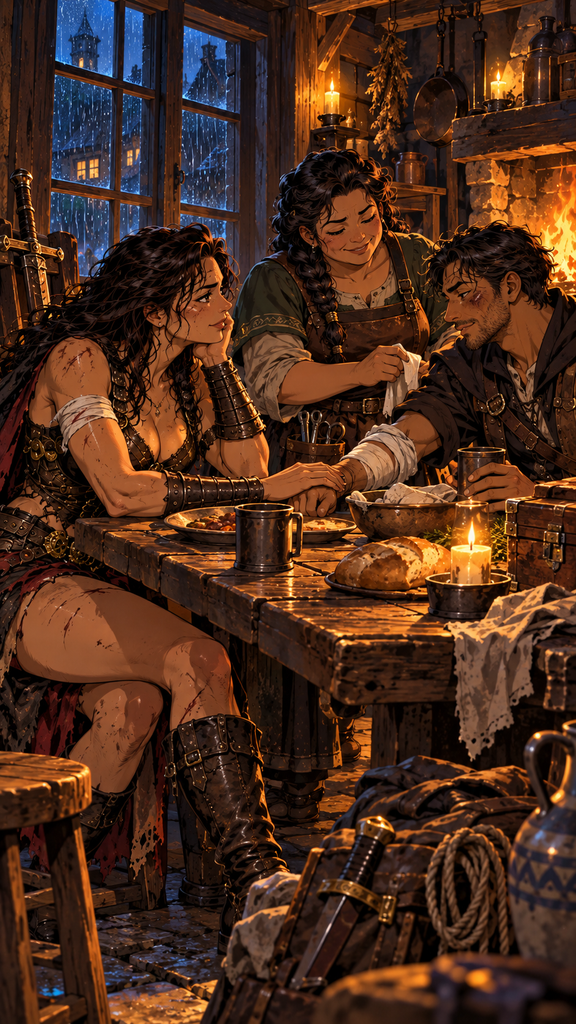
As adventures unfold, consider how your character’s relationships, ambitions, convictions, and everyday habits have changed. New companions may become more important than old acquaintances. A former enemy may earn respect. An unfinished obligation may finally be resolved, only to reveal a different purpose worth pursuing. Even physical wounds, frightening experiences, and hard-won victories can influence the way a character approaches future danger. The life created during ✍Character Creation becomes the foundation upon which the campaign builds, rather than an unchanging explanation for every decision.
The purpose of a believable backstory is ultimately to give your adventurer somewhere meaningful to begin. You need to understand enough about the character’s upbringing, previous experiences, relationships, and ambitions to make interesting decisions, but you do not need to know how the entire life will unfold. That is what the adventures are for.
When your character eventually stands before a desperate stranger, a dangerous enemy, an irresistible temptation, or a choice between personal ambition and loyalty, the decisions you make will reveal who that character truly is. Some will confirm the person you originally imagined. Others may change that person forever. Years later, your fellow players may not remember the exact numbers recorded on your character sheet, but they may still remember the companion who risked everything for a stranger, the warrior who finally learned mercy, or the unlikely hero who discovered something more valuable than the treasure everyone had been seeking.
Those are the characters worth remembering, and their greatest stories begin when the dice first hit the table.
About The Author