Choosing Your Kingsmark Character Class
17 Paths to Heroic Adventure
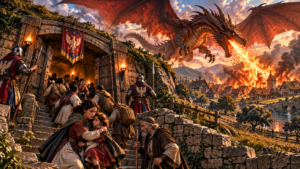
Imagine a merchant caravan stranded along a narrow mountain road. An overturned wagon blocks the passage, several travelers have been injured, and frightened horses are refusing to move. Somewhere beyond the trees, something large is approaching. The merchants hear branches snapping, followed by a terrible sound that none of them recognize. They have no idea whether they are about to encounter bandits, a dangerous animal, or something considerably worse.
Now imagine seventeen different adventurers arriving at the scene. A ⚔️Man-at-Arms might immediately begin organizing the caravan’s defenses, while a 🏹Ranger investigates the surrounding terrain and searches for signs of an approaching enemy. A 🎯Monster Hunter might recognize unusual tracks suggesting that the travelers are facing something far more dangerous than an ordinary predator. A ❤️🩹Healer would naturally be concerned about the wounded, while a 🎶Minstrel might try to calm the terrified survivors and discover what they know. Meanwhile, a 🔮Prophet might have received a troubling revelation whose significance is only now becoming apparent.
Every adventurer confronts the same situation, but each brings different training, abilities, knowledge, and perspectives to the encounter. Their Character Classes help determine what they are particularly good at, yet their personalities and decisions ultimately influence how they respond. The Man-at-Arms could be a compassionate protector or a ruthless mercenary. The Ranger might be courageous, cautious, arrogant, or frightened. The Minstrel could be more interested in gathering information than entertaining anyone. Even characters with identical training can approach the same problem in completely different ways.
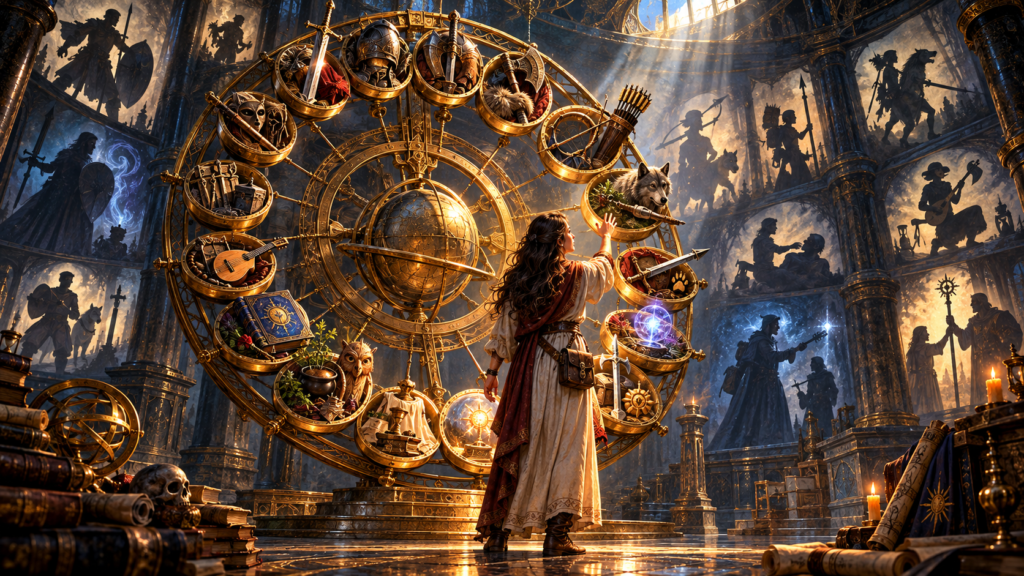
This is one of the ideas behind the seventeen 🎭Character Classes in Kingsmark, my heroic fantasy tabletop role-playing game for mature players. Choosing a Character Class is not simply about selecting the most powerful collection of abilities. It is about deciding what kinds of challenges you want to face, what you want your adventurer to excel at, and what sort of experiences you hope to have throughout a campaign.
Whether you are an experienced Dungeons & Dragons player searching for something different or someone creating their first tabletop role-playing character, understanding these distinctions can help you make a more satisfying choice.
🎭 What Makes Character Classes Different in Kingsmark?
In many tabletop role-playing games, Character Classes determine a character’s principal abilities, combat options, and advancement path. Kingsmark also uses Classes to represent specialized training, but its underlying mechanics approach character development differently from conventional class-and-level systems.
Every character possesses twelve 💪Attributes, five 🌈Attribute PRISMs, and twenty-four ⚒Skills. These provide the foundation for physical performance, mental capabilities, social interaction, professional knowledge, and spiritual abilities. Your Character Class establishes particular training and starting benefits, including relevant Skills, Trained Attribute Bonuses, equipment, and access to Schools of Magic where appropriate. You can examine these systems in Chapter 1 — 💪Attributes, Chapter 2 — 🌈Attribute PRISMs, and Chapter 3 — ⚒Skills.
Unlike games in which choosing a Class commits you to an extensive sequence of automatically acquired class powers, Kingsmark places considerable emphasis upon the development of the character’s underlying abilities. Adventurers earn ⭐Experience Points through actual adventuring and invest those points in improving their Skills and Attributes. The amount of XP invested determines their ⭐Action Star Level, which represents their growing experience and stature as professional adventurers.
This means two characters belonging to the same Class can develop quite differently over time. One ⚔️Man-at-Arms might concentrate on becoming an extraordinary swordsman, while another develops broader abilities involving military knowledge, physical endurance, or other practical talents. Their Class provides a common professional foundation without requiring their careers to become identical.
Kingsmark also treats danger as something more substantial than gradually subtracting conventional hit points. Adventurers suffer 🩸Physical Wounds and potentially 🧠Mental Trauma, making injury, recovery, preparation, and survival important considerations. An exceptionally powerful warrior can still face serious consequences from a dangerous encounter. A brilliant magician might possess extraordinary supernatural abilities but remain vulnerable when enemies close the distance.
Consequently, choosing a Character Class involves considering both its strengths and the circumstances in which those strengths are useful. The best choice is not necessarily the character who can inflict the greatest amount of damage. It may be the one whose abilities and responsibilities produce the adventures you most want to experience.
The complete starting requirements, training, equipment, and magical access for all seventeen Classes appear in Chapter 9 — 🎭Character Class. The following guide explores what makes each Class interesting and why different players might enjoy portraying one.
⚔️ Warriors: Strength, Discipline, and the Art of Combat
Some players enjoy the excitement of physical confrontation. They want to stand against dangerous enemies, execute impressive maneuvers, protect companions, and experience the intensity of cinematic action. Kingsmark provides several Classes built around different approaches to combat, but they are not interchangeable. Military discipline, extraordinary physical strength, aggressive fighting, and supernatural martial training each produce distinctive experiences.
⚔️ Man-at-Arms — The Professional Warrior
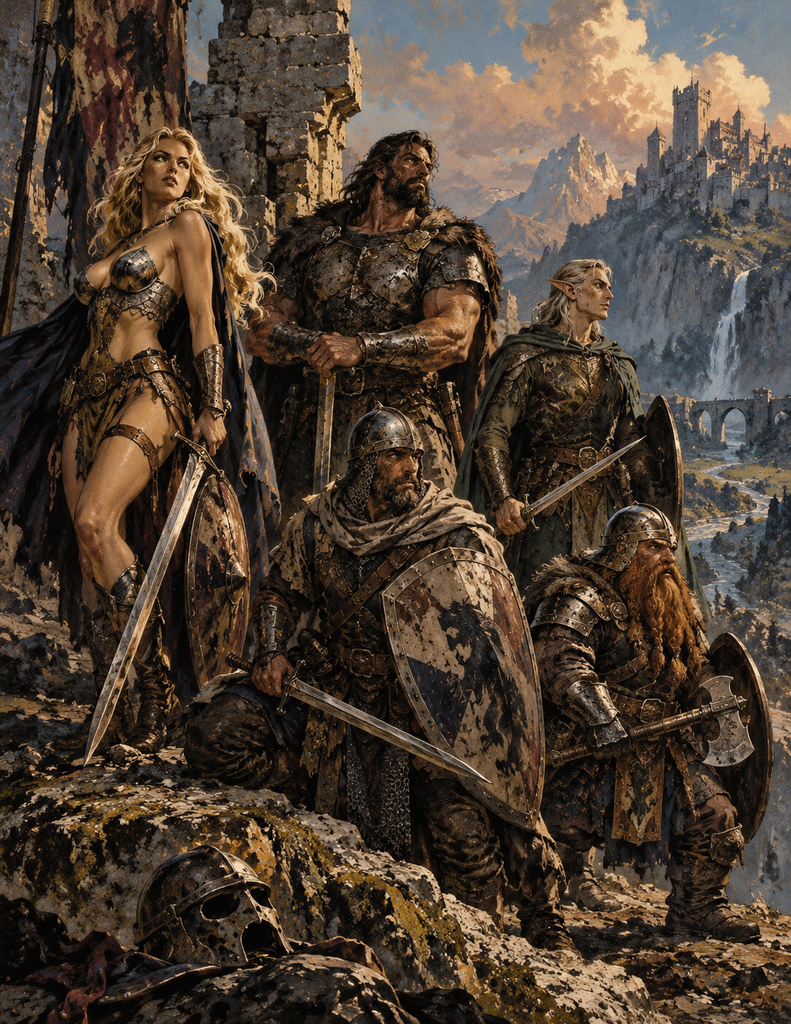
The Man-at-Arms represents the trained professional soldier whose principal occupation is armed combat. Historically, men-at-arms included heavily equipped soldiers serving noble households, military forces, and mercenary organizations. Knights were among them, but not every man-at-arms possessed noble status or a formal title. Kingsmark preserves that distinction by making the Class a profession rather than a social rank.
A Man-at-Arms begins with practical combat training involving Armed Combat, Unarmed Combat, Shield Combat, Infantry Athletics, and Man Skills. Starting equipment includes a martial melee weapon, shield, mail hauberk, padded armor, and helmet. The Class is particularly suited to players who enjoy conventional weapons, armor, disciplined fighting, and the responsibility of confronting dangerous opponents directly. Military experience also makes the character useful when organizing watches, evaluating defensive positions, preparing for ambushes, and understanding the behavior of armed enemies.
The Man-at-Arms is not restricted to one weapon or fighting style. A soldier might favor swords and shields, spears, polearms, axes, or other military weapons. Female Men-at-Arms, commonly called Shieldmaidens, may emphasize mobility, archery, psychological tactics, and controlling the distance between themselves and stronger opponents. Qatan cannot select this Class because its traditional military training and equipment are incompatible with their established warrior culture.
If you enjoy cinematic heroes who survive through training, discipline, determination, and professional competence, the Man-at-Arms offers a strong foundation. Perhaps your character is a veteran mercenary who has grown tired of fighting for money, a disgraced soldier seeking redemption, or a former castle guard determined to become something greater. The Class provides the martial foundation, but the individual behind the armor remains yours to create.
💪 Brute — The Powerhouse
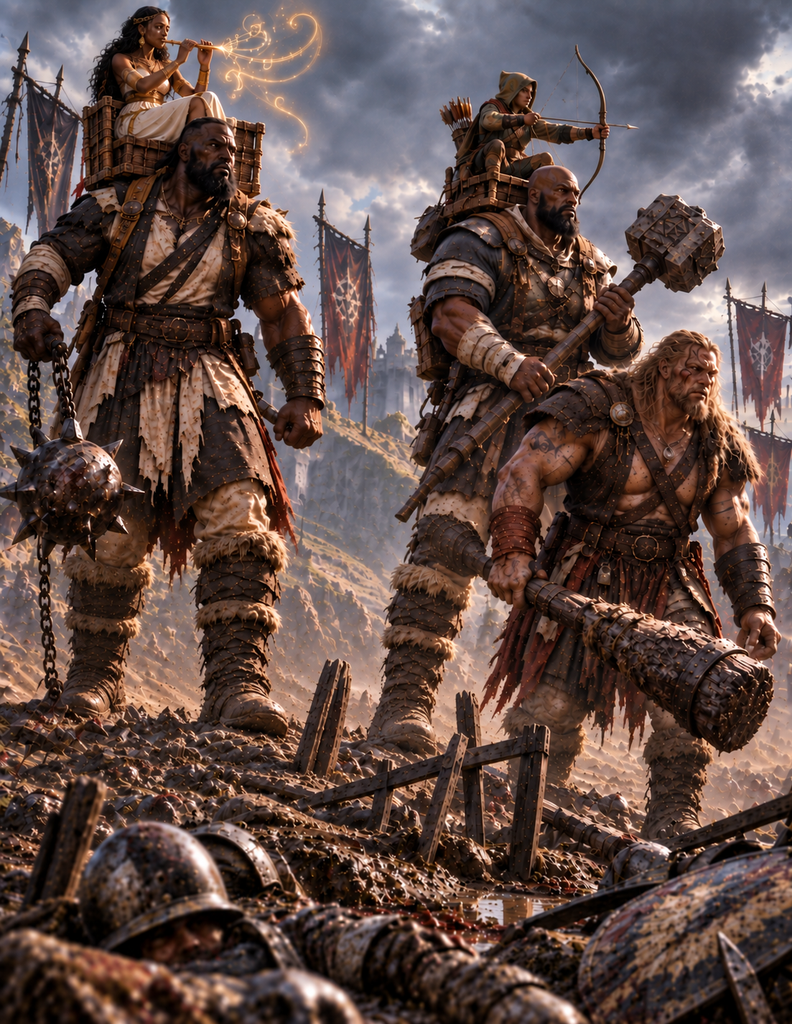
The Brute is one of Kingsmark’s most physically imposing Classes, available exclusively to male Gibborim, or Human Giants. Brutes are battlefield shock warriors whose extraordinary size, Strength, and mass allow them to overwhelm opponents through physical force. Where a Man-at-Arms relies heavily upon professional weapon training and defensive discipline, the Brute specializes in grappling, wrestling, throwing, shoving, and devastating physical attacks.
A Brute begins with particularly strong Unarmed Combat and Infantry Athletics training, along with Armed Combat. Heavy crushing weapons such as war hammers, maces, morning stars, and great clubs suit the Class’s fighting methods. Imagine a towering warrior physically forcing an enemy away from a vulnerable companion, throwing an attacker to the ground, or using overwhelming strength to create an opening that smaller adventurers could never accomplish in quite the same manner.
The Brute also possesses an unusual opportunity for cooperation with Qatan adventurers. Kingsmark describes specialized Brute Saddles that permit an adult Qatan to ride securely upon a Giant’s back. A Qatan archer might fire from this elevated position, while a magical companion could cast Spells as the Brute provides mobility and protection. This relationship introduces tactical possibilities rarely associated with traditional fantasy warrior Classes.
A Brute need not be an unintelligent bully or a mindless engine of destruction. Consider a gentle Giant who uses extraordinary strength primarily to defend others, or an educated wrestler whose imposing appearance conceals patience and wisdom. For players who enjoy tremendous physical power, unusual grappling possibilities, and the spectacle of a truly formidable warrior, the Brute provides a distinctive experience.
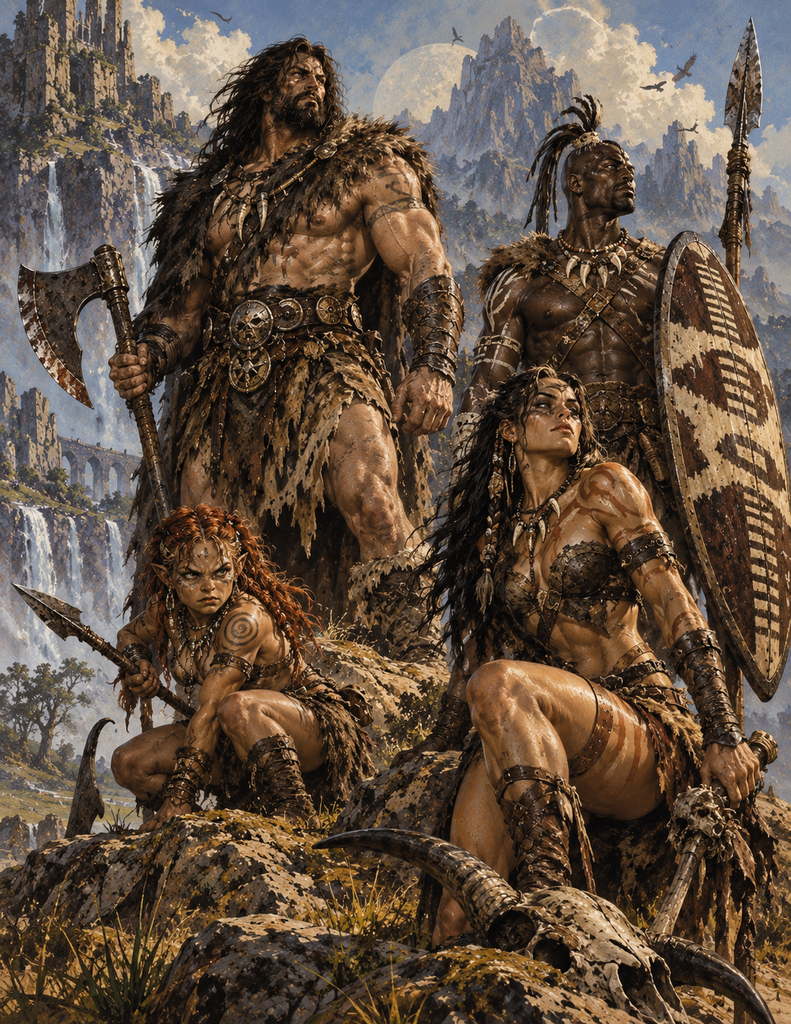
😡 Barbarian — The Ferocious Combatant
Kingsmark’s Barbarian represents a warrior shaped by life beyond the institutions of settled kingdoms. Barbarians may emerge from nomadic peoples, seafaring raiders, remote mountain communities, forest societies, or other cultures where hunting, harsh travel, tribal warfare, and survival have shaped their training.
The Barbarian’s defining combat ability is 😡Primal Rage. During an ▶️Action Scene, a Barbarian may enter this trained state of extreme combat arousal and ignore Pain Modifiers caused by 🩸Physical Wounds. This allows the character to continue fighting despite injuries that might seriously impair another adventurer. However, Primal Rage does not prevent wounds, provide supernatural invulnerability, or eliminate the possibility of death. When the Rage ends, the accumulated injuries remain.
Primal Rage also creates important behavioral restrictions. While an enemy remains an immediate threat, the Barbarian cannot simply retreat, hide, adopt Defensive Stance, or perform actions requiring careful concentration. Ending Rage while danger remains requires a successful Discipline Defense Test. This makes the ability powerful but potentially dangerous, especially when a situation suddenly demands restraint rather than aggression.
Outside combat, Barbarians possess useful wilderness training, including Survival and physical athletic capabilities. The Class is available to appropriate Anashim, Qatan, and Gibborim characters, but not Elyonim or Tzurim under the PHB’s cultural restrictions. A Barbarian need not be perpetually angry or irrational. Rage could manifest through battle cries, controlled breathing, ritual movement, or an unnervingly calm determination to destroy an enemy. Players attracted to aggressive combat, difficult survival, and warriors shaped by demanding cultures may find this Class particularly rewarding.
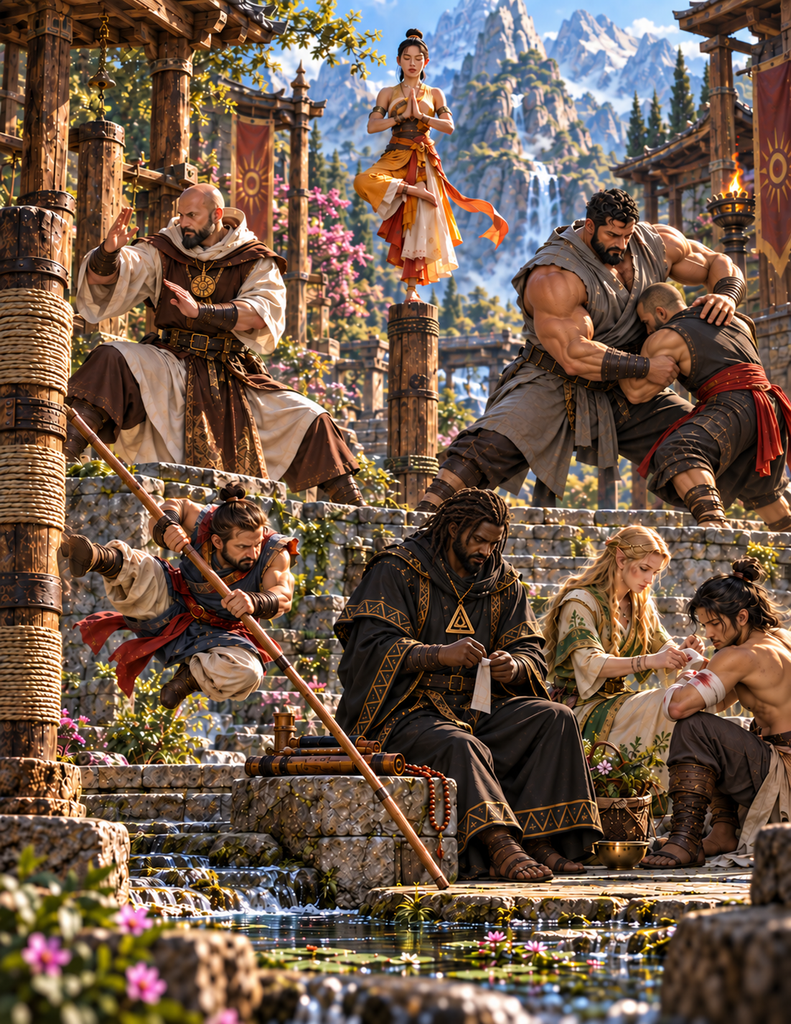
🥋 Monk — The Disciplined Martial Artist
The Monk provides a different experience from conventional armed warriors. Monks undergo demanding physical, mental, and spiritual training, developing extraordinary control over movement, balance, precision, striking, grappling, and personal endurance. They generally favor mobility and bodily control rather than depending upon heavy armor or cumbersome weapons.
Kingsmark’s Monk is also a supernatural practitioner. The Class requires 🌬Spirit +2 and possesses access to 🥋Martial Adept Magic and 🌬Astral Magic. Additional Schools become available through the character’s chosen Monastic Tradition. Traditions such as the Way of the Empty Hand, the Covenant, Sun & Shield, and others develop different approaches to supernatural practice while preserving the Monk’s identity as a disciplined martial artist.
This creates possibilities extending beyond ordinary unarmed combat. A Monk might combine physical techniques with supernatural perception, protection, spiritual resilience, or other capabilities appropriate to the character’s training. The precise repertoire depends upon the Monastic Tradition and the Spells the character learns.
The Monk is particularly suitable for players inspired by martial-arts cinema, especially stories emphasizing disciplined training, extraordinary physical control, and confrontations in which technique matters more than brute strength. A Monk might be a wandering teacher, a former student seeking a lost master, a disciplined competitor, or someone attempting to discover whether years of spiritual practice can survive the realities of dangerous adventuring. All five Human Types may pursue this Class if they satisfy its requirements, although their physical differences can influence preferred techniques.
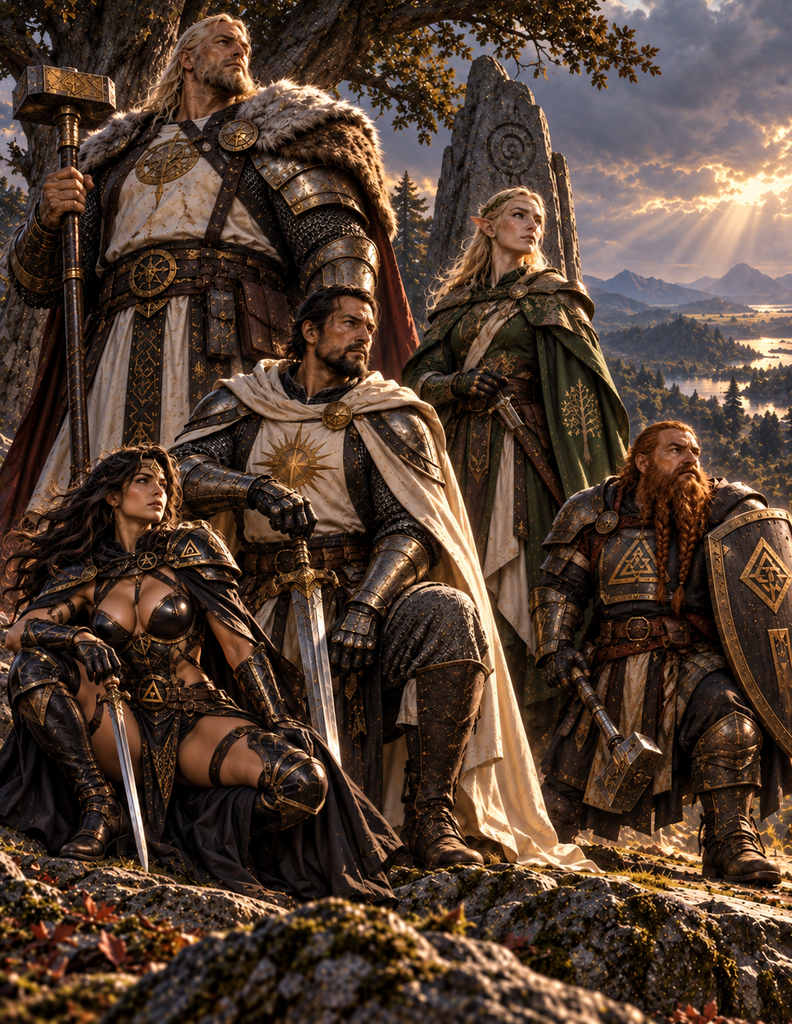
🛡️ Holy Knight — The Warrior of Sacred Conviction
The Holy Knight combines professional military training with religious devotion and supernatural power. Unlike the ordinary Man-at-Arms, whose profession is primarily armed combat, the Holy Knight’s vocation connects martial responsibility with the service of the Creator.
Kingsmark’s Holy Knights belong to one of Sylva’s three monotheistic traditions: the Covenant, Sun & Shield, or Path of the One. They may serve religious institutions, communities, rulers, sacred orders, or causes recognized by their faith. Their responsibilities and standards of conduct depend upon the tradition and institution to which they belong.
A Holy Knight possesses strong Armed Combat training, along with Shield Combat, Infantry Athletics, Spiritual Practices, and Occult Knowledge. The Class also has access to Schools including 🕯Holy Magic, 🦁Leadership Magic, 🥋Martial Adept Magic, ❤️🩹Healing Magic, and ❤️Love Magic. This creates opportunities for protecting companions, confronting supernatural evil, exercising leadership, and combining martial effectiveness with spiritual responsibilities.
The Holy Knight is especially interesting when personal convictions become difficult to uphold. What happens when a religious superior commands something the character believes is unjust? How does a warrior reconcile mercy with the necessity of violence? What if protecting innocent people requires defying a powerful institution? Such conflicts can produce compelling role-playing without requiring the character to abandon genuine devotion. Qatan are restricted from selecting Holy Knight, while eligibility involving gender can depend upon the relevant religious order. For players who enjoy principled warriors, sacred obligations, and the combination of steel and supernatural power, the Holy Knight offers a particularly rich path.
🏹 Wilderness Specialists: Exploration, Animals, and Dangerous Prey
Not every adventure takes place inside a castle, city, or dungeon. Much of Sylva remains wilderness, and dangerous journeys can require tracking, reconnaissance, navigation, practical survival knowledge, and an understanding of animals or unusual creatures. Three Kingsmark Classes approach these challenges in distinctly different ways.
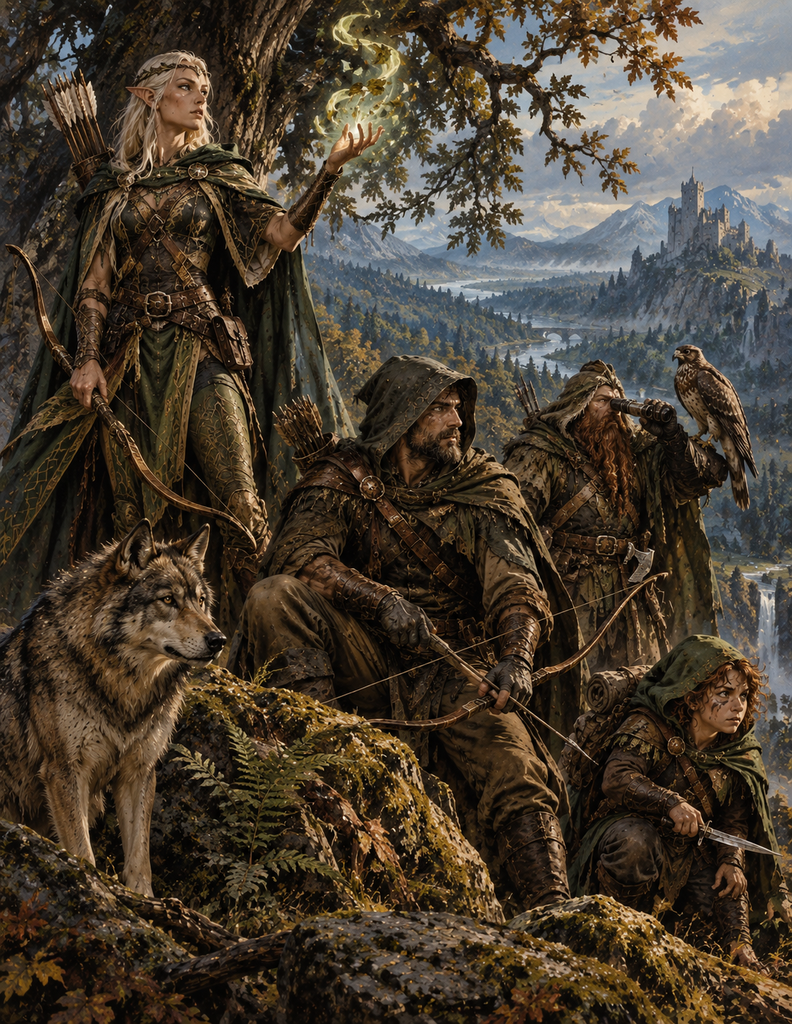
🏹 Ranger — The Elite Wilderness Operative
The Ranger is more than a solitary archer wandering through the forest. In Kingsmark, Rangers are elite wilderness warriors commonly drawn from soldiers whose exceptional martial, survival, perceptive, and magical capabilities qualify them for specialized training. Their profession resembles that of highly trained military scouts, reconnaissance specialists, and operatives capable of conducting difficult missions far beyond friendly territory.
Rangers are trained in Survival, Archery, Armed Combat, Infantry Athletics, and Cloak & Dagger. They may scout enemy positions, travel through dangerous wilderness, conduct raids, pursue enemies, infiltrate hostile territory, and survive without immediate assistance. Their supernatural abilities supplement this professional training. Rangers have access to several Schools, including 🌿Nature Magic, ❤️🩹Healing Magic, 🔮Divination Magic, 🛡Abjuration Magic, and others.
This magical element is important because it distinguishes the Ranger from the nonmagical Monster Hunter. Although both may be exceptionally capable archers and trackers, the Ranger incorporates supernatural abilities into military reconnaissance, wilderness travel, and combat.
For players who enjoy the suspense of moving through hostile territory, observing enemies without being detected, and solving dangerous problems through preparation, the Ranger offers numerous possibilities. A Ranger might be a decorated military scout, a former operative dissatisfied with political authority, or an explorer whose assignments have gradually become personal adventures. All Human Types may become Rangers, subject to Attribute requirements, with Gibborim facing particularly demanding starting qualifications.
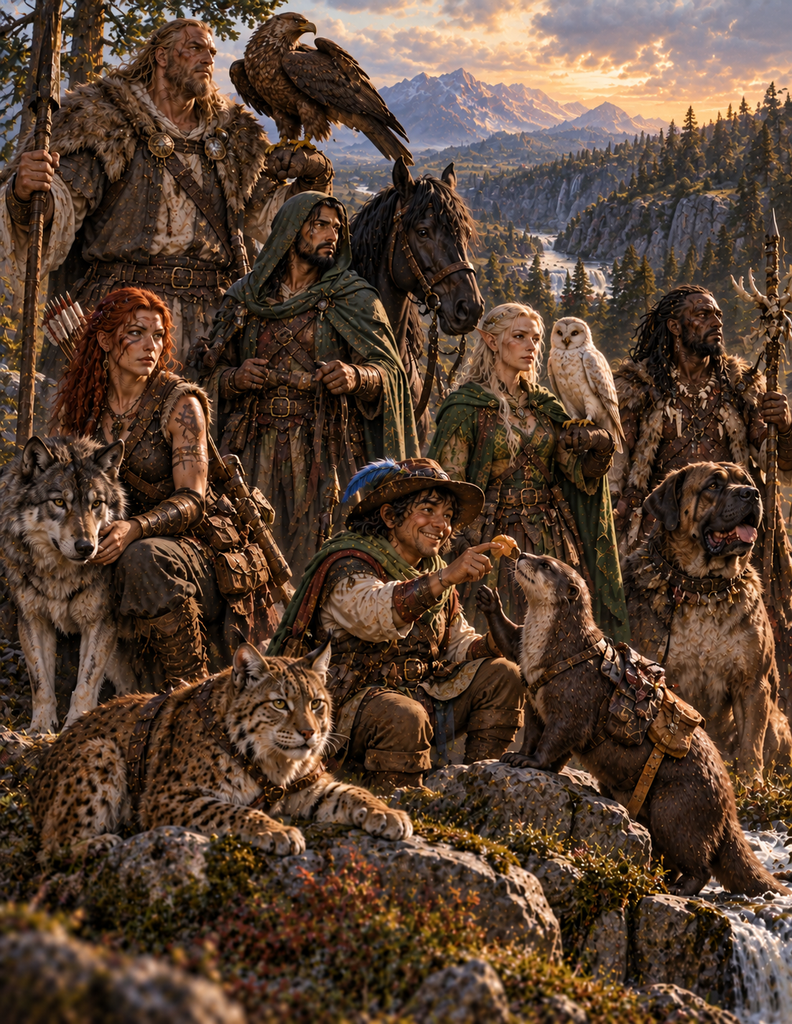
🐺 Beast Master — The Animal Companion Specialist
The Beast Master possesses an extraordinary affinity with animals, developing relationships that extend beyond ordinary domestication or professional animal handling. While hunters, shepherds, falconers, and stable workers may possess considerable experience with animals, the Beast Master’s abilities include supernatural possibilities.
A Beast Master can adventure alongside suitable animal companions, potentially including dogs, wolves, horses, birds of prey, great cats, and other creatures appropriate to the circumstances. Such companions may assist with tracking, guarding, scouting, transportation, hunting, or combat according to their natural capabilities and training. The Class also possesses access to Spells bearing the 🐺Animal tag.
Unlike an expendable summoned combatant, an animal companion is a living creature with needs, limitations, instincts, and a continuing relationship with the adventurer. Players must consider how to protect their companions, provide appropriate care, and use their abilities responsibly.
This relationship can become one of the most emotionally rewarding aspects of the Class. Imagine a Beast Master who rescued an injured wolf years earlier, or a Qatan adventurer whose trusted riding animal has accompanied him through numerous dangerous journeys. Their relationship may be central to the character’s identity.
The Beast Master is an excellent choice for players who love animals, enjoy cooperation between different creatures, or want companions whose presence influences everyday decisions as well as combat. All Human Types and genders may select the Class, and different cultures may develop remarkably different traditions of animal companionship.
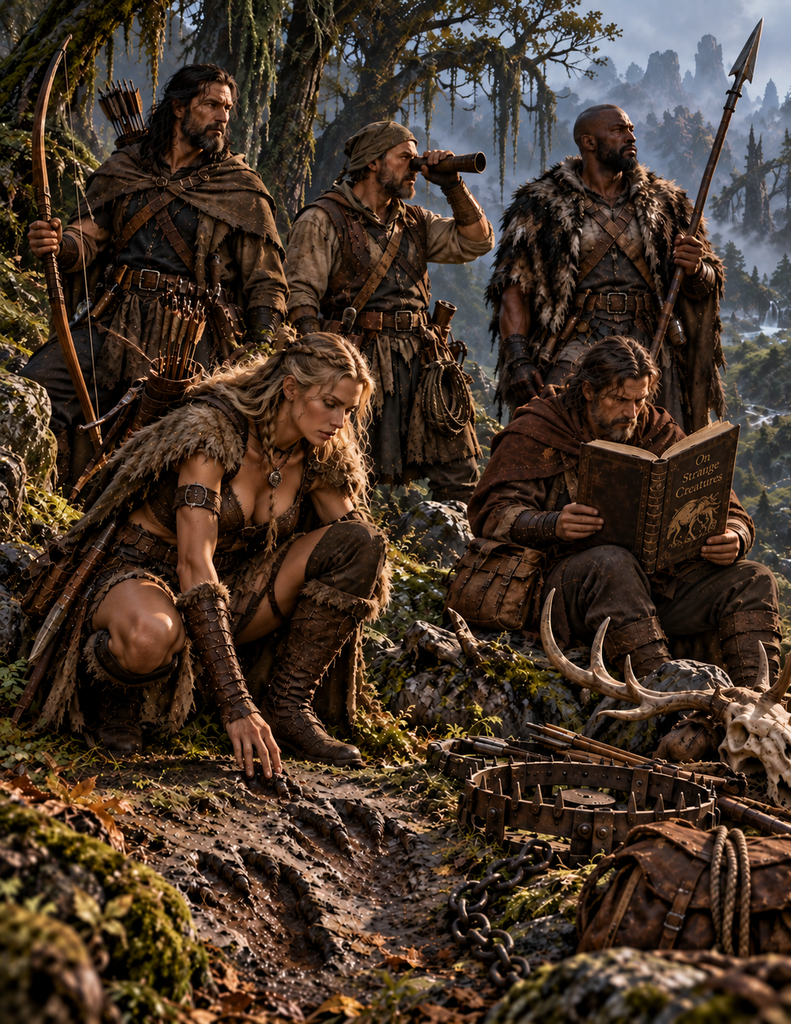
🎯 Monster Hunter — The Professional Hunter of Extraordinary Prey
The Monster Hunter begins with a deceptively simple idea: what if someone already skilled at hunting ordinary animals decided to pursue creatures considerably more dangerous?
Unlike the Ranger or Beast Master, the Monster Hunter possesses no inherent supernatural abilities. The Class depends upon practical knowledge, careful observation, specialized equipment, tracking, archery, traps, survival, and an understanding of dangerous creatures.
A Monster Hunter begins with notable Archery and Survival training, accompanied by Cloak & Dagger, Mechanisms, and Occult Knowledge. The Class’s equipment includes a hunting bow, weapons, trapping supplies, tools for field dressing, and a small collection of writings or folklore concerning monsters.
One of the most interesting aspects of the Monster Hunter is that beginning characters are not necessarily legendary monster slayers. They may be capable woodsmen, trappers, poachers, or professional hunters who believe their existing experience will prepare them for extraordinary prey. Whether that confidence proves justified is another matter entirely.
Imagine a hunter who has spent twenty years pursuing deer and wolves, confidently accepting a Contract to destroy a creature that has been terrorizing nearby villages. Upon encountering the monster, he discovers that its behavior, intelligence, defenses, or supernatural characteristics make it unlike anything he has previously hunted.
For players who enjoy investigation, practical preparation, monster folklore, and the tension of pursuing something genuinely dangerous, this Class can provide an exceptionally satisfying experience. Monster Hunters are available among all five Human Types, and Qatan Monster Hunters are particularly renowned for techniques involving traps and defeating creatures much larger than themselves.
🗝️ Specialists in Stealth, Deception, and Influence
Some adventurers prefer accomplishing objectives without engaging enemies in straightforward combat. They might infiltrate a fortress, bypass a dangerous mechanism, gather confidential information, deceive suspicious guards, or influence powerful individuals through conversation. Kingsmark offers several Classes whose abilities can transform these situations into adventures of their own.
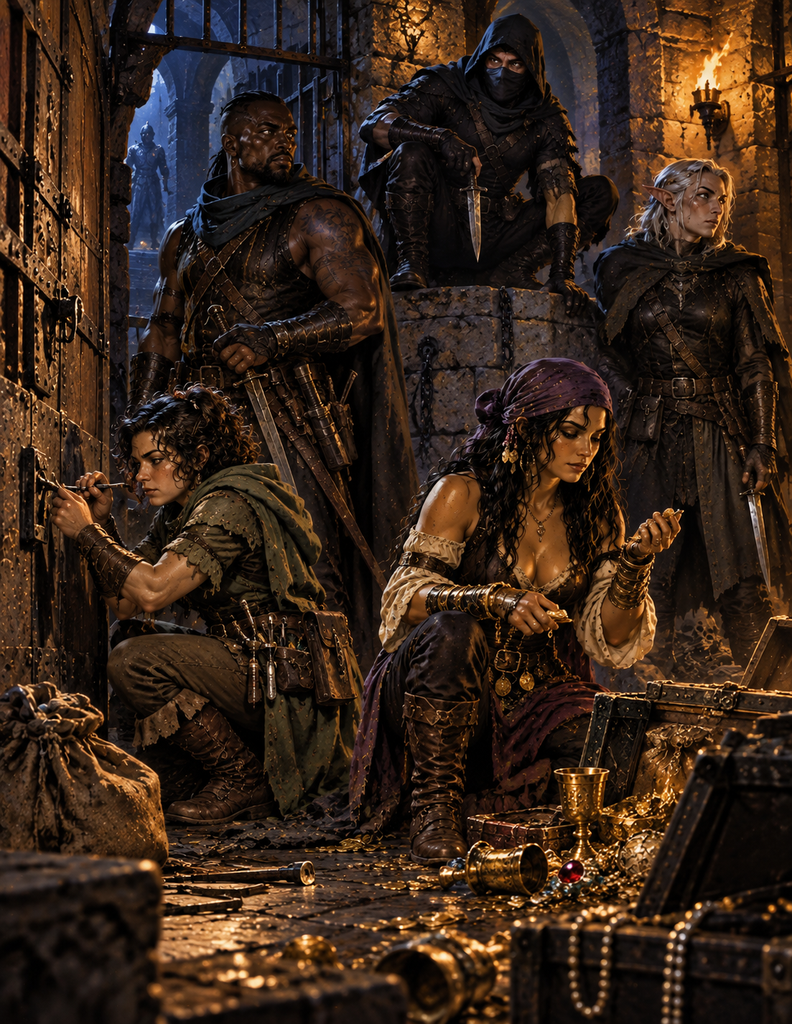
🗝️ Thief — The Expert in Getting Where Others Cannot
The Thief is a specialist in stealth, infiltration, burglary, locks, traps, deception, and the practical techniques of bypassing security. Although the name suggests criminal activity, Kingsmark does not require every Thief to be a criminal.
A Thief might be a professional locksmith, intelligence operative, security specialist, investigator, smuggler, treasure hunter, or former burglar who has discovered a more legitimate use for specialized abilities. The Class is entirely nonmagical, relying upon training, tools, observation, Dexterity, Agility, and practical knowledge.
Starting Skills include Thievery, Cloak & Dagger, Mechanisms, Underworld, and Armed Combat. Equipment includes lockpicks, a small mirror, a pry bar, a grappling hook, weapons, and other tools useful for entering dangerous or restricted locations.
Imagine an adventuring party discovering a sealed chamber beneath an abandoned fortress. The Man-at-Arms might consider forcing entry, but the Thief recognizes that the door contains a mechanism connected to concealed traps. Instead of simply breaking through, the party can investigate the defenses and attempt to bypass them intelligently.
The Thief appeals to players who enjoy problem-solving, infiltration, technical challenges, and accomplishing objectives through clever preparation. All Human Types may select the Class, although their physical characteristics influence how they approach concealment and security. A particularly memorable Thief might be an honorable professional who takes genuine pride in defeating elaborate security systems without stealing anything at all.
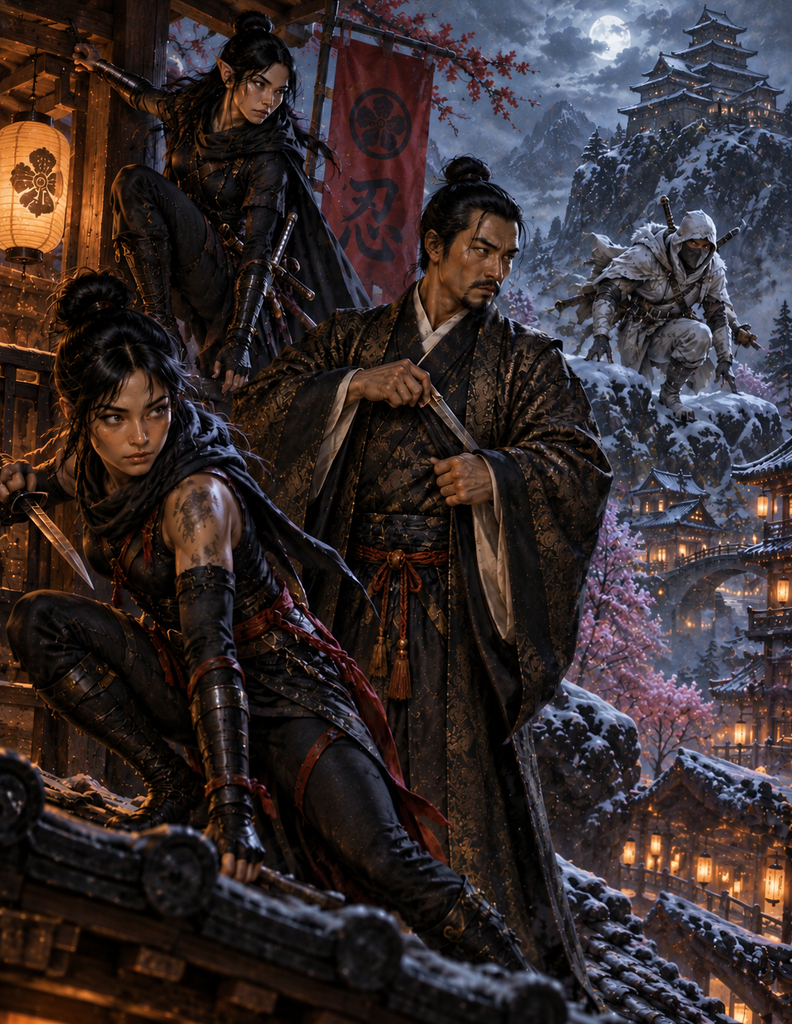
🥷 Ninja / Kunoichi — The Master of Covert Operations
The Ninja combines infiltration, espionage, reconnaissance, deception, escape, specialized combat training, and supernatural techniques. In many respects, the Class represents a professional operative whose success depends upon determining when, where, and how an encounter occurs.
Unlike the nonmagical Thief, the Ninja possesses access to supernatural abilities through Schools including 🥋Martial Adept Magic, 🧠Psychic Magic, 🔥Elemental Magic, 🌀Illusion Magic, 🌿Nature Magic, and 🌑Dark Magic. This allows magical abilities to supplement stealth, unconventional combat, deception, and movement.
Kingsmark also distinguishes Ninja through specialized Clans, each offering different starting benefits. The 🌹Crimson Veil Clan emphasizes social infiltration, deception, performance, and seduction. The ⚡Storm Dragon Clan specializes in supernatural elemental techniques, while the 🗡Iron Shadow Clan places greater emphasis upon combat training. The 🐍Venom Lotus Clan develops expertise involving poisons and related substances, while the 🌙Ghost Moon Clan specializes in reconnaissance and covert entry.
These differences mean two Ninja can possess substantially different professional identities despite sharing the same Character Class. One might excel at entering a noble household through disguise and social manipulation, while another specializes in silently penetrating guarded fortifications.
Female Ninja are called Kunoichi. All Human Types may select the Class if they satisfy its demanding Attribute requirements. Players who enjoy covert operations, martial-arts action, espionage, and carefully planned missions may find the Ninja particularly appealing. The most satisfying moments may involve avoiding combat entirely because the objective has already been accomplished before anyone realizes the operative was present.
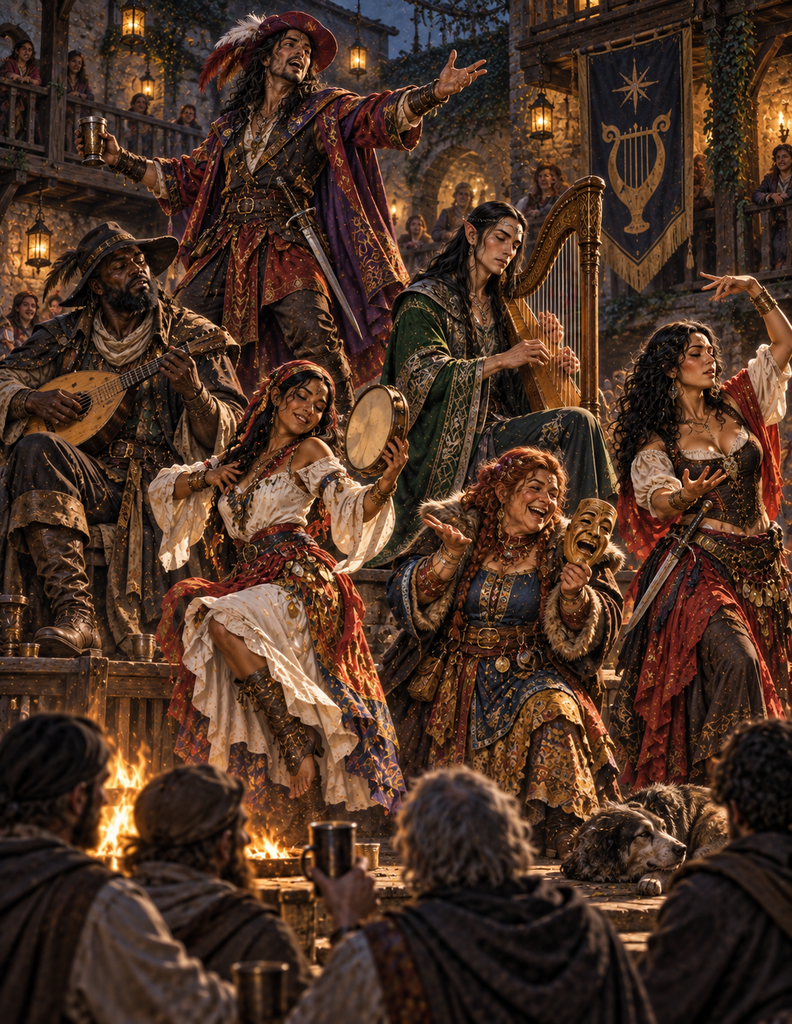
🎶 Minstrel — The Adventurer Who Wins With Words
The Minstrel is a professional performer, musician, storyteller, entertainer, and social adventurer whose talents can accomplish things that weapons cannot. Minstrels travel between communities, carrying songs, stories, rumors, news, and information while developing relationships with audiences from many different backgrounds.
Kingsmark’s Minstrel is also a supernatural performer. The Class requires 🌬Spirit +2 and has access to 🎶Minstrel’s Magic, ❤️Love Magic, and 🦁Leadership Magic. These abilities allow performance and social influence to become sources of genuine supernatural power.
A Minstrel possesses significant starting training in Social Skills and Spiritual Practices, along with Scholarship, Underworld, and Armed Combat. This makes the Class useful during conversations, negotiations, information gathering, and situations involving the emotional state or attitudes of other people.
Imagine an adventuring party arriving in a hostile village where armed strangers are unwelcome. A Man-at-Arms might inspire fear, and a Thief might attempt to gather information secretly. A Minstrel, however, might enter as an entertainer, become familiar to the villagers, and gradually discover what has been troubling the community.
The Minstrel is an excellent choice for players who enjoy social interaction, role-playing conversations, building reputations, and influencing events without constantly resorting to violence. A Minstrel need not be cheerful, flirtatious, or comical. The Class could represent a solemn poet, an ambitious court performer, a traveling historian, or a gifted musician whose songs preserve the memory of fallen companions.
You can explore the rules governing meaningful social encounters in Chapter 10 — 🗨️Dialog Scenes.
📜 Magic, Healing, and Spiritual Power
Magic in Kingsmark is divided among twenty-four Schools, representing different supernatural capabilities and traditions. However, possessing a magical Character Class does not mean that every magician approaches supernatural power in the same way.
Some practitioners devote their lives to scholarly investigation, while others inherit traditional methods, develop relationships with spirits, preserve the wounded, exercise religious authority, or receive supernatural revelation. The distinctions between magical Classes involve more than their available Spells. Their training, responsibilities, and methods can be profoundly different.
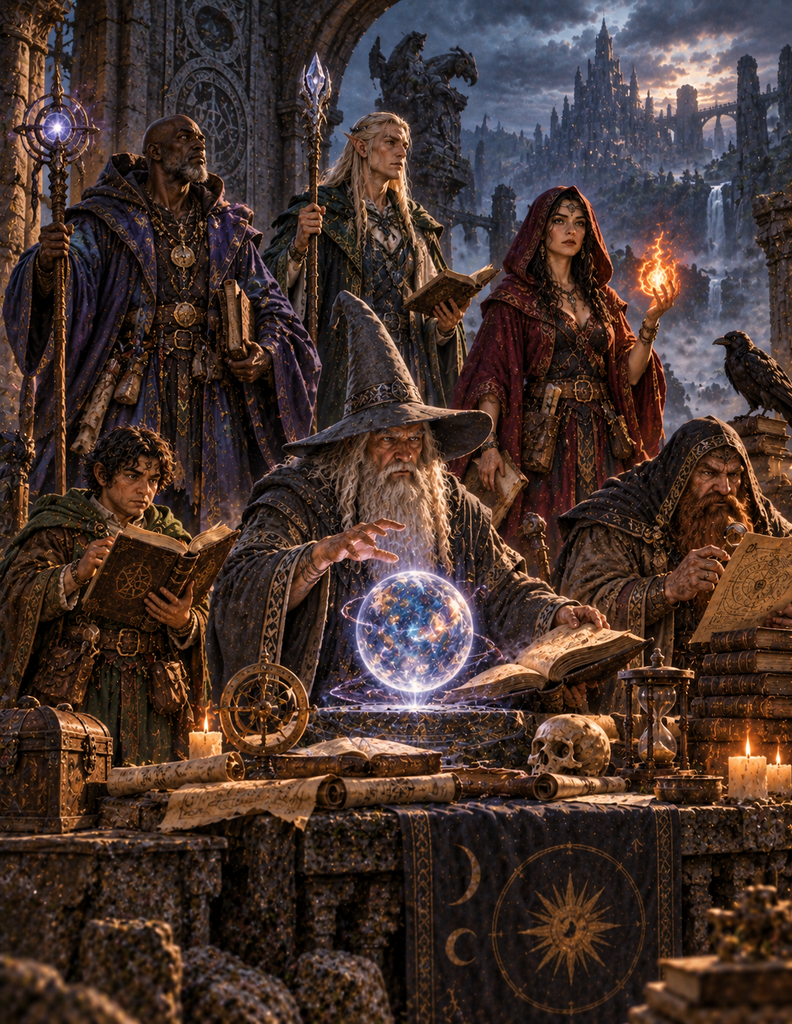
🧙♂️ Wizard — The Scholar of Supernatural Power
The Wizard is a dedicated practitioner of learned magic. Unlike a Ranger or Holy Knight, who supplements another profession with supernatural abilities, the Wizard makes magical study the central discipline of life.
Wizards investigate magical principles, study Spells, collect writings, consult teachers, experiment with rituals, and pursue supernatural knowledge. Their starting Skills emphasize Spiritual Practices, Occult Knowledge, Scholarship, and Alchemy.
The Wizard possesses the broadest potential magical repertoire of any Character Class, with access to every School except 🕯Holy Magic. This does not mean that a beginning Wizard automatically knows an enormous collection of Spells. Individual repertoires develop through training, discoveries, interests, and 📖Spell Learning Opportunities.
This breadth makes the Wizard appealing to players who enjoy investigating supernatural mysteries, studying unusual phenomena, experimenting with different magical approaches, and developing specialized areas of knowledge.
Imagine a Wizard encountering an ancient device inside a ruined temple. Rather than simply attempting to destroy it, the character might investigate its magical principles, consult relevant writings, examine its components, and consider what it could reveal about the civilization that created it.
A Wizard need not be elderly, arrogant, physically helpless, or socially detached. A young researcher might pursue practical magical inventions, while a traveling scholar could combine magical knowledge with extensive experience of the world. For players who enjoy intellectual challenges and building a distinctive magical repertoire, the Wizard offers tremendous possibilities.
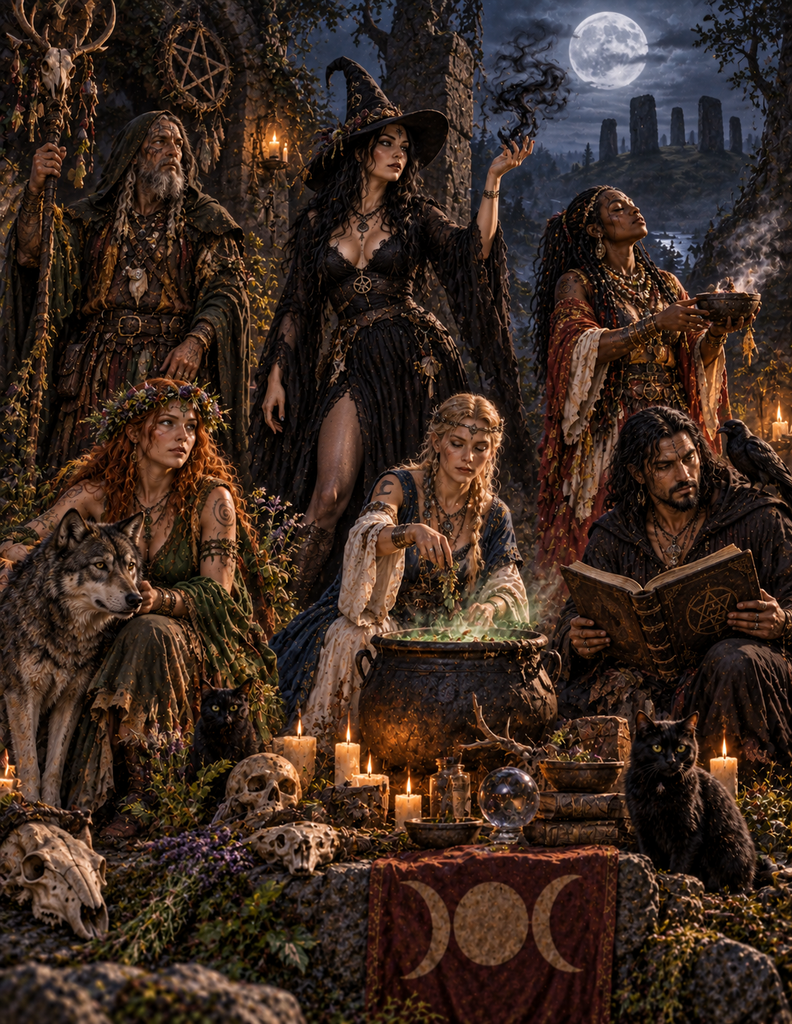
🧙 Witch — The Practitioner of Traditional Magic
The Witch represents a different approach to supernatural practice. Rather than primarily developing magic through formal scholarly institutions, Witches commonly learn through family traditions, mentors, local customs, old writings, experimentation, and direct supernatural experiences.
Witchcraft in Kingsmark encompasses numerous possibilities involving nature, healing, divination, spirits, charms, protection, and other magical practices. The Class possesses access to twelve Schools, including 🌿Nature Magic, 🔥Elemental Magic, ❤️🩹Healing Magic, ❤️Love Magic, 🚪Summoning Magic, 🌬Astral Magic, 🔮Divination Magic, and several others.
Starting training emphasizes Spiritual Practices and Occult Knowledge, accompanied by Survival and Alchemy. This combination reflects a profession that may integrate supernatural knowledge with practical understanding of the natural world.
Imagine a Witch living in an isolated mountain community where generations of practitioners have preserved unusual remedies, protective rituals, and methods of investigating supernatural disturbances. When an unfamiliar affliction begins spreading through nearby villages, the Witch’s combination of practical knowledge and magic might provide opportunities that other adventurers would overlook.
Witches are not automatically evil, benevolent, seductive, or socially isolated. Some may be respected community practitioners, while others pursue knowledge that their neighbors distrust. Although the profession is most commonly associated with women, Kingsmark permits Witches of any gender and Human Type.
The Witch is particularly suitable for players interested in folklore, inherited traditions, magical mysteries, and supernatural practices whose history is deeply connected to individual communities.
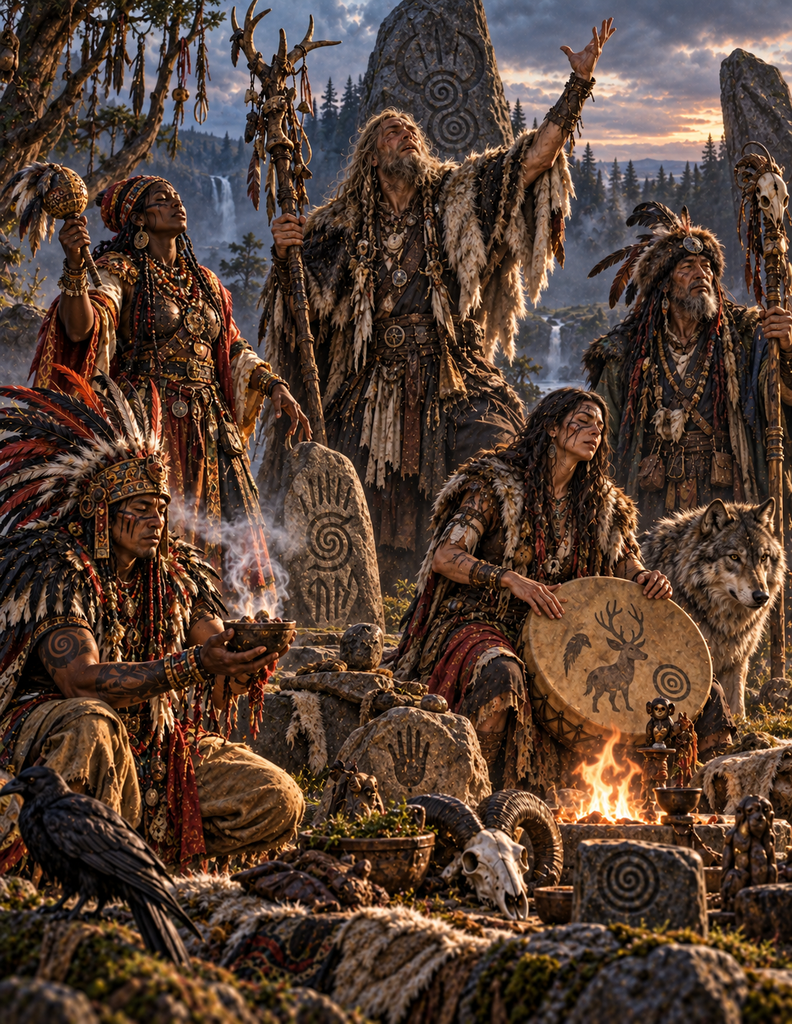
🪶 Shaman — The Intermediary Between Worlds
The Shaman is a spiritual practitioner whose abilities emerge through relationships with spirits, dreams, visions, ancestors, natural forces, sacred places, and the unseen world. Rather than approaching magic primarily as an academic discipline, Shamans commonly develop their abilities through spiritual traditions, ceremonial practices, personal experiences, and encounters with supernatural beings.
Kingsmark represents the diversity of shamanic practice through a combination of shared Schools of Magic and individualized Spirit Guides or Totems. Every Shaman possesses access to 🌿Nature Magic, 🎶Minstrel’s Magic, 🌬Astral Magic, 🚪Summoning Magic, 🌙Dream Magic, and 🔮Divination Magic.
A Shaman’s Spirit Guide or Totem provides two additional Schools, along with a particular Gift and Burden. These combinations create different supernatural specializations and influence the character’s strengths, limitations, and possible behavior.
For example, a 🐺Wolf Shaman might emphasize loyalty and coordinated hunting, while a 🦉Owl Shaman possesses abilities associated with nocturnal perception. Other Totems represent different characteristics and supernatural possibilities.
Imagine an adventuring party encountering a haunted settlement whose inhabitants have experienced disturbing dreams and inexplicable illnesses. A Shaman might approach the situation through spiritual investigation, supernatural communication, dream-related abilities, and an understanding of the unseen world.
The Shaman is particularly interesting for players who enjoy mythology, spiritual mysteries, ceremonial traditions, and adventures involving supernatural beings. All Human Types and genders may select the Class, allowing its practices to reflect a wide variety of cultures and individual traditions.
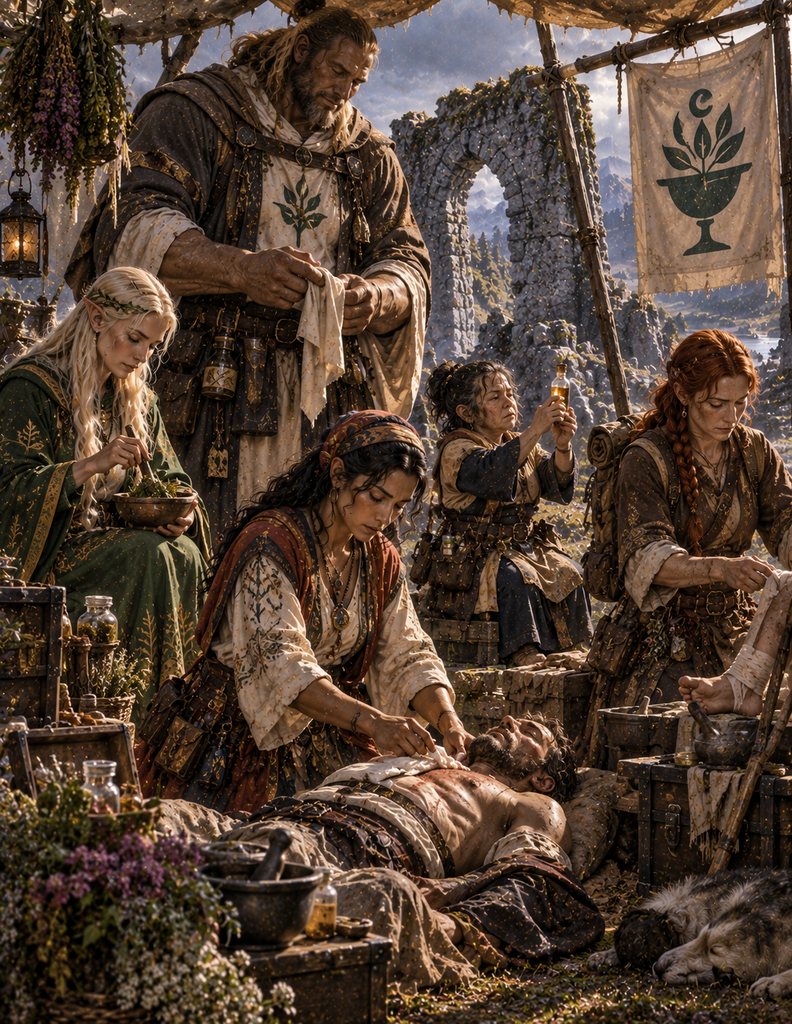
❤️🩹 Healer — The Guardian of Life
The Healer is a specialist in preserving life and restoring those who have suffered injury or illness. Unlike characters whose principal contributions involve defeating enemies, the Healer’s profession centers upon helping people survive the consequences of danger.
Kingsmark’s Healers combine practical medical training with supernatural abilities. Starting Skills include Medicine, Alchemy, Spiritual Practices, Scholarship, and Social Skills. Their equipment includes bandages, medical instruments, medicinal preparations, and tools appropriate to treating injured patients.
Every Healer possesses access to ❤️🩹Healing Magic and ❤️Love Magic, with additional Schools determined by the character’s chosen Healer Tradition. These traditions include Sacred Healer, Sylvaran Healer, Spirit Healer, and Healing Voice, allowing different supernatural approaches to medical care and recovery.
The distinction between practical medicine and magical restoration is important. A Healer should understand injuries, recognize dangerous conditions, stabilize patients, and provide care during recovery. Supernatural abilities supplement these professional responsibilities rather than making ordinary medical knowledge irrelevant.
Imagine an adventuring party struggling through hostile territory after a disastrous encounter. One companion is seriously wounded, another is exhausted, and reaching a settlement may take several days. The Healer becomes essential not merely because of magical Spells, but because the party requires someone capable of managing injuries and helping others survive.
For players who enjoy protecting companions, solving medical problems, and contributing meaningfully during dangerous emergencies, the Healer can be an extremely satisfying Class. The rules governing recovery receive particular attention in Chapter 14 — ❤️Healing Scenes.
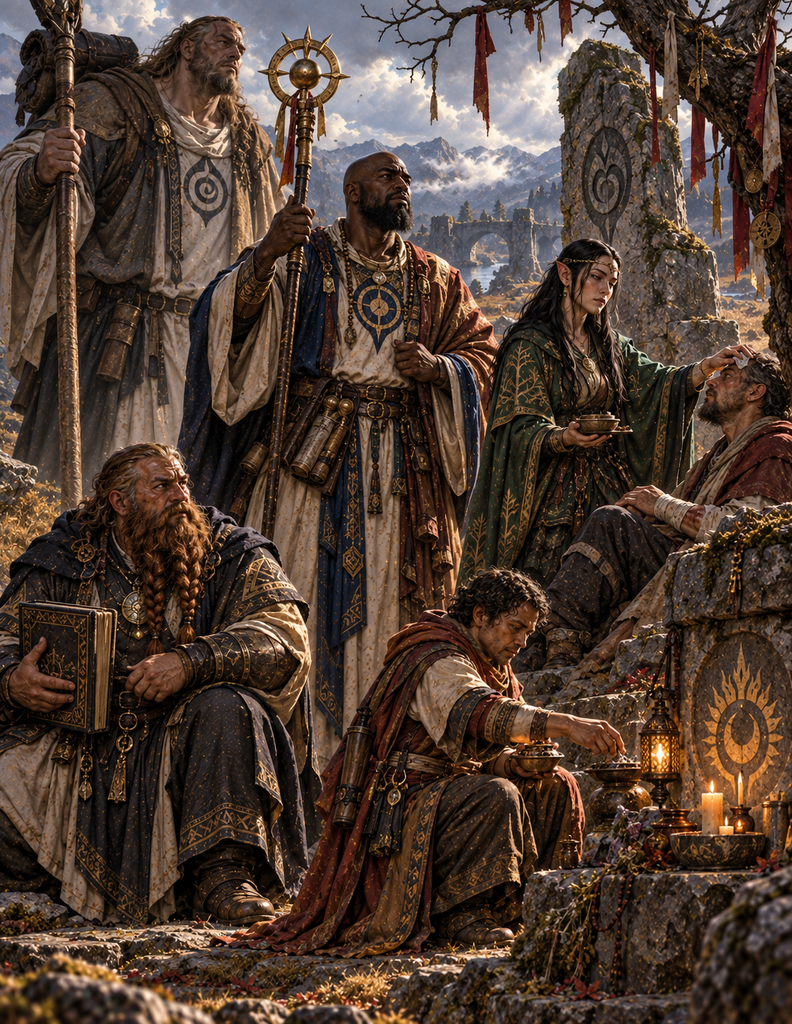
🕯️ Priest / Priestess — The Religious Practitioner
The Priest is a religious specialist belonging to one of Sylva’s three monotheistic traditions: the Covenant, Sun & Shield, or Path of the One. Unlike the Healer, whose profession centers upon medical treatment, the Priest serves a broader religious vocation involving sacred ceremonies, teaching, spiritual leadership, community service, and supernatural responsibilities.
Priests require the substantial spiritual capacity represented by 🌬Spirit +3. Their training emphasizes Spiritual Practices, Scholarship, Social Skills, Occult Knowledge, and Medicine. Their available Schools include 🕯Holy Magic, 🛡Abjuration Magic, 🦁Leadership Magic, ❤️🩹Healing Magic, and ❤️Love Magic.
A Priest might minister to an isolated village, advise a ruler, operate a religious hospice, protect sacred teachings, confront supernatural corruption, or accompany an adventuring party on a mission involving religious responsibilities.
Different religious traditions may possess distinct attitudes toward weapons, political authority, wealth, marriage, and other aspects of life. Consequently, Priests should not be treated as possessing a single universal personality or institutional role. Eligibility regarding gender may also depend upon the relevant religious tradition and priesthood.
Imagine a Priest discovering that an influential religious official has deliberately concealed information concerning a dangerous supernatural threat. The character’s responsibilities might require investigating the matter even when doing so could damage relationships with respected authorities.
The Priest appeals to players interested in theology, religious leadership, moral responsibility, supernatural protection, and the difficulties of maintaining spiritual convictions in a complicated world.
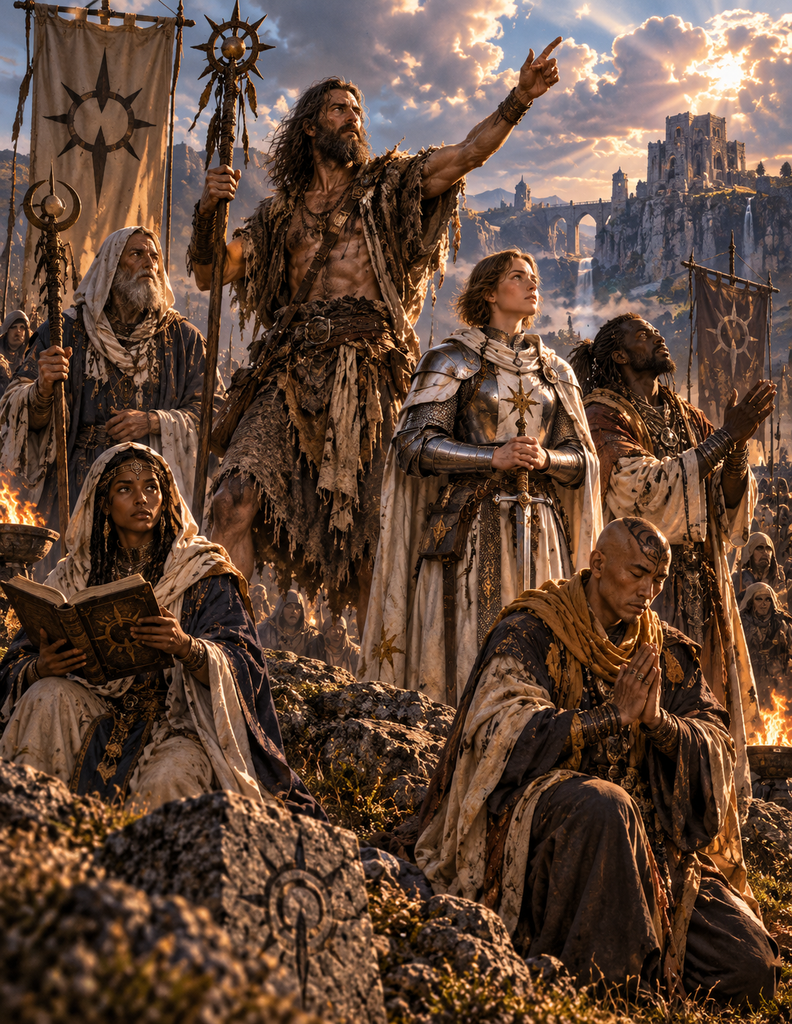
🔮 Prophet / Prophetess — The Bearer of Revelation
The Prophet is among Kingsmark’s rarest and most unusual Character Classes. Like the Priest, the Prophet belongs to one of Sylva’s three monotheistic traditions, but the source of the character’s authority differs fundamentally.
A Priest commonly derives responsibility through religious education, office, or institutional service. The Prophet’s defining characteristic is direct supernatural revelation, which may arrive through visions, dreams, warnings, symbolic experiences, or other manifestations.
The Class requires the extraordinary spiritual capacity represented by 🌬Spirit +4. Prophets possess access to several Schools, including 🕯Holy Magic, 🔮Divination Magic, 🦁Leadership Magic, 🛡Abjuration Magic, 🔥Elemental Magic, ❤️🩹Healing Magic, and ❤️Love Magic.
One particularly unusual feature is that the player does not select the Prophet’s individual Spells. The Game Master determines them through revelation, considering circumstances and events that may lie ahead. The Prophet must then interpret and decide how to use the abilities received.
This distinction creates opportunities for mystery, uncertainty, and personal responsibility. A Prophet might receive a warning whose meaning remains unclear until much later, or acquire a Spell whose significance becomes apparent during an unexpected supernatural confrontation.
Prophets are not omniscient and cannot simply demand answers to every question. Their abilities operate within Kingsmark’s established magical rules, including the limits of their available Schools and magical capacity.
The Class is particularly suitable for players who enjoy revelation, spiritual mysteries, difficult responsibilities, and characters whose actions may influence events extending far beyond an ordinary adventuring Contract. Female characters are called Prophetesses, and all Human Types may qualify.
The broader supernatural system is explained in Chapter 15 — 📜Magic System.
⚔️ Which Character Class Should You Choose?
With seventeen possibilities, some players will immediately recognize a favorite, while others may struggle to distinguish Classes that appear similar. The most useful approach is to compare what each profession is trained to accomplish and what kind of adventuring experience that training creates.
Consider the ⚔️Man-at-Arms, 💪Brute, and 😡Barbarian. All three are capable of dangerous physical combat, but their methods differ considerably. The Man-at-Arms represents professional military training and the disciplined use of weapons and armor. The Brute relies upon the extraordinary Strength and size of a male Human Giant, emphasizing grappling and overwhelming physical force. The Barbarian combines aggressive fighting and wilderness survival with 😡Primal Rage, which permits functioning through pain at the cost of important tactical restrictions.
Similarly, the 🏹Ranger, 🎯Monster Hunter, and 🐺Beast Master can all contribute to wilderness adventures, but their professional identities are different. Rangers are elite scouts with specialized military and magical training. Monster Hunters are nonmagical professionals whose expertise involves tracking and confronting dangerous creatures. Beast Masters develop extraordinary relationships with animals and possess supernatural capabilities that complement those relationships.
The distinction between the 🗝️Thief and 🥷Ninja is equally significant. A Thief depends upon ordinary training, technical knowledge, stealth, tools, and practical experience. The Ninja possesses covert training supplemented by magical abilities and Clan specializations. Someone who enjoys bypassing sophisticated locks and understanding security mechanisms might prefer the Thief, while a player seeking supernatural espionage and unusual infiltration techniques may favor the Ninja.
Among magical Classes, the 🧙♂️Wizard offers the broadest access to learned magic, while the 🧙Witch emphasizes traditional magical practices and the 🪶Shaman develops capabilities through spiritual traditions and Totems. The ❤️🩹Healer specializes in preserving life, whereas the 🕯️Priest possesses broader religious responsibilities. The 🔮Prophet follows a particularly unusual path involving revelations and Game Master-determined Spells.
These are genuine differences worth understanding before choosing. However, players should not assume that specialization prevents creative participation in other activities. A Man-at-Arms can investigate mysteries, a Witch can engage in diplomacy, and a Thief can protect a companion during battle. Character Class determines important areas of training without dictating every decision or activity.
🫀 Your Human Type Matters Too
Kingsmark features five Human Types: Anashim, Tzurim, Elyonim, Qatan, and Gibborim. Each possesses particular physical characteristics, Attribute limitations, and other considerations that can affect Character Creation.
A common mistake is assuming that Human Type and Character Class should always follow familiar fantasy stereotypes. Elves need not become Rangers, Dwarves need not become heavily armored warriors, and Giants need not be Brutes. A Qatan could develop extraordinary magical abilities, while a thoughtful Gibborim might pursue a profession that has little to do with physical intimidation.
However, Kingsmark does contain genuine eligibility restrictions. The 💪Brute is exclusive to male Gibborim. Qatan cannot select ⚔️Man-at-Arms or 🛡️Holy Knight, while Elyonim and Tzurim cannot become 😡Barbarians under the cultural foundations established in the Player’s Handbook. Some Classes also impose demanding Attribute requirements that make particular combinations difficult or require adjustments during Character Creation.
These requirements should be examined before committing to a character concept. The relationship between Human Type, Attribute Ratings, and Class eligibility is explained in Chapter 8 — 🫀Human Type and Chapter 17 — ✍Character Creation.
The important distinction is that physical characteristics and professional opportunities influence what a character can become, but they do not determine the individual’s personality. A Tzurim Monk, Elyonim Thief, or Anashim Beast Master can possess motivations and convictions that are entirely personal.
⭐ The Most Powerful Class Is Not Necessarily the Most Enjoyable
Players accustomed to analyzing Dungeons & Dragons and other class-based games often ask which Class is strongest. It is a reasonable question, particularly when combat and survival are important parts of an adventure, but it is not always the most useful starting point.
Mechanical effectiveness depends upon circumstances. A Brute may possess overwhelming physical advantages when confronting an enemy directly, yet a Thief might accomplish an objective without requiring a fight. A Wizard may possess extraordinary supernatural possibilities but still require protection when facing immediate physical danger. A Healer might contribute little to a particular negotiation while becoming essential during a desperate medical emergency.
Kingsmark’s ▶️Action Scenes also make choices involving movement, defense, positioning, assistance, and specialized maneuvers significant. The rules described in Chapter 11 — ▶️Action Scenes and Chapter 12 — 🎬Example Actions allow players to approach dangerous situations through considerably more than repeatedly attacking an enemy.
A player’s enjoyment also depends upon the kinds of challenges they find interesting. Someone fascinated by espionage may prefer the Ninja or Thief to a physically powerful warrior. A player who enjoys complicated interpersonal relationships might discover that portraying a Minstrel is far more satisfying than maximizing combat damage. Someone who loves animals might find a Beast Master’s continuing relationship with an animal companion more memorable than any particular victory.
There is no reason to assume every Class is equally effective in every situation. Their differences are precisely what make specialization meaningful. The more important question is whether those differences align with the experiences you want to have.
📖 Your Character Is More Than Your Class
Choosing a Character Class is only one part of creating a memorable adventurer. Two characters with identical training can possess completely different histories, values, personalities, and ambitions.
Imagine two 🛡️Holy Knights. One is an ambitious warrior seeking military glory and recognition from a powerful religious order. The other is a quiet protector who considers service to ordinary people more important than personal reputation. Both possess the same professional foundation, but their decisions and relationships could produce entirely different adventures.
Kingsmark’s ✍Character Creation system develops these distinctions through personal identity, a Backstory Engine, 🎯Immediate Want, ⭐Direction, and ⚔️Party Connections. Players may also select optional 🪵Burdens and 🕊Blessings where appropriate.
A character’s past should influence the present without completely determining the future. Perhaps your Ranger distrusts authority because of a disastrous military experience, or your Wizard pursues supernatural knowledge because a mysterious event destroyed everything previously believed about the world. These motivations can gradually change as the campaign unfolds.
I explored these principles more extensively in my article Beyond the Character Sheet: How to Become a Better Role-Player. The essential lesson is that abilities determine what your character can accomplish, while motivations, relationships, and decisions reveal who that character actually is.
Kingsmark uses the term 📖Character Bible because a character’s life should become more than a collection of current statistics. Over time, the adventurer may accumulate injuries, friendships, enemies, responsibilities, accomplishments, and experiences that gradually shape the person they become.
🕯️ Seventeen Paths, Countless Adventures
The caravan stranded on the mountain road could have produced seventeen very different adventures depending upon which Character Class arrived to investigate. One adventurer might have defeated the approaching creature, another might have discovered why it was attacking travelers, and another might have found a way to prevent further violence. Some could have saved the wounded, protected the caravan, or discovered a mystery far more important than the original encounter.
This is what makes choosing a Character Class interesting. You are not merely selecting a profession or a collection of useful statistics. You are deciding what abilities, responsibilities, limitations, and opportunities will shape your experience as an adventurer.
Perhaps you want to become a disciplined ⚔️Man-at-Arms, a powerful 💪Brute, a relentless 🎯Monster Hunter, or a resourceful 🗝️Thief. Perhaps supernatural mysteries appeal to you more than physical confrontation, leading you toward the 🧙♂️Wizard, 🪶Shaman, or 🔮Prophet. You may find greater satisfaction protecting others as a ❤️🩹Healer, developing extraordinary animal partnerships as a 🐺Beast Master, or influencing the world through performance as a 🎶Minstrel.
Every Class presents different possibilities, but none determines the complete person you will portray. Your choices will shape the character’s experiences, relationships, reputation, and eventual legacy.
The complete rules for all seventeen Classes are available in Chapter 9 — 🎭Character Class, while Chapter 17 — ✍Character Creation explains how to turn your chosen profession into a complete adventurer. You can read the entire Kingsmark Player’s Handbook online for free at Kingsmark.games.
Kingsmark is A Heroic Fantasy TTRPG for Mature Players. Choose the Class that inspires you, create someone worth remembering, and discover what happens when that person steps into the dangerous world of Sylva.
About The Author