💥Damage & Defense in 👑Kingsmark
Wounds, Armor, and Mental Trauma Explained
How Damage Levels, Armor Ratings, Physical Wounds, Mental Trauma, and R.A.D. work in Kingsmark’s combat system.
In most tabletop role-playing games, characters lose Hit Points until they fall unconscious or die. Kingsmark replaces conventional Hit Points with a system of 🩸Physical Wounds and 🧠Mental Trauma, making injuries and psychological consequences an important part of the adventure. A sword wound, shattered bone, terrifying encounter, or supernatural assault can leave consequences that influence how characters fight, think, and behave long after the initial encounter.
The intricacies of Kingsmark’s rules are designed to encourage players to treat injuries as actual events in their characters’ lives rather than simply subtracting numbers from an abstract pool. The complete mechanics appear in Chapter 13: 💥Damage & Defense.
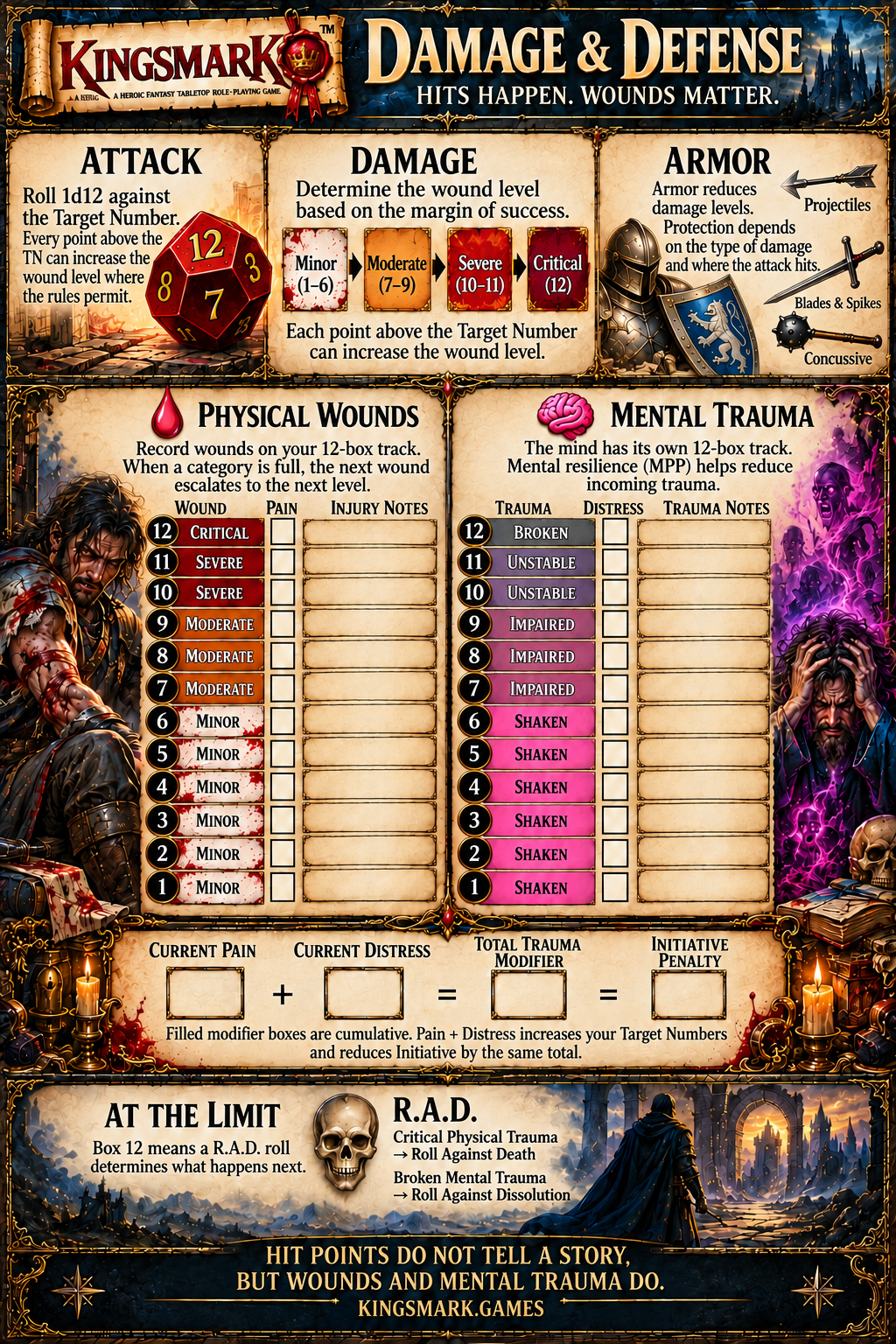
How Attacks, Damage Levels, and Armor Work
A damaging attack begins with a dice roll against a Target Number (TN), determined by the circumstances and applicable combat rules. Every weapon has a Base Damage Level, representing the injury it ordinarily causes on a successful hit. If the attack’s modified result exceeds the final Target Number, each point above that number increases the Damage Level by one step: 🩸Minor, 🩸Moderate, 🩸Severe, and 💀Critical.
However, Critical damage is restricted by the weapon’s Critical Threshold. Even an exceptionally successful attack cannot escalate to 💀Critical unless its modified result also meets that threshold. This distinguishes genuinely lethal weapons from objects that might injure someone but are unlikely to cause catastrophic wounds.
Armor provides another important defense. Kingsmark distinguishes between Damage Types such as 🏹Projectiles, 🗡️Blades & Spikes, and 🪨Concussive impacts. A suit of armor might protect exceptionally well against swords while offering less protection against crushing force. Armor Ratings reduce incoming Damage Levels only when the relevant protection covers the actual Hit Location and applies to the incoming Damage Type.
For example, an attack that produces 🩸Severe Damage can be reduced to 🩸Moderate by applicable Armor Rating −1. Sufficient protection can reduce damage below Minor, preventing a Physical Wound altogether. This makes equipment choices, vulnerable body parts, and defensive tactics meaningful.
Recording Physical Wounds and Mental Trauma
Every character possesses two twelve-box Trauma Tracks on their Medical Record. The 🩸Physical Wounds track contains six Minor boxes, three Moderate boxes, two Severe boxes, and one Critical box. When every box of a particular severity is occupied, another wound of that severity escalates to the next available category.
The 🧠Mental Trauma track follows the same distribution, but its categories are Shaken, Impaired, Unstable, and Broken. Psychological injuries can result from terror, grief, torture, horrifying discoveries, supernatural effects, and other overwhelming experiences. Characters threatened with Mental Trauma normally resist using 1d12 + 🌈Mental Performance PRISM, against a Target Number determined by the threatened Trauma Level. Successful resistance reduces the severity, potentially eliminating the Trauma entirely.
Accumulated injuries eventually interfere with performance. The character’s 🌈Physical Performance PRISM determines when Physical Wounds begin imposing Pain Modifiers, while 🌈Mental Performance PRISM determines the corresponding Distress thresholds. Each filled box with a recorded modifier contributes to the character’s cumulative disadvantage.
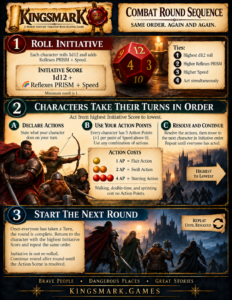
Current Pain + Current Distress = Total Trauma Modifier. This total increases the character’s Target Numbers and reduces ⏳Initiative by the same amount. Importantly, Trauma without an immediate numerical penalty is still a real injury that should influence role-playing.
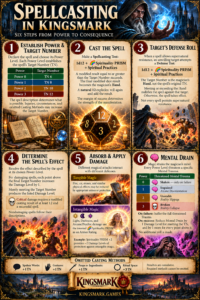
For recovery, treatment, and rehabilitation, consult Chapter 14: ❤️Healing Scenes.
💀When Trauma Reaches Its Limit
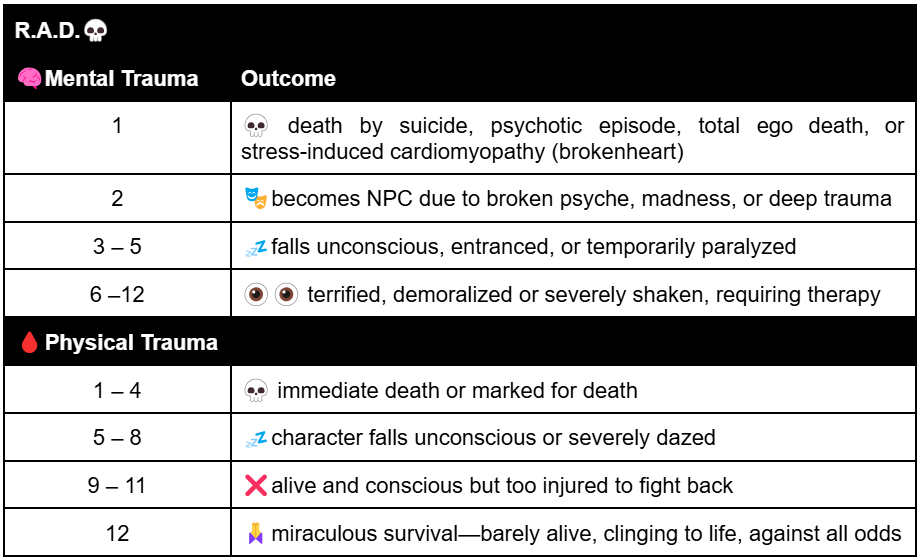
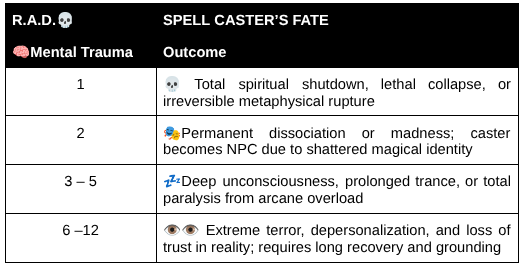
Box 12 represents catastrophic Trauma. 💀Critical Physical Trauma may require a Roll Against Death when survival is genuinely uncertain, while 💀Broken Mental Trauma immediately requires a Roll Against Dissolution. These procedures are collectively called R.A.D.💀 and determine the consequences of reaching the limits of physical or psychological endurance.
A Critical Wound does not automatically mean death, nor does every Critical Wound require R.A.D. Certain Death and Fatal Bleeding have their own rules. Kingsmark distinguishes these circumstances because the actual nature of an injury matters.
For a broader discussion of this design philosophy, read The Problem With Endless Hit Points.
🎬Example: Blood on the Road to Greywatch
During an ambush on the road to Greywatch, a warrior named Sorin confronts an orc armed with a sword. Sorin has already suffered three 🩸Minor Wounds during the fighting. The orc attacks, achieving a modified result of 8 against a final Target Number of 7. The attack succeeds by one point, increasing the sword’s assumed Base Damage of 🩸Minor to 🩸Moderate.
The blow strikes Sorin’s armored shoulder. His armor provides −1 against 🗡️Blades & Spikes at that location, reducing the incoming wound back to 🩸Minor. Because Sorin already has three Minor Wounds, he records this fourth injury in box [4]. His 🌈Physical Performance PRISM is +1, so the fourth Minor Wound imposes +1 Pain according to his Trauma Threshold.
Moments later, Sorin witnesses a companion being brutally killed. The Game Master determines that the experience threatens 🧠Impaired Mental Trauma, normally TN 8. Sorin’s existing +1 Pain increases that Target Number to 9. With 🌈Mental Performance PRISM +1, Sorin rolls 6, achieving 7. He fails the resistance Test and records an 🧠Impaired Trauma in box [7], applying any Distress Modifier recorded for that box on his Medical Record.
His shoulder aches, his concentration falters, and the sight of his companion’s death threatens to overwhelm him. Sorin must now decide whether to continue fighting, retreat, or attempt to rescue the survivors. The wounds have become more than numbers on a character sheet. They have become part of his story.
About The Author