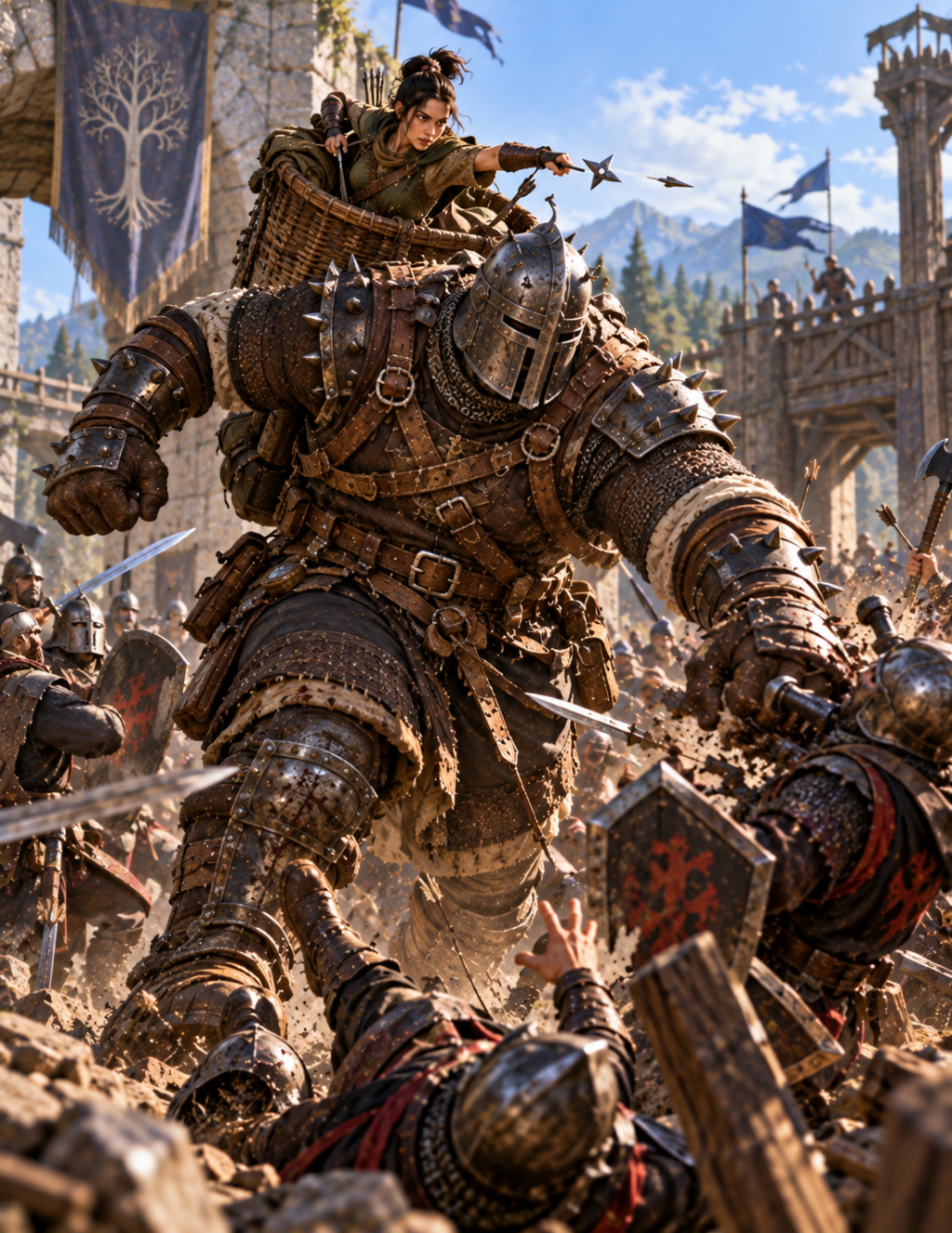
Whenever there is a possible risk of injury to the player characters, or non-player characters, that portion of the storyline is referred to as an Action Scene. Insofar as combat gameplay during an Action Scene is concerned, the Kingsmark ruleset was written with the following objectives in mind:
- Combat should make you feel like you’re an action movie star that can usually succeed against incredible odds…but who may not make it to the end of the movie.
- Combat situations should be challenging but survival should be achievable with discipline, teamwork, strategy, professionalism and tactical competence.
- Combat should feel exciting, cinematic, realistic, fast paced, intense and lethal.
Rolling for ⏳Initiative
When an Action Scene begins, every participating Player Character and Non-Player Character determines an ⏳Initiative Score. In the physical world, ⏳Initiative is based upon the character’s Reflexes PRISM and Speed Attribute. If a character’s 🌬Ruach (Spirit) is engaged in Astral Combat, use Astral ⏳Initiative instead.
Step 1: Roll ⏳Initiative
Every character rolls 1d12 and applies their Reflexes PRISM and Speed. Positive ratings increase ⏳Initiative and negative ratings reduce it. If either Reflexes PRISM or Speed is negative, subtract that rating accordingly. Regardless of penalties, a character’s ⏳Initiative Score can never fall below 1.
INITIATIVE SCORE
1d12 + Reflexes PRISM + Speed
Step 2: Determine Action Points
Every character normally receives 5 Action Points during each ⏸Turn. Apply the character’s Speed directly to this number. Positive Speed grants additional Action Points, while negative Speed reduces them. Speed −3 provides 2 Action Points, Speed −2 provides 3, Speed −1 provides 4, Speed 0 provides 5, Speed +1 provides 6, Speed +2 provides 7, Speed +3 provides 8, and Speed +4 provides 9. A character can never receive fewer than 1 Action Point during a ⏸Turn, regardless of penalties. Action Points should be tracked using tokens or coins.
Step 3: Determine ⏸Turn Order
Characters take their Turns from the highest ⏳Initiative Score to the lowest. After everyone has taken a Turn, play returns to the character with the highest ⏳Initiative Score and proceeds through the same order again. Players and the Game Master continue taking Turns in this order, over and over, until the Action Scene is resolved. When two or more characters have the same ⏳Initiative Score, compare their unmodified 1d12 ⏳Initiative rolls. The character who rolled the highest acts first. If the die rolls are also tied, the character with the higher Reflexes PRISM acts first, followed by the character with the higher Speed. If all of these are tied, their actions occur simultaneously.
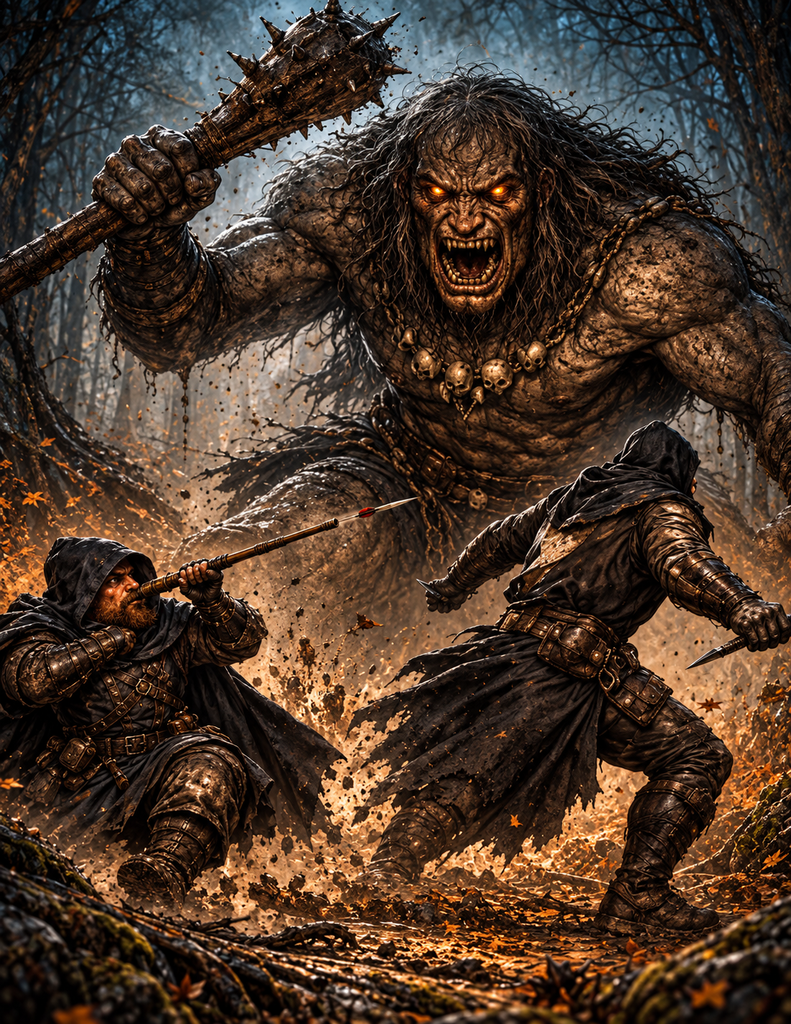
⏳Initiative and Injury
⏳Initiative Scores can change during an Action Scene. Subtract the character’s current Pain Modifier and Distress Modifier from the ⏳Initiative Score. Whenever either modifier changes, recalculate that character’s Initiative immediately. Initiative can never fall below 1. Changing Initiative changes the character’s position only among Turns that have not yet occurred during the current Round. Every participant receives no more than one Turn per Round. If a character has already acted, lowering or raising Initiative cannot grant another Turn or erase the Turn already taken. Place a marker beside every participant after that participant completes a Turn. When the next Round begins, remove the markers and use the current ⏳Initiative order.
🎬Example — Calculating ⏳Initiative
Johan has Initiative 9 but has not acted. An enemy acting on Initiative 11 wounds him and gives him +2 Pain, reducing Johan to Initiative 7. Another character on Initiative 8 now acts before Johan. Johan still receives his Turn on Initiative 7. If Johan had already acted before receiving the wound, he would not act again during that Round. He would begin the next Round at Initiative 7.
🎬Example — Calculating ⏳Initiative
Mira rolls 6 on 1d12. She has Reflexes PRISM +1 and Speed +1, giving her an Initiative Score of 8 (6 + 1 + 1 = 8). Her Speed also determines how many Action Points she receives on each Turn. Characters begin with 5 Action Points modified directly by Speed, so Mira’s Speed +1 gives her 6 Action Points. Joseph rolls 10 on 1d12. He has Reflexes PRISM +2 and Speed +2, giving him an Initiative Score of 14 (10 + 2 + 2 = 14). His Speed +2 gives him 7 Action Points on each Turn. Joseph therefore acts before Mira. Negative Speed works the same way. A character with Speed −2 receives only 3 Action Points on each Turn, while a character with Speed 0 receives the standard 5.
🎬Example — ⏳Initiative Changes During Combat
Mira begins an Action Scene with Initiative 10. Tomas has Initiative 8, and Brakka has Initiative 6. The Turn Order is therefore Mira, Tomas, and Brakka. Before Mira acts during a later Round, an interrupting attack fills one of her Physical Wound boxes and gives her a +3 Pain Modifier. Her Initiative immediately falls from 10 to 7. The Turn Order becomes Tomas at 8, Mira at 7, and Brakka at 6. Because Mira had not yet acted, she now waits until Initiative 7. During a different Round, suppose Mira acts at Initiative 10 and then receives the same wound later in that Round. Her Initiative still falls to 7 immediately, but she does not receive another Turn when Initiative 7 is reached. Her new position applies normally during the following Round. Later, a healer gives Mira 2 points of Pain Relief. Her effective Pain Modifier falls from +3 to +1, so her Initiative rises from 7 to 9. If Mira has already acted during that Round, she does not act again. Beginning with the following Round, she acts at Initiative 9 for as long as the Pain Relief remains effective.
Combat Round Sequence
The following is a streamlined breakdown of how a ▶️Combat Round unfolds using ⭐Jack’s Cinematic d12 rules.
Step 1: Roll ⏳Initiative Score
Each character rolls 1d12, then adds their Reflexes PRISM and Speed ratings to the result. Negative ratings are subtracted accordingly.
INITIATIVE SCORE
1d12 + Reflexes PRISM + Speed
This determines when characters act. No character can have an ⏳Initiative Score below 1. If characters have the same score, the highest die roll acts first, followed by the highest Reflexes PRISM, then the highest Speed. If still tied, their actions occur simultaneously.
Step 2: Characters Take Their ⏸Turns in Order
Characters act in descending order, starting from the highest ⏳Initiative Score.
A. Declare Intended Actions
The acting player character states what they intend to do on their ⏸Turn. Every character normally receives 5 Action Points, modified directly by Speed. Positive Speed increases the character’s Action Points, while negative Speed reduces them.
ACTION POINTS
Speed −3 = 2 Action Points
Speed −2 = 3 Action Points
Speed −1 = 4 Action Points
Speed 0 = 5 Action Points
Speed +1 = 6 Action Points
Speed +2 = 7 Action Points
Speed +3 = 8 Action Points
Speed +4 = 9 Action Points
A character’s Action Points are therefore calculated as:
ACTION POINTS = 🔵🔵🔵🔵🔵 5 + Speed
The character may perform any combination of actions whose total cost does not exceed the Action Points available on that Turn. Unspent Action Points are normally lost when the Turn ends unless another rule specifically allows them to be used later. Characters may Walk or move at Double-Time according to the movement rules without spending Action Points. Sprinting costs 4 Action Points and may be performed only once per ⏸Turn.
ACTION COSTS
1 Action Point 🟡 Flair Action
2 Action Points 🟠🟠 Swift Action
4 Action Points 🔴🔴🔴🔴 Starring Action
B. Resolve Actions
Actions are resolved based on the current situation.
C. Continue to the Next Character
Move to the next character by descending ⏳Initiative Score. Repeat declaration and resolution until all characters have acted.
Step 3: Start the Next ▶️Combat Round
Once everyone has taken a ⏸Turn the ▶️Combat Round is complete, return to the character with the highest ⏳Initiative Score and proceed through the Turn Order again. ⏳Initiative is not re-rolled. Players and the Game Master continue taking Turns in this order until the Action Scene is resolved.
Waiting & Interrupting
In certain moments, a character may hesitate—not out of fear, but out of strategy. If the player estimates that he’ll have a better opportunity for an action later in the round, he may choose to hold back his ⏸Turn and wait for the ▶️Round to progress. This is known as Waiting to Interrupt.
Laying in Wait
When a character’s ⏸Turn arrives (based on their ⏳Initiative Score), the player may declare, “I’m going to wait.” This dissolves their current Turn, and puts their character in a Laying in Wait status. They may also optionally declare a trigger—something specific that must happen before they act. It could be by saying, “I’ll attack when someone steps into the hallway,” or, “I’ll attack if I see the target reach for their weapon,” or, “I’ll loose an arrow as soon as I see one of them stand up.” Once this trigger occurs, the character immediately interrupts the scene and takes their turn—resolving actions just as if their ⏳Initiative Score had arrived naturally. Until then, they may only take Flair actions (short speech, looks, body language) and may not move or attack.
Interrupting
- The player must announce, “I’m interrupting,” after the triggering action has been declared but before any dice are rolled or any automatic consequence is applied. For example, if the Game Master declares that a scoundrel is about to stab the party’s healer, the interrupting character must act before the attack roll. If a captor declares Execute Helpless Target, the interrupting character must act before 💀Certain Death or 🩸Fatal Bleeding is applied. Resolve the interruption first. If it makes the triggering action impossible, the triggering action is canceled. If it does not, resolve the triggering action afterward.
- A character may stop Laying in Wait at any time.If two or more characters attempt to interrupt the same event, resolve their interruptions from the highest ⏳Initiative Score to the lowest. If an earlier interruption prevents another character’s trigger or intended action from remaining possible, the prevented interruption does not occur.
Surprise
Surprise occurs when a character or group is unaware of a threat because of stealth, distraction, betrayal, a hidden enemy, sudden hazard, or similar event. It can deny a character their first ⏸Turn, but is never automatic. The Game Master (GM) decides when a Surprise Test is required. When Surprise is possible, each character or group rolls:
1d12 + 🌈Reflexes PRISM + ⚒Cloak & Dagger
The highest result wins. Characters with a Trained Attribute Bonus in Perception add +1. Characters with no points in ⚒Cloak & Dagger add only their 🌈Reflexes PRISM because they lack training in either setting or detecting ambushes. For a sudden betrayal rather than a physical ambush, the potential victim may instead use one of the three interrogation formulas:
1d12 + 🌈Influence & Allure PRISM + ⚒Social Skills
1d12 + 🌈Mental Performance PRISM + ⚒Underworld
1d12 + 🌈Spirituality PRISM + ⚒Spiritual Practices
The betrayer still rolls 1d12 + 🌈Reflexes PRISM + ⚒Cloak & Dagger.
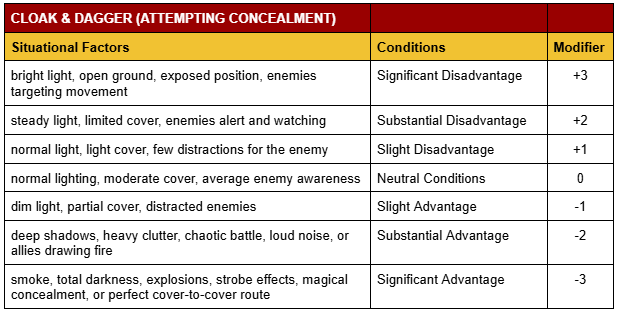
When concealment is involved, apply the appropriate modifier from Attempting Concealment to the Target Number the ambusher must equal or exceed against each observer. Advantage lowers that TN; Disadvantage raises it. Do not modify the ambusher’s roll itself. Compare the results:
- A character may act only against opponents whose Surprise score he exceeded. Even if his ⏳Initiative would normally place his ⏸Turn before an opponent who surprised him, he cannot act against that opponent on that first Turn.
- If the scores tie, both sides act normally.
- A character surprised by all opponents loses his first ⏸Turn completely. He cannot move, act, or make a deliberate defense and may speak only through Flair, such as gasping, flinching, shouting a brief warning, or reacting in shock. Ordinary attacks against him are resolved without a deliberate defensive action. Specialized maneuvers may still require a fixed Realism Target Number because surprise does not guarantee perfect placement, anatomical precision, or execution of a difficult technique. Surprise does not make the character helpless or create an Execution Position by itself.
Attempting Concealment
When using ⚒Cloak & Dagger to remain concealed, apply the modifier that best fits the situation:
• Bright light, open ground, exposed position, or enemies watching for movement: Significant Disadvantage, +3
• Steady light, limited cover, or alert enemies: Substantial Disadvantage, +2
• Normal light, light cover, or few distractions: Slight Disadvantage, +1
• Normal light, moderate cover, average awareness: Neutral, 0
• Dim light, partial cover, or distracted enemies: Slight Advantage, −1
• Deep shadows, heavy clutter, chaotic battle, loud noise, or allies drawing attention: Substantial Advantage, −2
• Smoke, total darkness, explosions, strobe effects, magical concealment, or an ideal cover-to-cover route: Significant Advantage, −3
▶️Attack Sequence
Weapon attacks use one of two procedures:
- A Melee Attack uses one attack roll and one opposing Defense Roll.
- A Ranged Attack uses one attack roll against a Realism Target Number. If that attack succeeds, an eligible defender may make one Defense Roll.
A character never makes two Defense Rolls against the same attack unless a special ability explicitly permits it. Spellcasting follows the separate Spellcasting Sequence.
Step 1: Weigh 🧠Mental Trauma
At the beginning of the character’s Turn, determine whether anything the character has just witnessed or experienced threatens new 🧠Mental Trauma from one of the Twelve Horrors. Resolve that Mental Trauma before the character performs an attack. Continuing to witness the same unchanged horror does not ordinarily require another Mental Trauma Test every Round. A new manifestation, escalation, casualty, revelation, transformation, or direct supernatural assault may constitute a new traumatic event.
Step 2: Assess 🩸Pain and 🧠Distress
Determine the current Pain Modifier and Distress Modifier of every character who will roll during the attack. Pain and Distress do not alter dice results. They impose Disadvantage by increasing the affected character’s Target Number. If Pain or Distress changes during the Attack Sequence, apply the new total as soon as the change occurs. Any resulting ⏳Initiative change also takes effect immediately.
Step 3: Declare the Attack
The attacker identifies:
- The intended target.
- The weapon or attack being used.
- Whether the attack is melee or ranged.
- The required Action Point cost.
- For a Ranged Attack, any special maneuver being attempted.
- Any declared hit location, if the attacker performed an action permitting one.
- The weapon’s Base Damage Level, Type of Damage, and Critical Threshold.
During an ordinary melee exchange, the attacker may select a melee attack or maneuver after seeing the opposed results, as explained under Declaring Melee Actions. The attacker still spends the Action Point cost of the melee exchange before rolling. Selecting the maneuver afterward does not permit the character to spend additional Action Points that were not available when the exchange began, ignore a prerequisite, change weapons, or perform an action that was impossible from the established position.
Step 4: Resolve a ⚔️Melee Attack
The attacker and defender each roll once. The attacker rolls:
1d12 + 🌈Physical Performance PRISM + appropriate combat Skill
The defender rolls:
1d12 + 🌈Physical Performance PRISM + Armed Combat, Unarmed Combat, or Shield Combat, as appropriate
The defender’s modified result becomes the attack’s Base Target Number. Then:
- Add the attacker’s Pain, Distress, and other Disadvantage.
- Subtract the attacker’s Advantage.
- Subtract the defender’s Pain, Distress, and other Disadvantage.
- Add the defender’s Advantage.
- Add any extra difficulty from a specialized maneuver.
A hindered defender is easier to overcome, so the defender’s Disadvantage lowers the attacker’s Target Number. A well-positioned or prepared defender is harder to overcome, so the defender’s Advantage raises it. These modifiers change only the Target Number, never either dice result. If the attacker equals or exceeds the final Target Number, the attack hits; otherwise, it misses. The defender makes only this one Defense Roll against the Melee Attack.
After both results are known, the attacker may choose any eligible attack or maneuver supported by the available margin. A normal strike needs only to meet the final Target Number. A specialized maneuver must also meet its listed extra difficulty, measured from the final Target Number after all modifiers. Choosing a maneuver after the roll does not change the Action Point cost already spent. The maneuver must still be possible with the weapon, position, free limbs, equipment, and circumstances already established.
⚔️Melee Attack Without a Defense Roll
A defender who cannot make a deliberate defense because of Surprise, unconsciousness, complete restraint, helplessness, or another established condition does not make the opposing Defense Roll.
An ordinary Melee Attack against such a target uses Base TN 4, modified by the attacker’s Pain, Distress, Advantage, Disadvantage, the target’s condition, and any specialized maneuver being attempted.
Surprise, helplessness, and restraint produce only the consequences stated by their respective rules. If the circumstances establish an Execution Position, use the execution rules instead of resolving an ordinary attack.
Step 5: Resolve a 🏹Ranged Attack
The Game Master begins with Base TN 4 and applies all relevant modifiers for range, visibility, movement, cover, environmental conditions, Pain, Distress, and the attempted maneuver. The attacker rolls:
1d12 + 🌈Reflexes PRISM + appropriate ranged-combat Skill
If the attacker rolls below the final Realism Target Number, the attack misses. If the attacker equals or exceeds the final Target Number, the attack hits. An eligible defender may then make one Defense Roll. A defender attempting to evade rolls:
1d12 + 🌈Physical Performance PRISM + Infantry Athletics
A defender attempting to block with a ready shield may instead roll:
1d12 + 🌈Physical Performance PRISM + Shield Combat
The attacker’s modified result becomes the defender’s Base Defense Target Number. Add the defender’s Pain, Distress, and other Disadvantage to that Target Number, then subtract any Advantage benefiting the defender.
If the defender equals the final Defense Target Number, reduce the attack’s Damage Level by one. Reduce it by one additional Damage Level for every point by which the Defense Roll exceeds the final Defense Target Number. If this reduces the attack below Minor, the defender avoids suffering a wound.
A defender who cannot perceive the attack or make a deliberate defensive reaction does not receive this Defense Roll unless another rule explicitly provides one.
A shield may be used for the Defense Roll only when it is ready and can realistically be placed between the projectile and the defender. A shield carried upon the back, held in an unusable position, bypassed by the attack’s direction, or prevented from moving cannot be used for the Defense Roll.
Natural Results
- An unmodified attack roll of 1 is an Epic Failure.
- An unmodified roll of 12 explodes. Roll another d12 and add it to the original result. Continue rolling and adding whenever another natural 12 is rolled.
- Defense Rolls follow the ordinary rules for natural 1 and exploding 12 unless a specific rule states otherwise.
- Advantage and Disadvantage never cause additional dice to be rolled or discarded. They modify Target Numbers.
Step 6: Calculate 💥Damage
Begin with the weapon’s Base Damage Level.
For a successful Melee Attack, increase the Damage Level by one for every point by which the attacker exceeded the final melee Target Number. For a successful Ranged Attack, increase the Damage Level by one for every point by which the attacker exceeded the final Realism Target Number. After determining this initial Damage Level, apply any reduction earned by the defender’s Defense Roll.
Damage cannot escalate to 💀Critical unless the attacker’s modified attack result also equals or exceeds the weapon’s Critical Threshold.
Meeting the Critical Threshold permits the attack to escalate to 💀Critical. It does not automatically create a Critical Wound if the weapon’s Base Damage Level and the attacker’s margin of success did not otherwise produce enough Damage Levels to reach Critical.
If the modified attack result does not meet the Critical Threshold, damage is capped at 🩸Severe regardless of the margin of success.
Step 7: Determine 🎯Hit Location
A player does not normally choose where a successful attack strikes. Unless the attacker used an action that specifically permits aiming, determine the Hit Location by rolling 1d12 or by applying obvious physical logic.
────────────────────────
HIT LOCATIONS
👨[12] Head
📿[11] Neck
👕[10] Upper Torso
👕[9] Lower Torso, Buttocks & Groin
💪[8] Right Shoulder & Arm
💪[7] Left Shoulder & Arm
✋[6] Right Hand
🤚[5] Left Hand
🦵[4] Right Leg
🦵[3] Left Leg
🦶[2] Right Foot
🦶[1] Left Foot
────────────────────────
The Game Master may determine the location without rolling when the circumstances make the result obvious. Likewise, if a rolled Hit Location could not logically have been struck, reroll it or select another logically available location. A character firing over a stone wall that exposes only an enemy’s head and shoulders cannot somehow hit the enemy’s foot merely because the Hit Location die rolled 2. If several locations remain reasonably available, roll normally among the possibilities rather than allowing the attacker to choose.
A player may describe an ordinary attack however he wishes—“I swing for him,” “I shoot at the knight,” “I try to put an arrow into him”—but descriptive language does not permit the player to select the Hit Location. Deliberately selecting where the attack lands requires an action that specifically permits aiming, such as 🟠🟠 Aim. An aimed attacker may select one of the twelve Hit Locations. The attacker may also describe the desired location generally rather than possessing detailed knowledge of the target’s equipment.
For example, the player may say, “I aim for an unarmored Hit Location,” “I aim for wherever his armor is weakest,” or “I aim for an exposed part of his body.” The Game Master then examines the target’s actual armor and position and identifies the most appropriate available Hit Location. The player is not required to know the construction of medieval armor or receive a complete inventory of an opponent’s equipment merely to make an intelligent aimed attack.
A Hit Location remains a broad anatomical area. Choosing 👨Head means that the attack is directed toward the Head; it does not mechanically mean that the attacker has selected an eyeball, temple, helmet slit, or another tiny structure within the Head. Likewise, choosing ✋Right Hand does not automatically select one particular finger.
The exact wound within the Hit Location is determined by the attack’s Damage Level, Damage Type, armor, circumstances, and resulting Physical Trauma. The Hit Location establishes where the injury occurs; the wound rules establish what actually happened there.
This distinction allows the dice and damage outcome to produce detailed cinematic injuries without requiring the player to declare microscopic targets. An attacker may simply aim for the Head. If the resulting attack gets through the helmet and causes a sufficiently serious wound, the Game Master might narrate, “Your blade slips through the narrow vision slit and destroys his eye.” The attack did not bypass the armor because the player casually announced “I hit the eye.” The established Hit Location, armor interaction, Damage Level, and wound outcome justified that description.
Whenever the resulting injury clearly destroys, severs, or permanently disables a body part, follow the Permanent Injury rules. Do not assign a Permanent Injury merely because the attacker’s narration mentioned a vulnerable body part. The actual severity and established injury must justify it.
Step 8: Apply 🛡Armor and Protection
Apply armor after the attack, Defense Roll, damage escalation, and Hit Location have been resolved. Armor reduces the Damage Level only when it protects the struck location against the attack’s Type of Damage. Add the applicable Armor Ratings of every protective layer covering that location.
For example, armor rated 🪨Concussive −2 and 🏹Projectiles 0 reduces Concussive damage by two levels but provides no reduction against arrows or crossbow bolts. A shield contributes its Armor Rating only when all of the following are true:
- The defender used Shield Combat against the attack.
- The shield was ready.
- The shield could realistically intercept the attack from that direction.
- The shield protected the location that would otherwise have been struck.
- The shield possesses an Armor Rating against that Type of Damage.
A shield does not contribute its Armor Rating when the character defended solely by dodging or parrying with another weapon, could not perceive the attack, was attacked from an uncovered direction, or could not bring the shield between the attack and the struck location.
Worn armor protecting the location applies normally whether the character defended with a weapon, shield, or evasive movement. If defense and armor reduce the Damage Level below 🩸Minor, no Physical Wound is recorded.
Step 9: Record the 🩸Wound
Record the following information in the Medical Record:
- Damage Level.
- Type of Damage.
- Hit Location.
- Description of the injury.
- Physical Wound Box filled.
- Pain contributed by that box.
- 🩸Bleeding, 🩸Fatal Bleeding, or another special condition.
- Any immediate physical limitation.
- Any required R.A.D.💀.
Fill the lowest empty Physical Wound Box belonging to the final Damage Level. A Minor Wound begins with box 1, a Moderate Wound begins with box 7, a Severe Wound begins with box 10, and a Critical Wound fills box 12. If every box belonging to that Damage Level is already filled, escalate the wound according to the Trauma accumulation rules.
Apply the Pain Modifier contributed by the newly filled box immediately. Recalculate the wounded character’s ⏳Initiative Score before play continues. Changing ⏳Initiative cannot grant a character a second Turn or erase a Turn already completed during the current Round.
A wound remains part of the character’s Medical Record until its Healing Scene and Recovery Time permit it to be erased.
🎬Example — Resolving a Melee Attack
Sir Aldren is fighting a brigand in the ruins of an old watchtower. At the start of Aldren’s Turn, nothing has occurred that requires a new 🧠Mental Trauma Test. Aldren is wounded, however, and currently suffers +1 Disadvantage from Pain. Aldren spends the required Action Points and attacks with his sword. His attack is 1d12 + 🌈Physical Performance PRISM + ⚒Armed Combat. His bonuses total +3. He rolls an 8, for a modified result of 11.
The brigand makes his one Defense Roll using 1d12 + 🌈Physical Performance PRISM + ⚒Armed Combat. His bonuses total +2. He rolls a 6, giving a Defense result of 8. That becomes Aldren’s Base Target Number.
Now the modifiers are applied. Aldren’s Pain raises the TN from 8 to 9. The brigand is standing on broken stone and suffers +1 Disadvantage, which lowers Aldren’s TN back to 8. No other modifiers apply.
Aldren’s result of 11 exceeds TN 8 by 3. He chooses an ordinary strike. His sword has a Base Damage Level of 🩸Minor, so three levels of escalation would normally carry the attack beyond 💀Critical. However, Aldren’s modified attack result does not meet the sword’s Critical Threshold, so the damage is capped at 🩸Severe.
The Hit Location roll is 8: 💪Right Shoulder & Arm. The brigand’s armor protects that location and reduces the damage by one level, leaving a 🩸Moderate Wound.
The GM records the wound in the lowest empty Moderate box, notes the injury and Damage Type, applies the box’s Pain immediately, and recalculates the brigand’s ⏳Initiative before play continues. No second Defense Roll is made—the brigand already used his one defense during the melee exchange.